New solo exhibition Right to Roam from artist Sarah Calmus explores our connection to nature through freedom of movement
Right to Roam is a new accessible multisensory immersive exhibition from the Scotland-based environmental artist Sarah Calmus. Taking Scotland’s outdoor access rights as its starting point, the exhibition asks us to consider the Right to Roam as a natural state, rather than just a human policy. Running from 7 – 24 May at Inspace Gallery, Edinburgh, Sarah Calmus: Right to Roam is an expansive enquiry into ecological freedom of movement through the exploration of water, with a focus on the River Forth. Featuring new works in film, sculpture, sound and screenprints including working with responsive technology the gallery space will be transformed into an accessible multisensory exploration of the Forth.
Right to Roam
New work exploring the intersections of climate change, data, and the fundamental freedom to move.
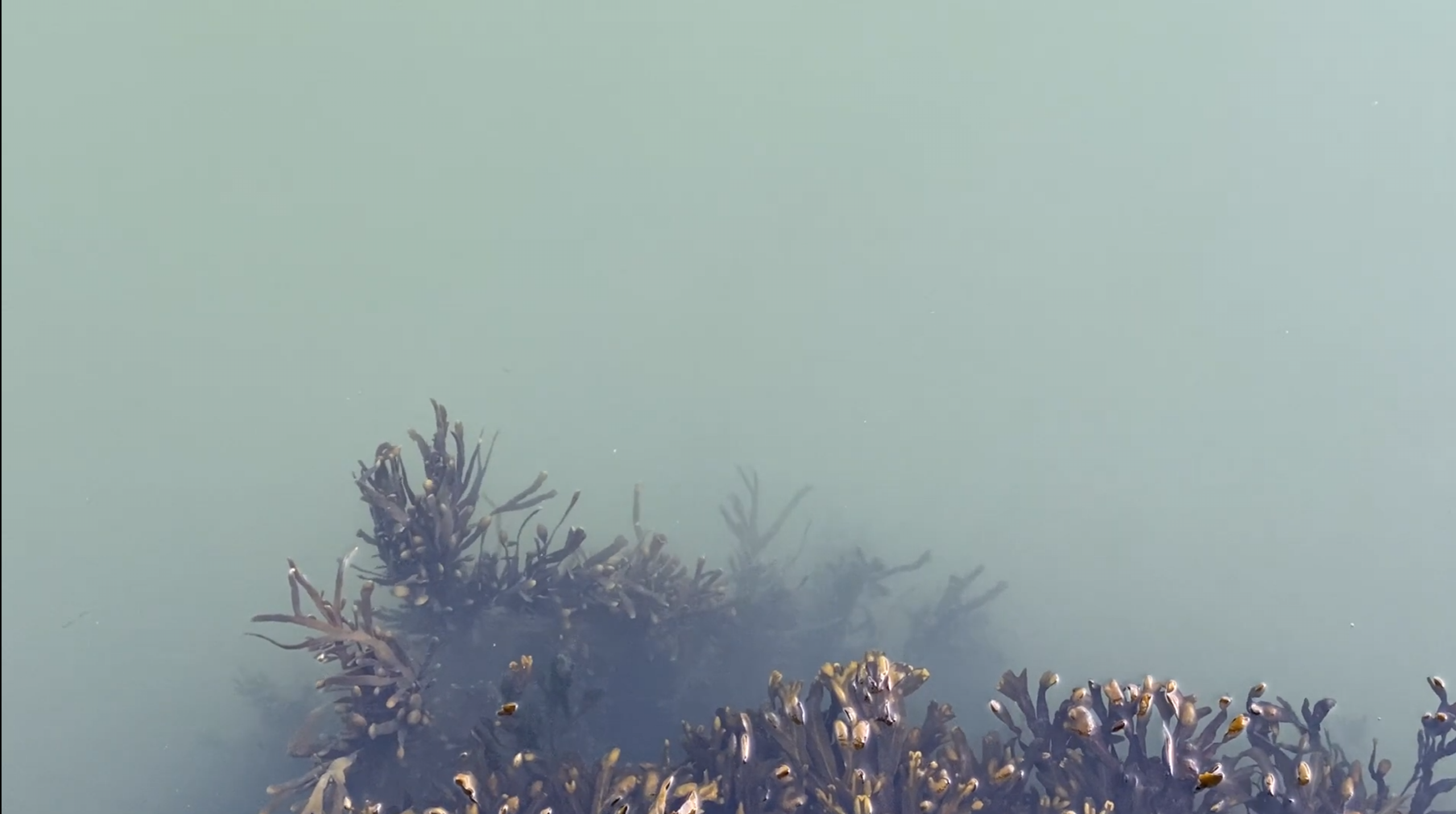
Using historical and live data from the River Forth, Right to Roam will feature elements of an abandoned water monitoring station. Here, creative exploration of environmental data and technology asks us to consider what we can learn through deep listening.
The data from SEPA and other sources, will provide a direct link to the river. When the water temperature or salinity changes, so too will the moving image and sound work in a live collaboration. Utilising Touch Designer software with support from Ray Interactive, gathered water samples from the Forth, are layered, alongside microscopic imagery to reveal the inner worlds of the river within the installation.
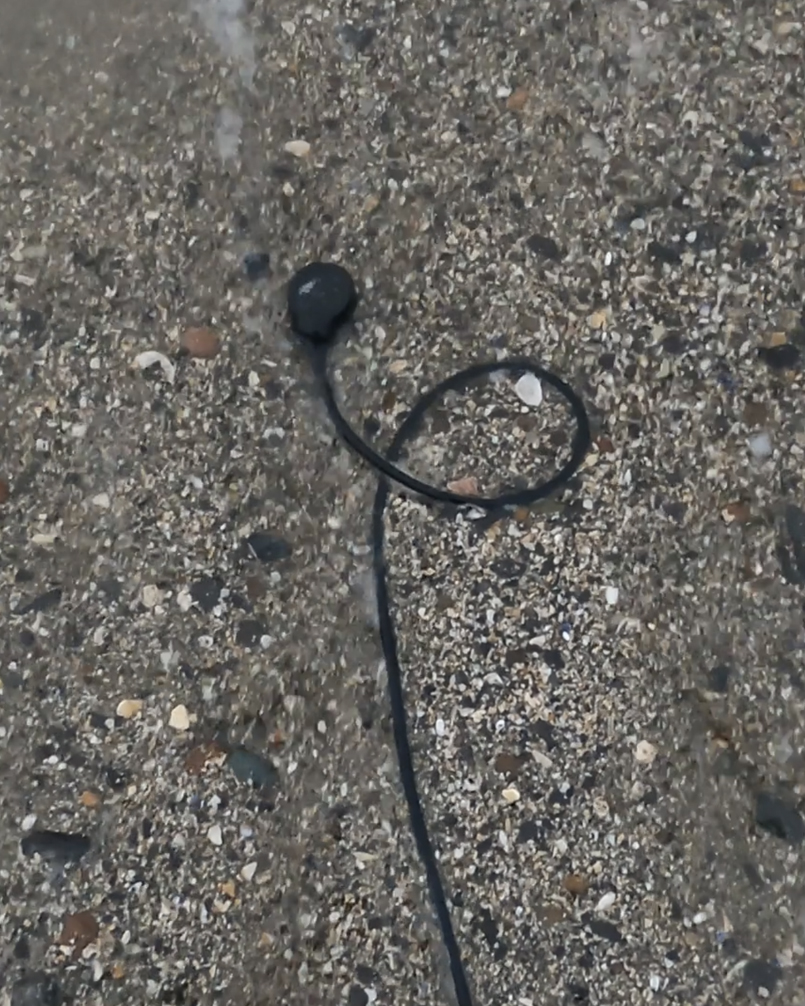
Sarah Calmus is also collaborating with artist Theodore Koterwas using hydrophone recordings of the Forth to be conveyed through underfloor speakers and subwoofers, allowing for direct conversation between the audience and the river.
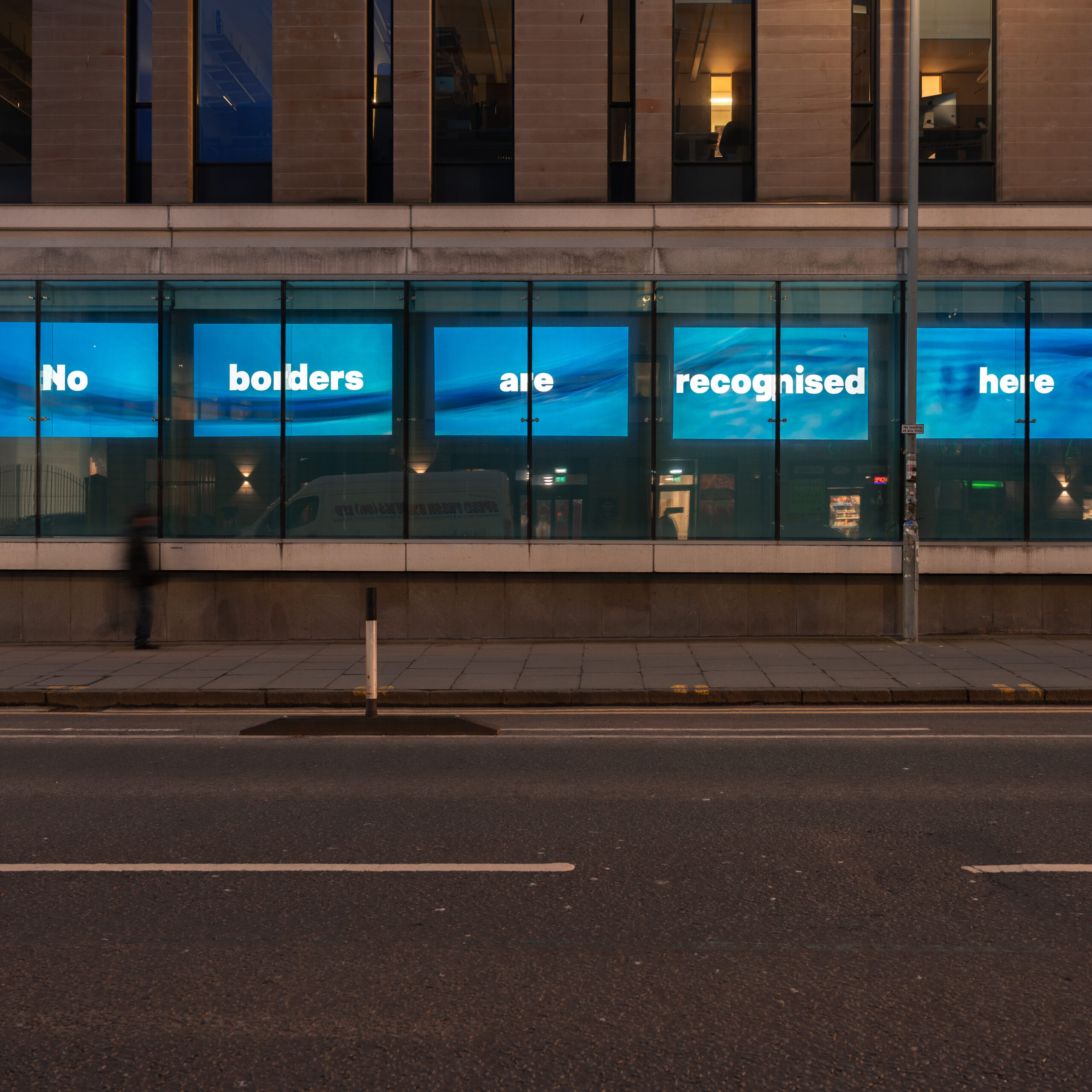
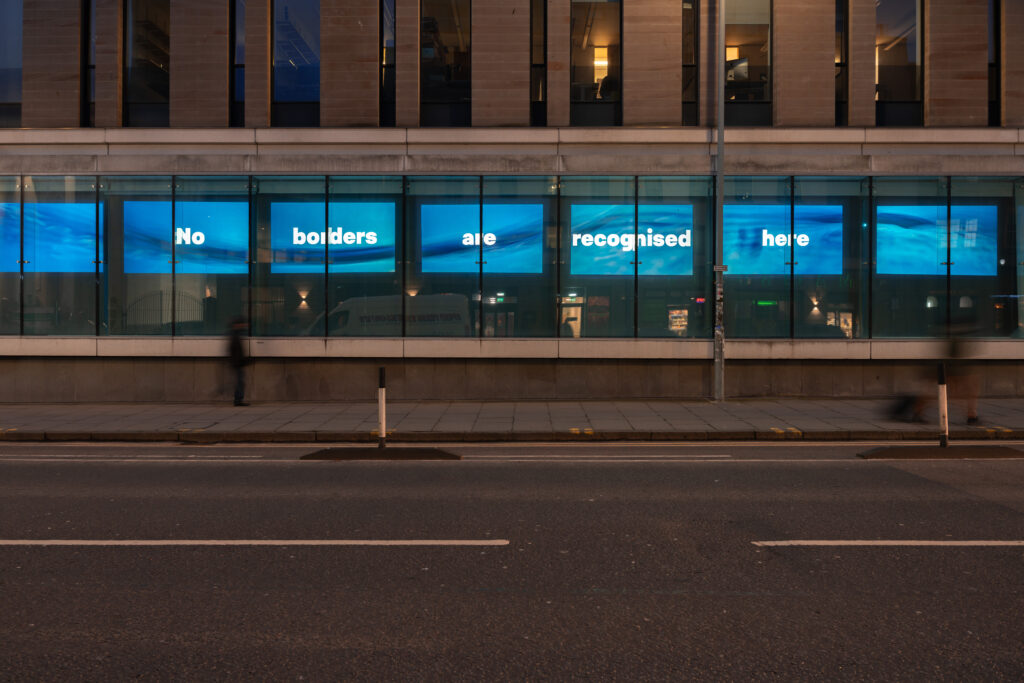
The exhibition includes night time screenings of the artist’s multiscreen film Uisge first shown on the Inspace City Screens in February 2026. As part of the wider exhibition, the film gives space to reflect on ideas of water as a living body by exploring the voice of the river Forth, through foraged films and overlaid text, where changes relating to the climate crisis incrementally affect interconnected ecosystems, both environmental and human.
Sarah Calmus is an interdisciplinary artist, programmer, and creator of large-scale immersive installations and provocations, working across a multitude of mediums such as light, sound and print. Accessible, multisensory, sustainably produced experiences are central within Calmus’s work, where artworks often draw focus on environmental concerns that build equity for participators and critique and explore ecosystems of varying scales. Interested in building spaces to connect and reflect, her practice is intentionally interdisciplinary and participatory, viewed as a series of experiments underpinned with explorations into interaction.
Speaking ahead of the exhibition artist Sarah Calmus said:
“This exhibition and the wider Right to Roam project invites us to slow down, be curious and take a moment to reflect on the power and voice of water. My artistic work has always explored ideas concerning interconnected ecosystems and Right to Roam is being designed to remind us to listen to what water is teaching us, to be better custodians of our environment, to empower us toward empathy for our natural world, which we are so a part of. Working in the River Forth has been a wonderful opportunity to use scientific data to help illustrate that connection and learning. Being an interdisciplinary artist I want my work to engage with audiences as participants through a range of senses, so we are encouraged to feel the exhibition as much as engage with the wider environmental message of the impact of incremental change. Focusing on giving space to the voice of the River Forth has been a hugely rewarding experience and I hope visitors to the exhibition will connect with the power of this water body whilst being mindful of the fragility of our ecosystems.”
Right to Roam is a project by led by Sarah Calmus, funded by Creative Scotland and supported by Inspace and the Institute for Design Informatics.
Supported by