
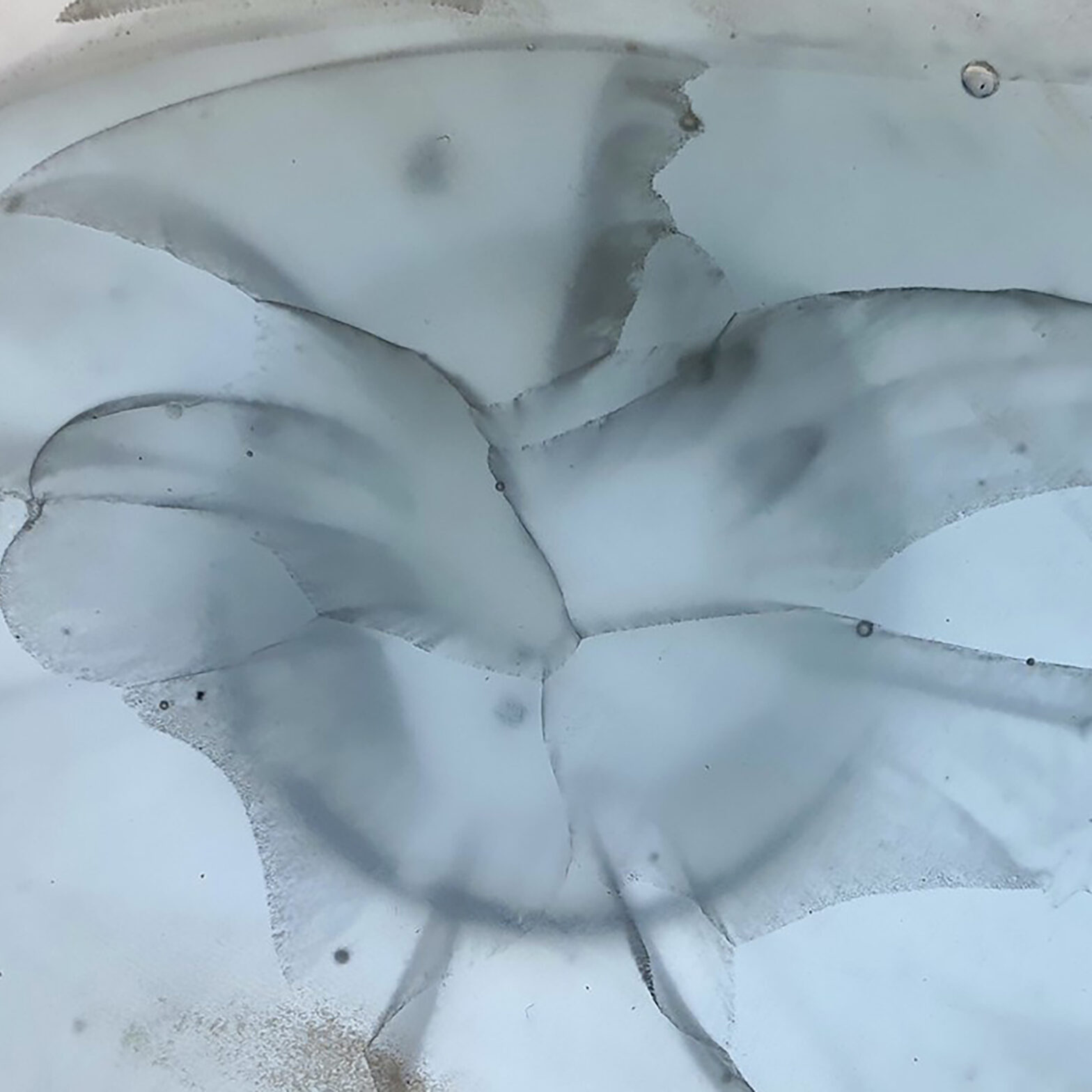
From Lab to Festival: A Residency Project Transforms into an Exhibition
How can the complex physical processes behind Magnetic Resonance Imaging (MRI) and the development of Magnetic Resonance sequences be made visible and tangible? This is the question that guided British glass artist Gregory Alliss during his STEAM Imaging VI residency. The resulting exhibition, Between Glass and Magnetic Fields, translates the intangible dynamics of magnetic resonance imaging, an imaging method that produces radiation-free, three-dimensional representations of the body, into the medium of glass. By merging the sensory and investigative capacities of art with scientific rigor and programming, Alliss expands the aesthetic potential of contemporary glass art. His works integrate contaminated waste materials with the tools and logic of MRI sequence development to explore the intersections of visibility, matter, and image formation.
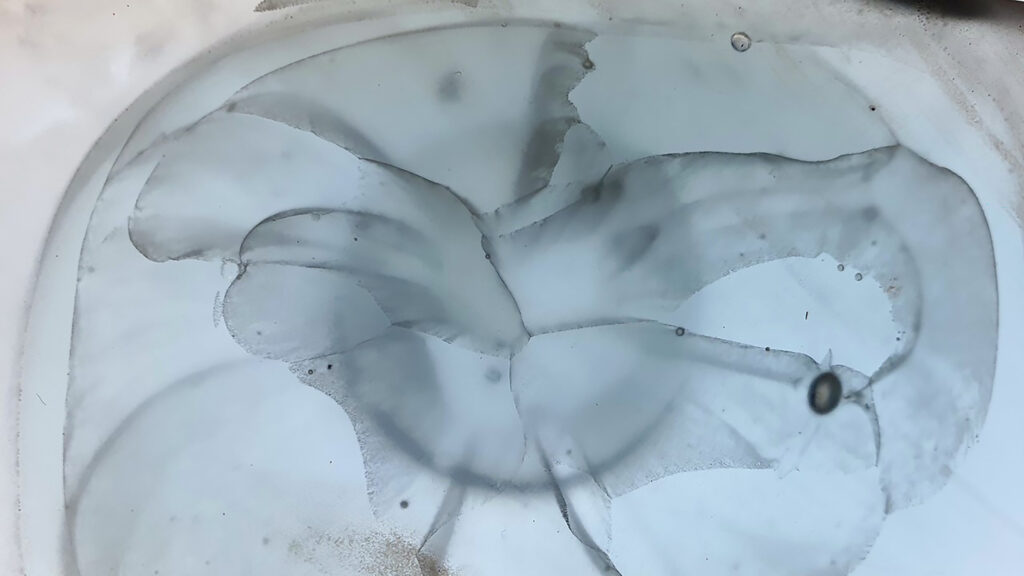
Between Glass and Magnetic Fields
Glass Art Meets MRI
From the world’s first clinical MRI scanner in Aberdeen to today’s frontier research, Scotland has long defined MRI physics. German researchers at Fraunhofer MEVIS are currently pushing these boundaries further with the vendor-neutral gammaSTAR platform, eventually streamlining the rollout of cutting-edge imaging techniques into everyday clinical practice. ‘Going Global’ this year’s festival theme seeks to highlight science ‘as a shared human story of inquiry, experimentation, failure, and breakthrough’, and it is this spirit that is reflected in the making process at the heart of Between Glass and Magnetic Fields and in the collaborative journey undertaken by Gregory Alliss, Fraunhofer MEVIS scientists, and school students during the STEAM Imaging VI Residency & Science Engagement project in Bremen, Germany, last November.
Between Glass and Magnetic Fields premieres at Inspace, Edinburgh, during the 2026 Edinburgh Science Festival, this April 2026. The exhibition features glass sculptures made from recycled Cathode Ray Tube (CRT) glass, from old TVs, an interactive glass object linked to MRI simulation software, video projections of MRI scans of the glass objects, and live-streamed scans from the Bremen MRI lab during the opening. Visitors can trigger imaging sequences through the interactive object and contribute their own reflections on a digital tablet, engaging in a ‘journey through glass’ that bridges art and scientific imaging. Alliss’s studio practice transforms recycled and contaminated glass into intricate art objects that also function as phantoms, proxies for human tissue in MRI experiments. When immersed in water, these glass phantoms reveal voids and contrasts that visually trace how MRI sequence commands—radio-frequency pulses, gradients, and timing—shape image formation. The work opens an aesthetic material gateway into the abstract logic of MRI, merging material practice with the advanced MRI research tool gammaSTAR.
MRI produces images using powerful magnetic fields in conjunction with controlledthrough controlled sequences of radio-frequency pulses, gradients, and timing parameters. The glass phantoms developed by Alliss make these invisible dynamics visible by translating them into optical contrasts—between voids, inclusions, and textured surfaces. Through STEAM Imaging VI, the artist collaborated closely with Fraunhofer MEVIS scientists and school students, co-developing and co-leading an International Fraunhofer Talent School Bremen workshop. Central to this collaboration was gammaSTAR, a modular, vendor-independent platform for MRI sequence development that bridges education, R&D, and clinical applications across domains. The project embodies the aim of democratizing science, making research processes transparent, accessible, and open to transdisciplinary creativity.
This Residency & Science Engagement Program is a partnership between Fraunhofer MEVIS in Bremen, Germany, and the Institute for Design Informatics in Edinburgh to create this unique opportunity to explore the potential for application of creative multi and transdisciplinary approaches in digital medicine. This collaboration involves the International Fraunhofer Talent School Bremen, Oberschule am Waller Ring in Bremen, and is supported by Ars Electronica in Linz, Austria.
Image Credit: Lenses, © Gregory Alliss, Jan 2026
Exhibition details
Inspace City Screens
Dates: 15-26 Apr, 2026
Times: 10:00 – 17:00 Daily | Free/Drop-in
Location: Inspace, 1 Crichton St, Edinburgh, EH8 9AB
Audience: General public
Venue Access features: Accessible toilets, Assistance dogs welcome, Baby changing facilities, Seating, Step-free access, Wheelchair accessible
Event Programme
Interactive Talk
Date: 16 Apr 2026
Times: 16:00-18:00 (2hrs) | Free/Ticketed
Location: Inspace, 1 Crichton St, Edinburgh, EH8 9AB
Audience: General public
Venue Access features: Accessible toilets, Assistance dogs welcome, Baby changing facilities, Seating, Step-free access, Wheelchair accessible
Guided Lunchtime Tour
Date: 23 Apr 2026
Times: 13:00-14:00 (1hr) | Free/Ticketed
Location: Inspace, 1 Crichton St, Edinburgh, EH8 9AB
Audience: General public
Venue Access features: Accessible toilets, Assistance dogs welcome, Baby changing facilities, Seating, Step-free access, Wheelchair accessible
If you have any enquiries about the events and venues, please email event organisers at designinformatics@ed.ac.uk
About the Artist
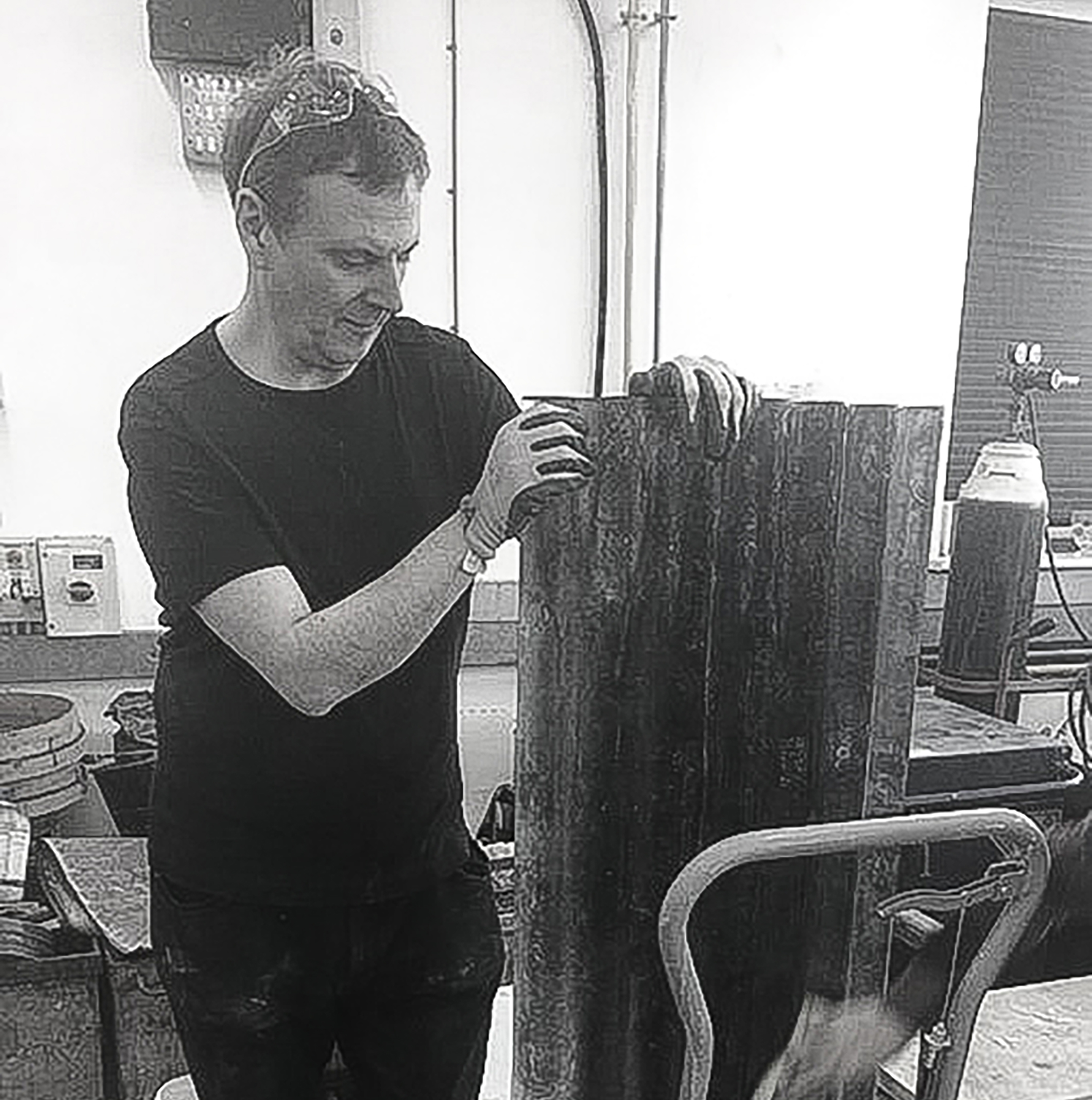
Gregory Alliss is an Artist and engineer, with an artistic practice in glass sculpture, specialising in kiln casting and cold working techniques using optical and recycled glass. He is currently undertaking a PhD at the Edinburgh College of Art (ECA), having previously gained an MFA in Glass also at the ECA. The PhD is practice based, looking aspects sustainability in the context of glass art studio practice. His recent artistic practice has been heavily focused on using recycled glass from Cathode Ray Tubes (CRTs) from old-style televisions. His current work has expanded on this to investigate the production of glass art made from highly contaminated waste glass that is not traditionally used by glass artists. Experimenting with these contaminated glasses has blurred the boundaries between his creative and engineering worlds. His previous artistic practice has also drawn on his background in science and engineering using techniques including, 3D printing, data visualization and immersive spaces. These toolsets have been used both within the development of his glass sculptures and as ways to present his work in the digital and interactive spaces. His work has been exhibited in UK, Spain, Austria, and Ireland, and has been published in journals and catalogues. His work also is in private collections in the UK.
About Frauenhofer MEVIS
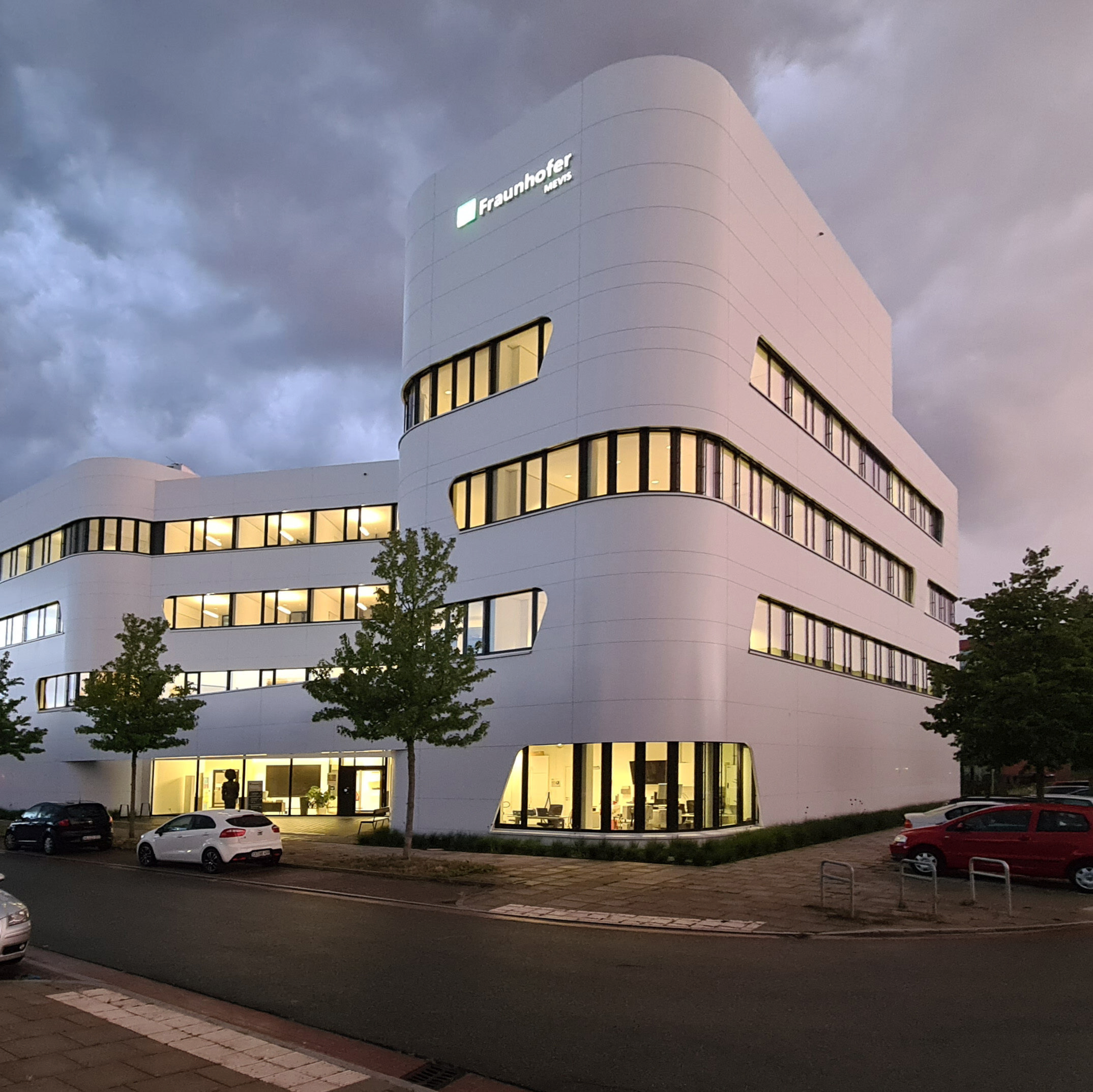
Fraunhofer MEVIS, lead and host of the STEAM Imaging residence programme, develops real-world software solutions for image and data-supported early detection, diagnosis, and therapy. Strong focus is placed on cancer, as well as diseases of the circulatory system, brain, breast, liver, and lungs. The goal is to detect diseases earlier and more reliably, tailor treatments to each individual, and make therapeutic success more measurable. To reach its goals, Fraunhofer MEVIS works closely with medical technology and pharmaceutical companies, providing solutions for the entire chain of development, from applied research to product-ready medical products. Fraunhofer MEVIS, a part of the Fraunhofer Society, has a network of national and international partners from the fields of academia, industry, clinics, and the public sector. The Institute’s scientists are committed to raising awareness about how digital medicine and related STEM sciences influence healthcare. Besides their primary mission, they develop experiential projects at the intersection of science, art, and technology to stimulate critical dialog of new technologies, reach new audiences, and foster a diverse R&D landscape.
Supported by