

We are delighted to share this snippet from last month (November), during this year’s Fraunhofer MEVIS residency in Bremen, Germany, which featured work in progress by Edinburgh College of Art PhD student Gregory Alliss, this year’s STEAM Imaging Creator in Residence. The residency took place across two weeks and we are looking forward to hosting Gregory, glass artist and engineer, in Inspace during the 2026 Edinburgh Science Festival, when he will present the outcome of this residency.
This November, The International Fraunhofer Talent School in Bremen brought together Fraunhofer MEVIS researchers, Edinburgh College of Art PhD student Gregory Alliss, and upper secondary school students to dive into the world of MRI imaging and MR sequence development. The STEAM workshop aimed to make MRI principles accessible not only on a scientific level but also through hands-on and artistic exploration, encouraging participants to engage creatively with the technology.
In a “mini-MR Lab,” a multisensory simulation environment designed for MR sequence creation, participants tackled the challenge of imaging glass, a material that is difficult to measure with conventional MRI parameters, and explored how design strategies can support scientific reasoning with complex materials. The workshop segment demonstrated how artistic thinking opens up new metaphors in technical fields, introduces alternative approaches to problems, and provides unexpected access to complex systems.
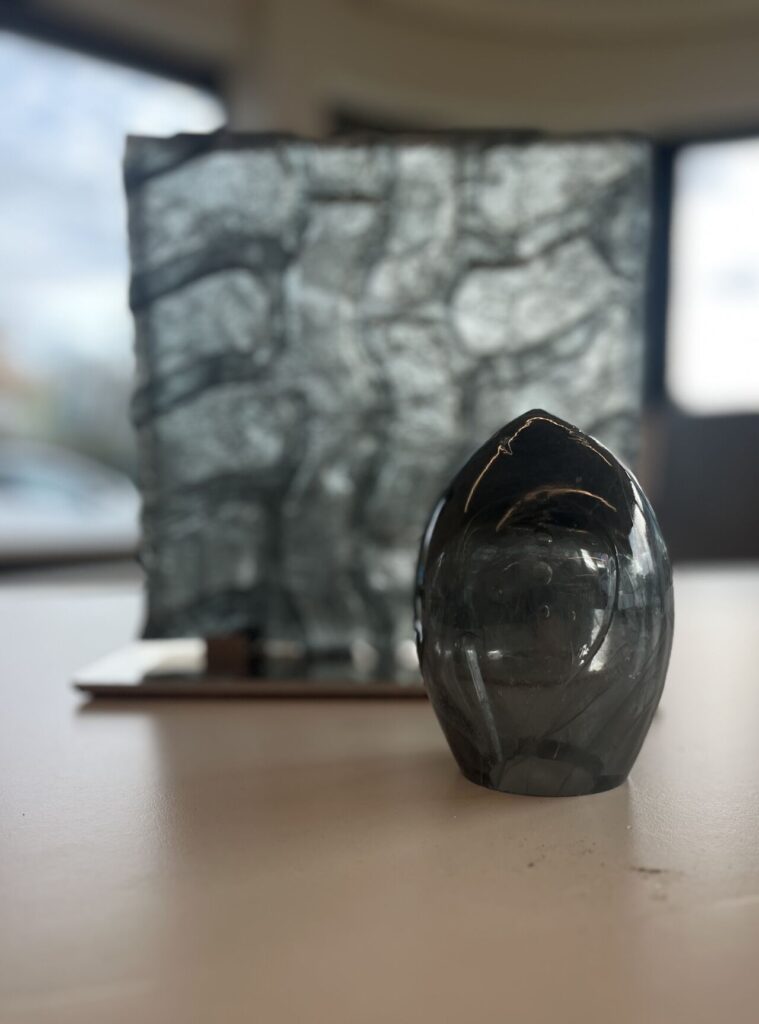
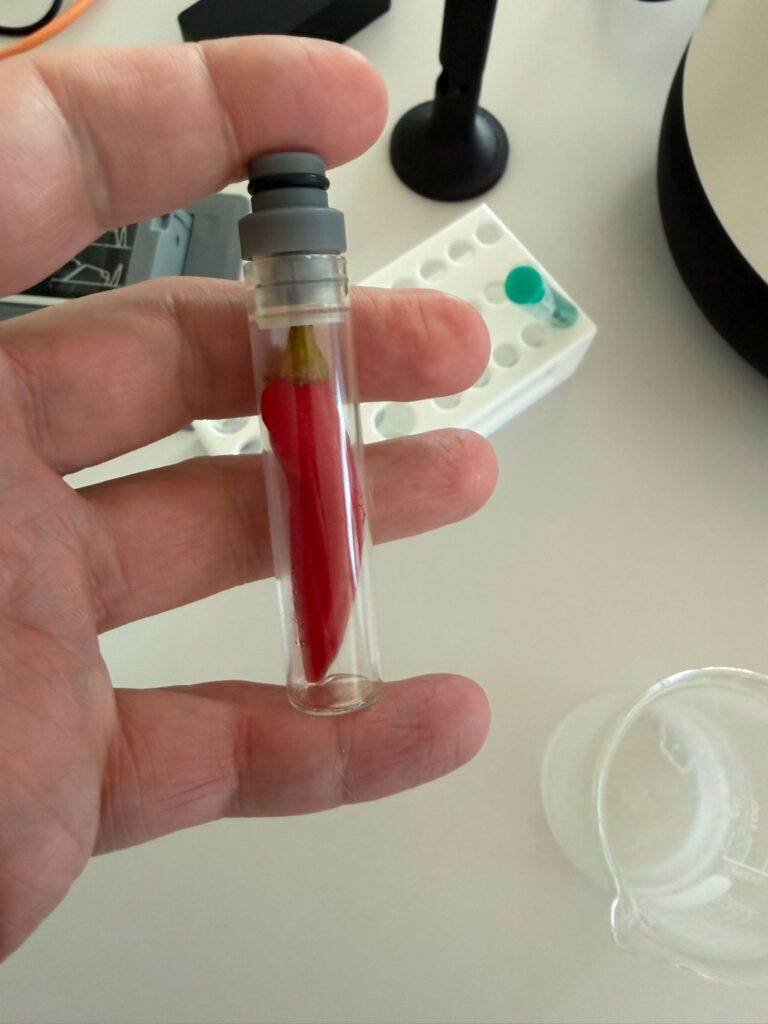
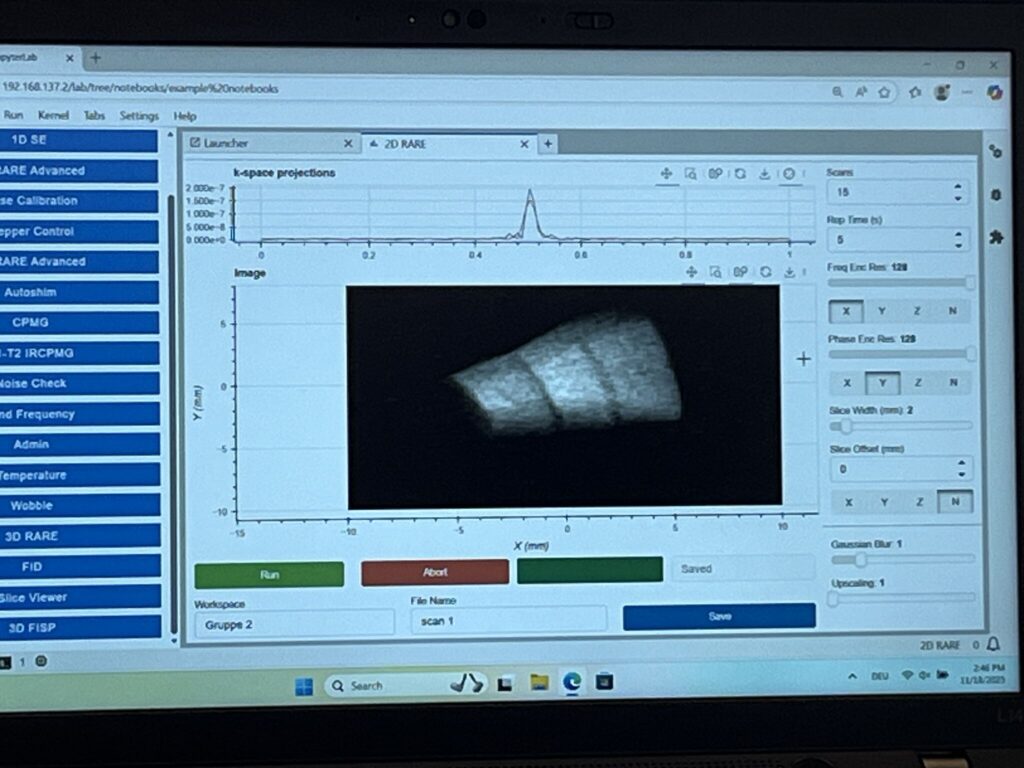
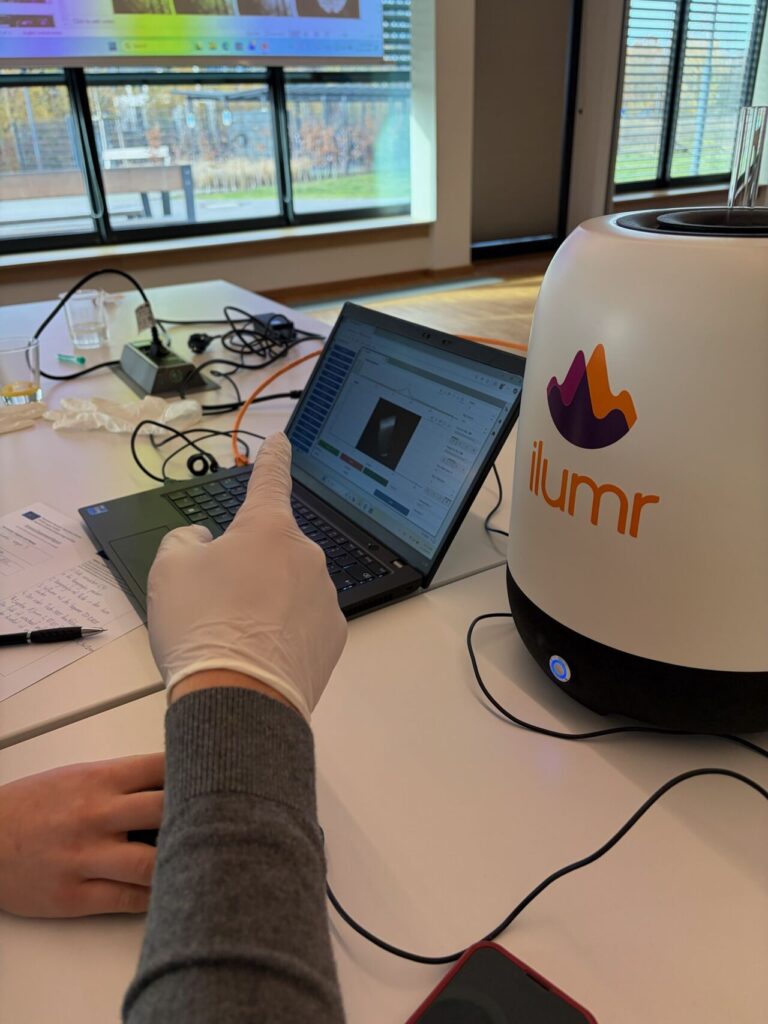
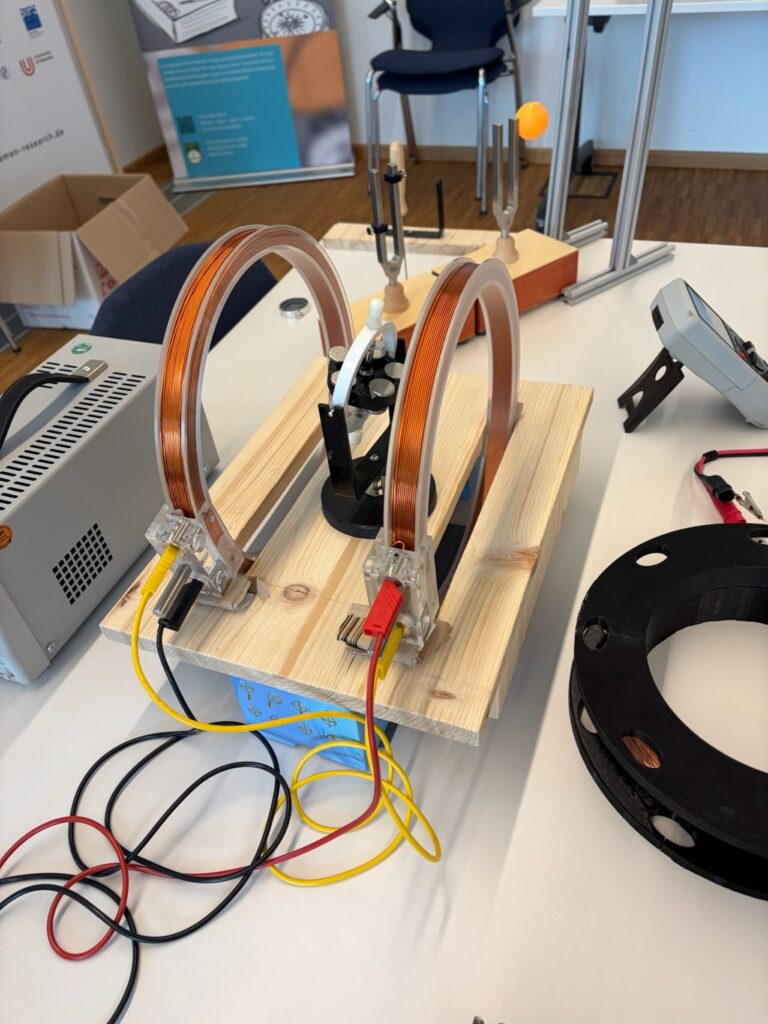
On the second day, the students, together with artist and MR physicist Gregory Allis and researchers from MEVIS, moved from the virtual simulation environment to real scanners. Working on both low-field and large research MR scanners, they tested sequences they had modified themselves and scanned various objects—glass, plants, and even a human—experiencing first-hand how subtle technical decisions shape what becomes “visible”. This shift from conceptual planning to empirical experimentation, blending STEM and artistic approaches, lies at the heart of STEAM Imaging: understanding developments in digital medicine not only as systematic, objective and traceable procedures, but also as creative, subjective and context-dependent processes that sometimes even rely on non-standardized methods.
This programme seeks explore how creative approaches can help demystify and increase diverse access to and engagement with Resonance Imaging technology.
Check back next February for more details about the outcome of this residency which will be presented in Inspace in April 2026.

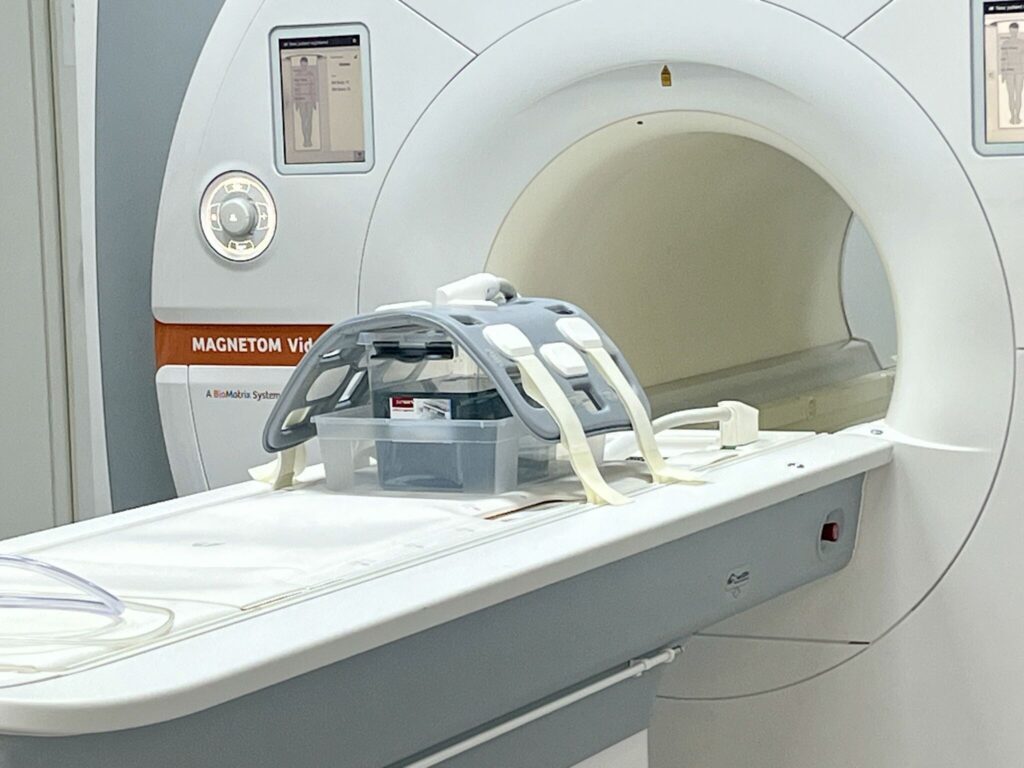


This Residency & Science Engagement Program is a partnership between Fraunhofer MEVIS in Bremen, Germany, and the Institute for Design Informatics in Edinburgh to create this unique opportunity to explore the potential for application of creative multi and transdisciplinary approaches in digital medicine. This collaboration involves the International Fraunhofer Talent School Bremen, Oberschule am Waller Ring in Bremen, and is supported by Ars Electronica in Linz, Austria.