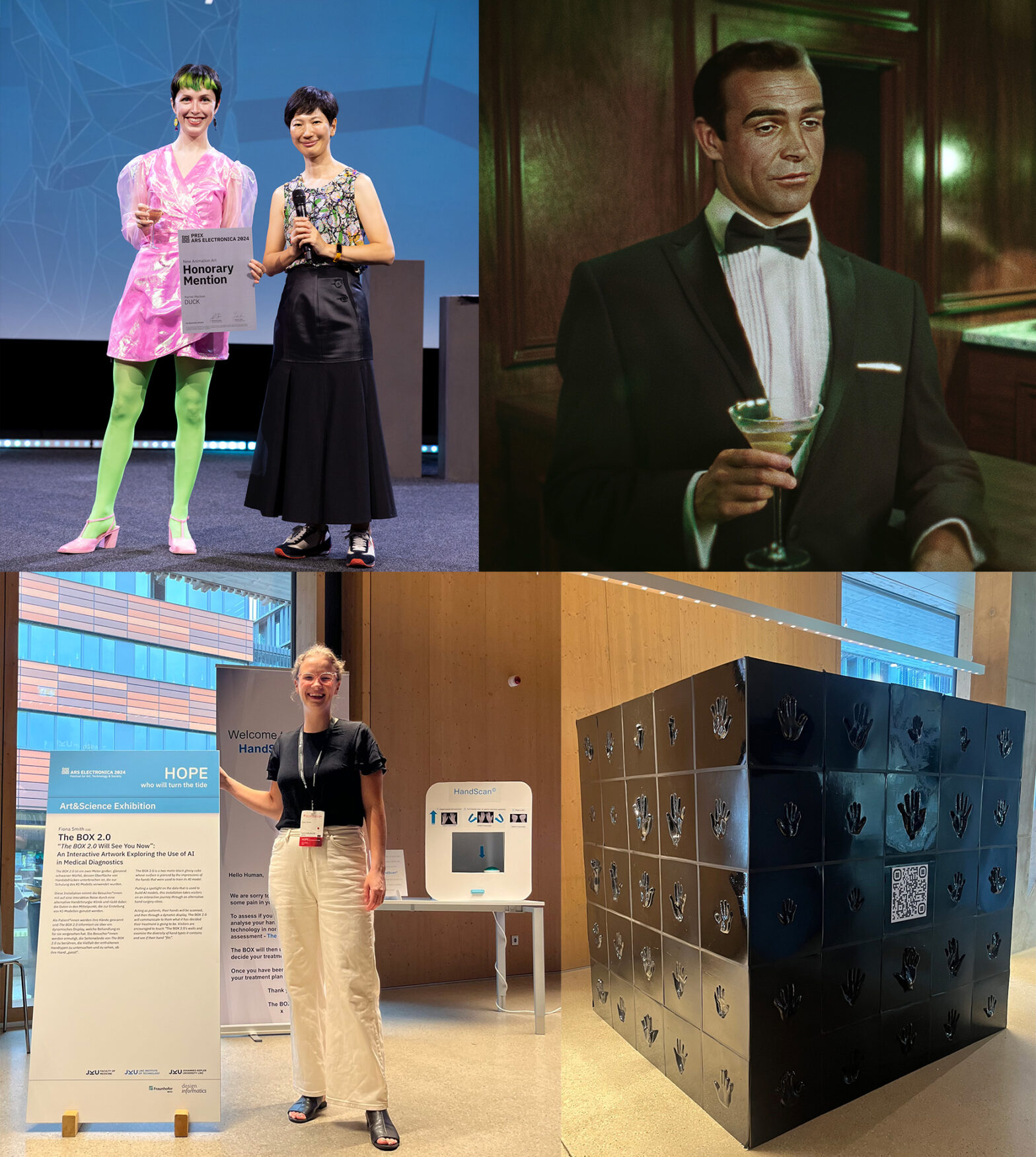
We were honoured to have two Design Informatics’ and Inspace collaborations, The BOX 2.0 by Fiona Smith and DUCK by Rachel Maclean, presented at the Ars Electronica Festival 2024 in Linz earlier this September.
We are delighted to congratulate Rachel Maclean, creator of DUCK, which received an Honorary Mention in the New Animation Art category of the Prix Ars Electronica. Design Informatics PhD candidate Martin Disley worked closely with Maclean on this deepfake British spy thriller parody starring Sean Connery and Marilyn Monroe.
Produced using deepfake visuals and audio, Maclean, who plays all the characters, swaps her voice and face with the very recognisable cast of actors, while Disley developed bespoke voice clones for each character in the film using state-of-the-art deepfake audio synthesis techniques.
“DUCK explores the fragility and malleability of identity, the slipperiness of reality, and the ramifications of gender-based power dynamics. Society is entering an increasingly more powerful inflection point through the role and impact of more AI. Through this, DUCK satirically reflects on such a moment with a time-bending cultural resonance, reminding us that the issues we fear are also issues we have dealt with in other forms.”
DUCK was produced by Forest of Black and Too Happy Studios with support from Newcastle University, Kunstpalais, and the Institute for Design Informatics.
We were also thrilled to see PhD student Fiona Smith, who is based at the UKRI Centre for Doctoral Training in Biomedical AI at the School of Informatics, University of Edinburgh, attending Ars Electronica Festival to present The BOX 2.0.
For the ARS Electronica Festival 2024, Smith reenvisioned the central sculpture of the artwork The BOX to present the new iteration The BOX 2.0 to festival audiences. The act of bringing THE BOX 2.0 from Edinburgh to Linz symbolized for Smith the international sharing of “data” that was required to build the accurate and fair AI models of the future.
The BOX was an interactive installation presented at the 2024 Edinburgh Science Festival that challenged the audience to consider how diverse medical datasets can be developed to make AI models for healthcare that work for everyone. THE BOX 2.0 was presented by Smith at the JKU Med Campus throughout the Ars Electronica Festival where the work was shared alongside opportunities to discuss the development of fair and accurate AI for healthcare.
The BOX was the outcome of the Residence “STEAM Imaging V—Holding the ‘Digital’ in Medicine to Account,” hosted by Fraunhofer MEVIS, in collaboration with the Institute for Design Informatics, the International Fraunhofer Talent School Bremen and the School Center Walle, supported by Ars Electronica.Visit the EIFF website for more information about the full programme
About the Institute for Design Informatics
In the Institute for Design Informatics, we fuse design and creative methodologies with data, data science and data-driven technologies. We create prototypes and experiences that make real to people the ideas that underpin the data society, and aim to ensure that new technologies sustain and enhance human values.
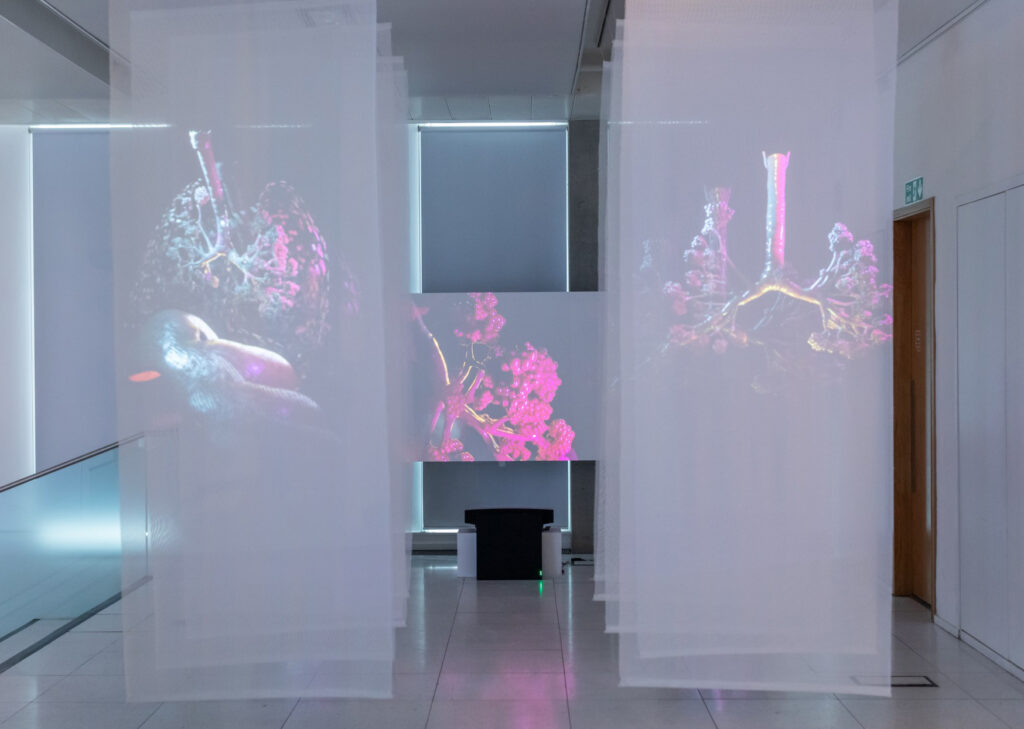
Presenting an exhibition of current research at the Institute of Design Informatics exploring digital authorship and rights, data protection and privacy through the voice of marginalized groups and reflections on the potential societal impacts of AI
Join us at Inspace to chat to researchers about current projects, ORAgen Fables, Citizen Data Agency, AI for the Street… on the Street, the topics they are exploring with opportunities to participate in the research yourself.
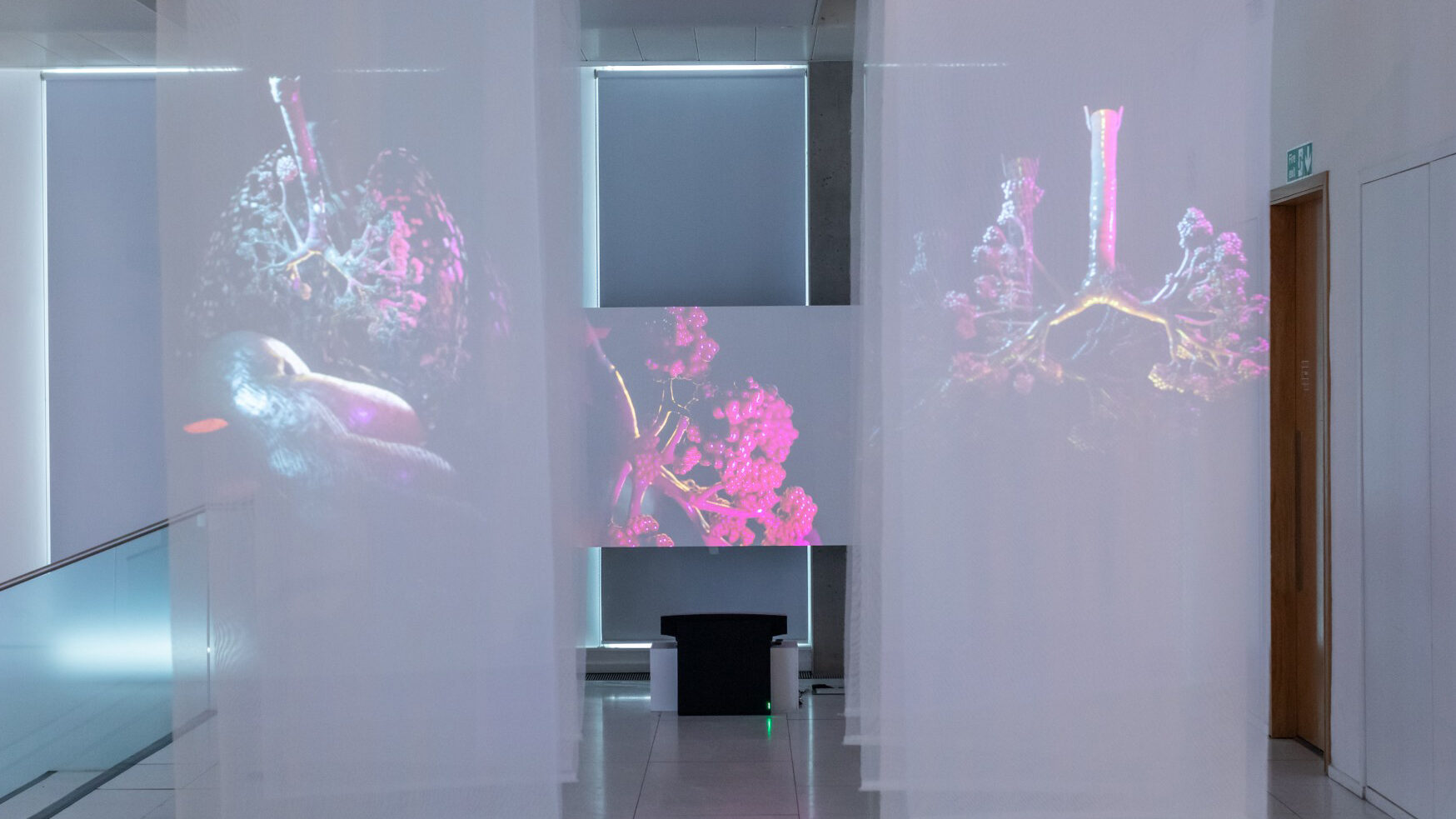
Image Credit: Not I, by Unit Test, part of the Sound of Deepfake exhibition 2023. Photographer Chris Scott
Featured Projects
ORAgen Fables
Is there value in tracking contributions in collective storytelling? And what does it mean to recognise others when we add to, or reuse someone else’s work?
Join the researchers leading this project in Inspace to explore these questions for yourself through ORAgen Fables, a digital interactive exhibit which invites visitors to explore, interact, and contribute to collective digital fables about objects and current Design Informatics research.
ORAgen Fables is a research study by the UKRI Decentralised Digital Economy (DECaDE) Research Centre at Institute of Design Informatics, University of Edinburgh. ORAgen Fables is part of an ongoing research project by DECaDE investigating a technical framework known as ‘ORA’ (standing for ‘ownership’, ‘rights’, and ‘attribution’) that seeks to address digital ownership, rights, and attribution related challenges in reuse and collective making practices. By interacting with ORAgen Fables, we ask visitors to participate in our research study, inviting them to discuss whether they see tracking contributions as valuable, reflect on how this might impact our understanding of digital authorship, and consider if this might shape how others reuse and share content online.
Citizen Data Agency
The Citizens Data Agency project is a design research project exploring people’s data advice needs both today and in the future. It seeks to explore what current and future data privacy support might look like and what current needs should be addressed.
We are seeing technologies being embedded within all aspects of our lives, within our cities, homes and pockets. These interactions create large amounts of information/data which are captured by private organisations and governments for potential benefits, but they also pose increased privacy risks.
Conversations around data protection, digital privacy and online risks do not often involve people from marginalised groups, so their needs and experiences are not included in the design of support and advice. For this project, researchers in the Institute for Design Informatics have partnered with two community organisations – Amina and Datakirk – who provide support for people from minority ethnic backgrounds. Through a series of participatory and co-design workshops we explored possible future speculative data support services designed around their experiences and needs.
The project is funded by the UKRI National Research Centre on Privacy, Harm Reduction and Adversarial Influence Online (REPHRAIN) and the Edinburgh Futures Institute (EFI).
For further information, please visit the Citizens Data Agency website
Following a successful street-side pop-up collaboration with the Leith community we will be featuring “AI for the Street… on the Street,” at the Edinburgh Doors Open Day, aiming to engage the public in exploring diverse perspectives on artificial intelligence (AI).
Join us at Inspace where you are invited to participate actively with the display, and to offer your own insights and reflections on the potential societal impacts of AI. This intervention seeks to spark conversations and provide means for you to have your say and to consider how AI might influence and shape our future.
AI for the Street… on the Street, is part of AI in the Street 6-month scoping project, aiming to understand the connections and tensions between how people make sense of AI in daily life and how it is conceived by those actors who usually wield power, for example, big tech companies, organisations that decide on policy and governance, and local and national government. This research is set against a backdrop of continued public controversies tied to AI and ongoing efforts to define more ethical and responsible practices in the tech sector.
Motivated by the question “What does Artificial Intelligence mean for the person on the street?”, they chose to centre their research in Leith Walk – situated in the heart of Edinburgh – standing as a vibrant hub with multicultural communities, thriving businesses, cultural hotspots, and long-time residents committed to their neighbourhoods. Capturing the vibrancy of this local area, they wanted to see how and where AI is finding a place in the street and playing a role for local residents and businesses. The hope was to learn how AI should work in response to local individual, public and civic needs, with Leith Walk providing a snapshot, helping them to inform a responsible approach to AI for Edinburgh and across Scotland.
Where world-leading research, innovation and creativity meet
Discover the intersection of research, innovation, creativity and stunning views at the University of Edinburgh on Doors Open Day!
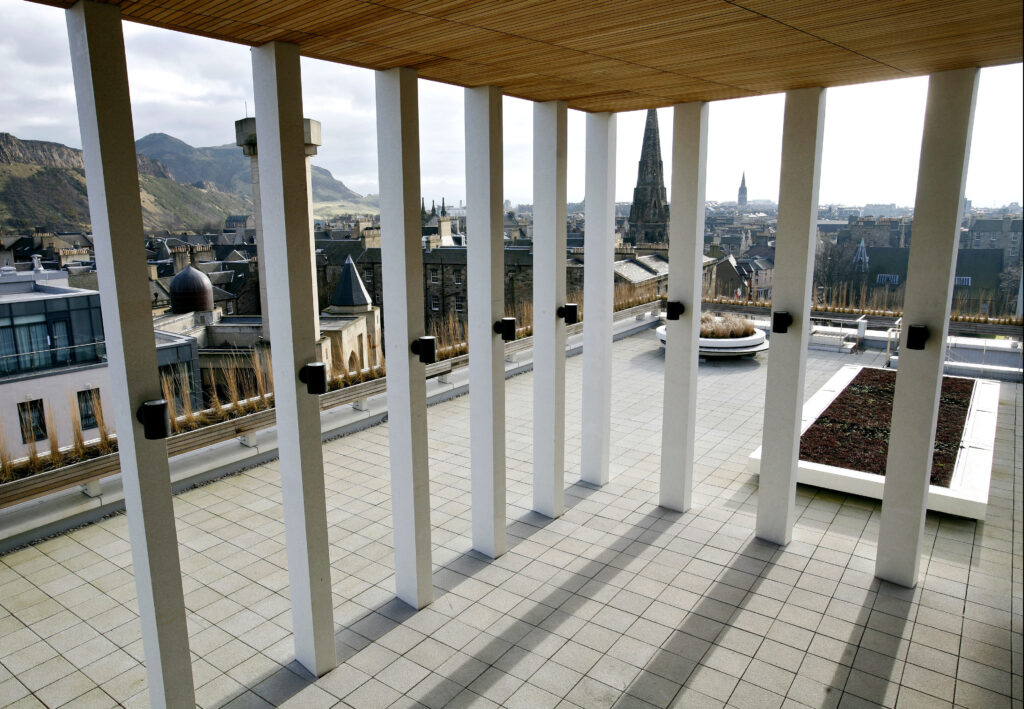
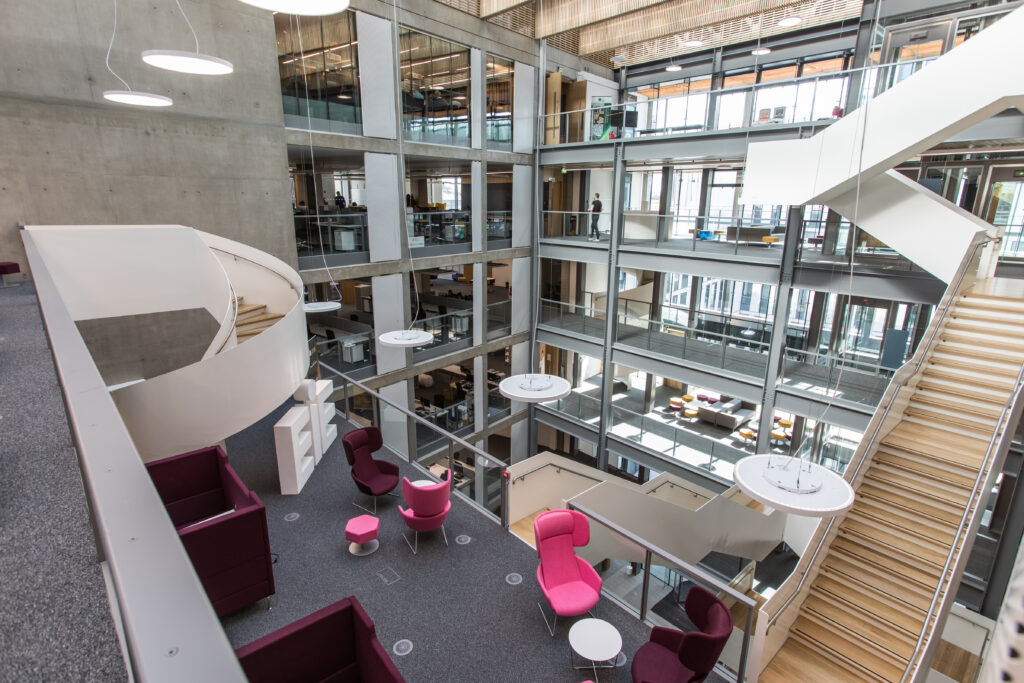
We invite you to experience the ground floor of the breath-taking Informatics Forum. Take advantage of exclusive guided tours that include a visit to the scenic roof terrace—an absolute must-see for photographers and enthusiasts alike! After soaking in the views, continue on the tour through the terrace link for an exclusive peek into the Bayes Centre tours including their robotics lab interactive touchscreen display. Then wrap up your visit venturing along to Inspace, Design Informatics studio and workshop facilities, to explore this high-tech venue, and glimpse behind the scenes at the ways researchers and students are thinking about the future and combining the fields of art, design, data science and technology.
Event details
Date: Sunday 29th September 2024 Time: 10:00 – 15:00 Locations: Informatics Forum, Bayes Centre, Inspace, Design Informatics Studio and Workshop
Exhibitors
As part of Doors Open Day 2024, Inspace will present a selection of research projects, ORAgen Fables, Citizen Data Agency, AI for the Street… on the Street and more. These pop-ups explore themes relating to data and artificial intelligence (AI), such as digital authorship and rights, data protection and privacy through the voice of marginalized groups and reflections on the potential societal impacts of AI. These exhibits are all excerpts of current research being explored by researchers at the Institute for Design Informatics.
Route: Starts at the main entrance to the Informatics Forum Early attendees gather in the Atrium (science/history stations TBC) Attendees follow student ambassador guides upstairs to level 4. A quick history of the Forum on the way. Time to take photos on the Roof Terrace. Attendees are taken to the Bayes Centre via the link on the roof. They are taken downstairs and provided a quick history of the Centre before arriving in the Atrium with the robotics lab. Attendees are taken for a Tour of Inspace, the Design Informatics studio and workshop. Attendees are welcome to stay in Inspace to view pop-up displays.
Venue Information
Inspace
Inspace is part of the Institute for Design Informatics and is a collaborative hub, commissioning and producing creative activity. Our public programme connects data, research and creative talent.
In the Institute for Design Informatics, we fuse design and creative methodologies with data, data science, data-driven technologies and ethical AI. We create prototypes and experiences that make real to people the ideas that underpin the data society, and aim to ensure that new technologies sustain and enhance human values.
Informatics Forum
Did you know the Informatics Forum boasts a roof terrace offering panoramic views of the iconic Arthur’s Seat?
The University’s history in pioneering artificial intelligence and computer science research dates back to 1963 with the establishment of dedicated research groups and has grown to a vibrant hub of activity within the state-of-the-art Informatics Forum and the adjacent Bayes Centre and Inspace.
Opened in September 2008 the Informatics Forum, designed as a ‘Forum for Interaction’, is now home to the School of Informatics, providing space for over 500 scientists pursuing research in fields such as computer science, artificial intelligence, and cognitive science.
Bayes Centre
The Bayes Centre is the University of Edinburgh’s Innovation Hub for Data Science and Artificial Intelligence rooted firmly within the College of Science and Engineering’s domain of mathematical, computational, engineering, and natural sciences. Located on Potterrow, the £45 million Bayes Centre building, designed by Bennetts Associates, was officially opened in October 2018. It is currently home to 400 scientists, PhD students and industry experts.
Bayes is also home to the Edinburgh Centre for Robotics’ Robotarium East, which hosts the Valkyrie robot. Standing 1.8 metres tall and weighing 125 kilograms, the Valkyrie is one of the most advanced humanoid robots in the world. Visitors are welcome to use the NASA Valkyrie interactive touchscreen experience to learn more about the robot.
For the 2024 summer festivals The Institute for Design Informatics’ Inspace are delighted to announce our partnership, with the 77th Edinburgh International Film Festival (EIFF) in collaboration with Monkey Barrel Comedy, and the return of Inspace as an Edinburgh Festival Fringe venue for this exciting relaunch.
Founded in 1947 when it was known as the International Festival of Documentary Films, Edinburgh International Film Festival is the world’s oldest continually running film festival. Following the 2023 edition, a new organisation was established under chairman Andrew Macdonald to lead a revitalised EIFF from 2024 onwards. Paul Ridd was appointed incoming Festival Director in December 2023.
Inspace is a unique events and exhibitions space which is part of the Institute for Design Informatics, based at the School of Informatics and Edinburgh College of Art, within the University of Edinburgh. It is a collaborative hub, commissioning and producing creative activity that unlocks digital and creative technology and explores its role in society. Our public programme connects data, research and creative talent, and we are delighted to be supporting the new vision for the EIFF’s 77th Festival.
‘We are thrilled to be a Fringe Venue, hosting the relaunch of the Edinburgh International Film Festival which will see Inspace, transformed into a cinema theatre. We are looking forward to welcoming Edinburgh and Film and Fringe Festival audiences to experience our venue’s metamorphosis and to enjoy the unique atmosphere that Inspace has to offer throughout this exciting week-long programme of film screenings and industry events.’
Miriam Walsh, Inspace Manager
Check out the links below for the programming happening at Inspace, which will include multiple screenings each day, a mixture of HOH (Hard of Hearing) screenings, shorts and full features. Inspace will also be host to the EIFF’s industry programme which promises to be an impactful series of panels and networking opportunities for Scottish and international creatives to engage with industry experts. Find our more via their website.
‘The Institute for Design Informatics are delighted to be working with the Edinburgh International Film Festival as we see exciting connections between the inspiring work and film makers celebrated at EIFF and our own collaborations with creatives doing innovative data driven work, including film makers and SMEs working in film and tv. We are particularly excited to host the Film Festival this year as we set up our role in CoSTAR, an ambitious UK-wide network of facilities and support enabling new research and development for the screen industries around new technologies including new developments of virtual production.’
Nicola Osborne, Manager of the Institute for Design Informatics
Programme Dates
15-21 Aug 2024 Screenings daily
Check out the Edinburgh Festival Fringe website for more information about our venue, to view and book all shows happening at Inspace and visit AccessAble for full venue access guides.
In the Institute for Design Informatics, we fuse design and creative methodologies with data, data science and data-driven technologies. We create prototypes and experiences that make real to people the ideas that underpin the data society, and aim to ensure that new technologies sustain and enhance human values.
Join the opening reception of the Citizens Data Agency, a fictional service provider proposing five speculative data support services.
Explore this interactive exhibition showcasing the outcomes of a series of co-design workshops which were part of a year-long research project which aims to spark conversations about the challenges people will face around data privacy in the future and what kinds of support services we might need.
Citizens Data Agency is an exhibition of a fictional service provider proposing five speculative data support services.
Join us at Inspace to explore the Citizens Data Agency, an interactive exhibition showcasing the outcomes of a series of co-design workshops, part of a year-long research project which aims to spark conversations about the challenges people will face around data privacy in the future and what kinds of support services we might need.
Join us in Inspace Gallery for the launch and reception of Citizen Data Agency Exhibition. This reception will include a short introduction from the researchers behind the project.
The Citizens Data Agency is a project by researchers in the Institute for Design Informatics at the University of Edinburgh and seeks to explore what current and future data privacy support might look like for people from marginalised communities. We partnered with two community partners – Amina and Datakirk – who provide support for people from minority ethnic backgrounds. Through a series of participatory and co-design workshops the aim was to explore possible future speculative data support services designed around their experiences and needs.
Datakirk is an Edinburgh based social enterprise that aims to empower people from disadvantaged groups in the data economy by providing learner-centred training in data literacy and analytic skills.
Amina is a Scottish wide charity that empowers and supports Muslim and BME women by serving as a vital link between them and the barriers they face every day.
Exhibition Gallery
The project is funded by the UKRI National Research Centre on Privacy, Harm Reduction and Adversarial Influence Online (REPHRAIN) and Edinburgh Futures Institutes (EFI).
We are delighted to announce Nic Sandiland, artist and co-founder of creative production company Flexer&Sandiland, as our Inspace Artist-in-Residence this June. The focus of Sandiland’s residency will be on An Obscure Camera, an interactive moving image installation, incorporating a live camera feed, to explore notions of ‘following’, ‘public space’, ‘the everyday’ and the ‘camera’s gaze’.
First staged in Brighton Dome in 2023 as work in progress, during this residency in Inspace, Sandiland will explore collaborations and connections with researchers at the Institute for Design Informatics and the University’s wider community, to further develop this concept and prototype, towards a subsequent public launch later this year.
Through this Inspace Residency, Sandiland will spend the week testing and developing the current prototype:
‘It is a pleasure to have InSpace host and facilitate the ongoing development of An Obscure Camera. Not only does this help further develop our universites partnership, but it also provides a much-needed hub for transdisciplinary collaboration, drawing together expertise from the arts, technology, academic and cultural networks in a versatile and accommodating environment.’
Nic Sandiland
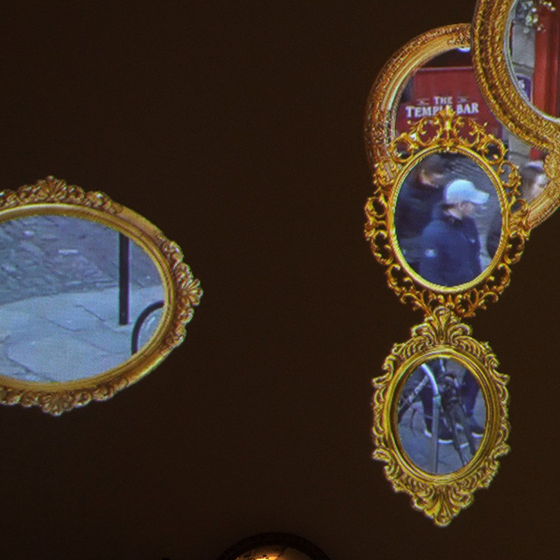
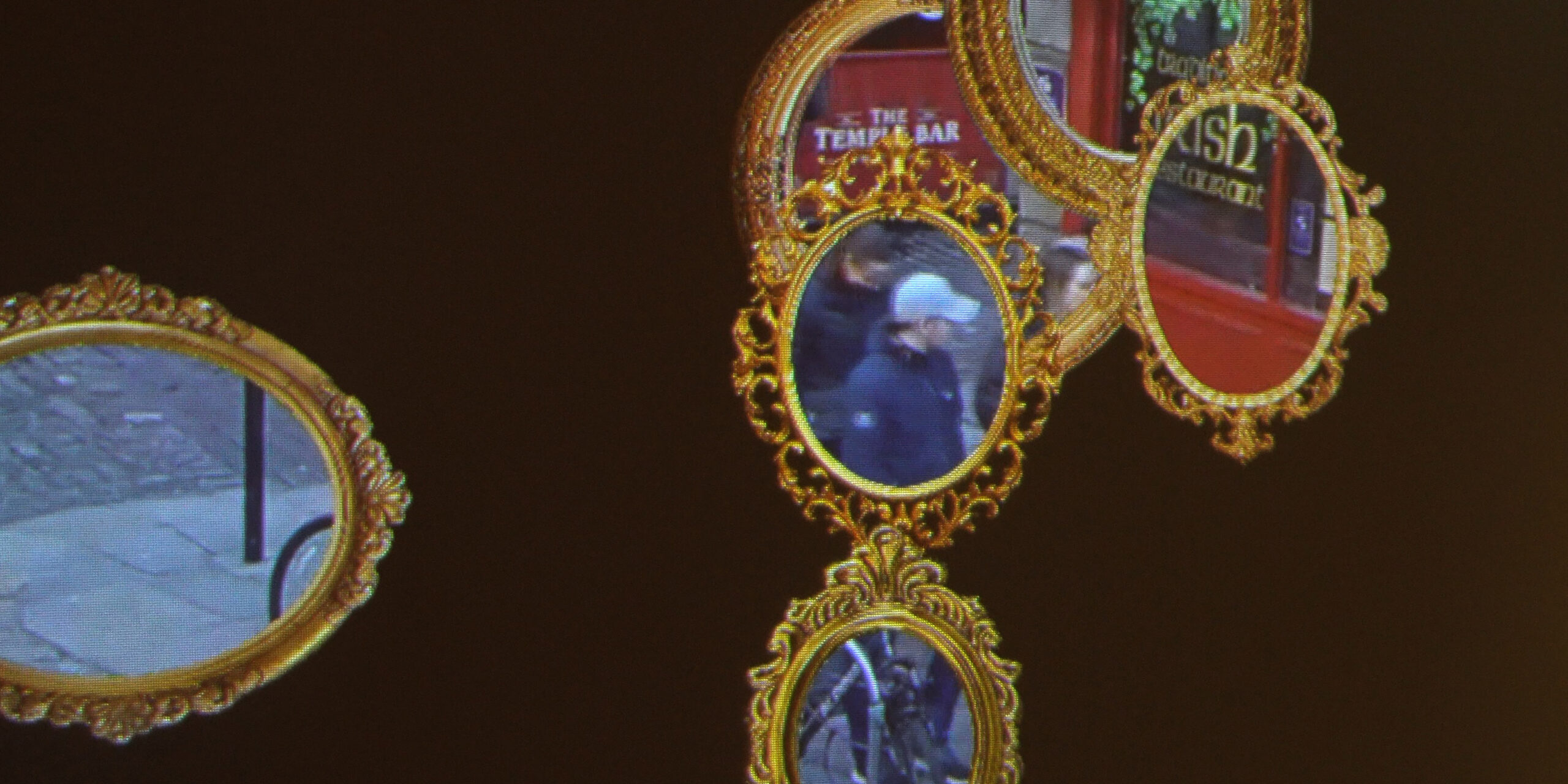
At the heart of this work is a sense of liveness, liveliness and embodiment, explored by Sandiland, by inviting visitors and viewers to participate in and interact with a live video feed, from the street right outside of Inspace, capturing passersby as they go about their daily activities. This live feed Sandiland playfully masks to create ‘portholes’ which allow the underlying image of the street scene to show through at various points, enabling installation viewers to choose to reveal any part of the projection they find interesting, and to reflect on what they choose to follow and what it feels like to do so.
The intention of this work is to encourage members of the public to take a more critical perspective on the use and processing of their data in public contexts, potentially providing significant benefits to their ongoing understanding and engagement with other forms of public surveillance.
This Artist-in-Residence is supported by Middelsex University and the Institute for Design Informatics
Important notice: This work involves the temporary installation of a street facing camera in the window of Inspace, which captures a live feed of passersby. Footage from this camera feed is being used as the input for the installation but none of the data is recorded or stored
Access the Data Protection Impact and Legitimate Interest Assessments here for more information.
If you have any feedback, questions or concerns about his project, please email:designinformatics@ed.ac.uk
The fascination with Camera Obscura has captured audience imagination drawing people worldwide from Victorian times to present day. The spectacle of entering a dark room through which to witness and actively peer out to the surrounding landscape is both theatrically enticing and technically mysterious. An Obscure Camera develops this form for a 21st-century context through a physically interactive installation.
We enter a large dark space and are immersed by a multitude of ornate Rococo frames projected onto the surrounding walls. Each frame contains a close-up view of the live outdoor environment outside of the building. As we walk around, the frames move with us, matching our speed and direction. New subjects enter and pass through the frames as our viewpoint changes. We canscan, track, and follow different features in the outdoor spaces, including its inhabitants, through our motion within the space.
Visitors are given the agency to physically enact the choices made by ubiquitous AI algorithms that observe, scrutinise, and categorise our every move.
In contrast to the minimal actions of clicking a mouse or pressing a key, a participant has to move their whole body through the installation in order to ‘follow’ those outside. This way, participants not only ‘embody the AI’, but are confronted, first-hand, with the associated ethical and social implications of their choices/actions.
About the Artist
Nic Sandiland is a UK based artist working across installation, performance, and film.
Through his work, Nic seeks to re-enliven the body, revisiting and revaluing the viewer’s actions through their innate physical presence. To do this, his work has drawn on cinematic techniques such as slow motion and moving camera mechanisms and, more recently, machine vision, LiDAR, and robotics.
Nic has made work in London, Europe and Southeast Asia and has presented at theatres, art galleries, and many unusual venues. His film work has been shown worldwide and has been broadcast on UK TV (Channel 4).
His work has been commissioned by organisations such as: the Royal Festival Hall, the Barbican Arts Centre, Sadler’s Wells Theatre and The Brighton Festival and he is a regular collaborator with choreographers Yael Flexer and Rosemary Lee.
He has also worked as an interactive technology designer with: Station House Opera, Blast Theory, Gary Stevens and Imogen Stidworthy. He is also a producer and editor for Extant Theatre, the UK’s leading professional performing arts company of visually impaired artists and theatre practitioners.
Nic has taught workshops on digital technology and dance around the World including: Bangalore, India and Seoul, South Korea. He also taught video production for 10 years at London Contemporary Dance School (MA dance for camera) and is currently a senior lecturer in fine art at Middlesex University. In 2022 Nic completed his PhD on agency within interactive installation.
Learn from the communities paving the way for Responsible AI development and discover the vital role of the arts & humanities in developing ethical AI futures.
Talk Details
Can artistic approaches help invite more voices into discussions about AI in Healthcare?
The potential benefits of utilising AI technology in healthcare are vast but there are important practical, technological, ethical, and legal implications that need to be addressed in order to safeguard patients. Doctor, AI researcher and artist Fiona Smith is particularly interested in how we can ethically curate the diverse datasets that are required to make accurate fair models. Join this discussion with Smith who will be talking about how these themes informed her latest exhibition “The BOX” which premiered at the 2024 Edinburgh Science Festival. “The BOX” is the outcome of the Creator Residency ‘STEAM Imaging V’, hosted by Fraunhofer Institute for Digital Medicine MEVIS, in collaboration with the Institute for Design Informatics, the International Fraunhofer Talent School Bremen & the School Center Walle supported by Ars Electronica.
The BOX is the artistic outcome of the Creator in Residence Programme ’STEAM Imaging V Holding the ‘Digital’ in Medicine to Account’, hosted by Fraunhofer Institute for Digital Medicine MEVIS, Bremen, Germany, in collaboration with the Institute for Design Informatics, Edinburgh, the International Fraunhofer Talent School Bremen, and the School Center Walle, Bremen, Germany, supported by Ars Electronica, Linz, Austria.
Please note limited seats are available at Inspace for in-person audiences, so please book tickets in advance. For those joining online please visit the online event page for the Zoom joining link and password.
*Important Notice*
This event will be photographed, recorded and live streamed and the data published online and used for research, promotional and reporting purposes by BRAID UK and the Institute for Design Informatics based at the University of Edinburgh. For further information please contact the organisers.
Event details
Thurs, 11 Apr 2024 4-5pm Free | Booking required
3-4pm – Recommended viewing of the experience (join an hour before the event to view the experience as the exhibition will be closed during and after the seminar)
16.00 – Welcome by Caterina Moruzzi 16.10 – Talk by Dr Fiona Smith 16.40 – Q&A 17.00 – End
The event starts at 16:10 to allow time for in-person audiences including staff and students to move around campus. Zoom Webinar will open from 16:00 for online audiences
Speaker & host
Guest speaker Dr Fiona Smith is a doctor and an AI researcher whose passion for art has led her to exploring multimedia approaches for public engagement throughout her career.
Fiona is a graduate of the University of St Andrews and the University of Manchester Medical Schools. She completed her foundation training in South East Scotland and her Plastic Surgery Themed Core Surgical Training in North East England. In 2021 she joined the CDT for Biomedical AI at the University of Edinburgh, where in addition to investigating AI applications in surgery for her PhD, she is a tutor for Case Studies in AI Ethics.
Caterina Moruzzi, our host, is a Chancellor’s Fellow in the Institute for Design Informatics, School of Design and research affiliate of the Edinburgh’s Futures Institute at the University of Edinburgh. Her research lies at the intersection between the philosophy of art, history and philosophy of human and artificial creativity, and the philosophy of AI. She holds a Ph.D. in philosophy from the University of Nottingham and an artist diploma in piano performance from the Conservatorio G.B.Martini, Bologna, Italy. In her ongoing projects, she collaborates with researchers, artists, and technology companies to investigate modes of shared agency and creativity between humans, data, and technology.
STEAM Imaging VI: Resonant Connections through Design and Data – Engagement in MRI Sequence Development, Using No-Field, Low Field and Research MRI Scanners This is a Call for Creatives, postgraduate PhD students, across the University of Edinburgh, for a Residency & Science Engagement Programme. Closing Date for Applications: 2 June 2025
We are delighted to announce this new Call for Creatives across the University of Edinburgh, with the residencies’ host, Fraunhofer MEVIS, for a Residency & Science Engagement Programme. This is an exciting new and unique opportunity for postgraduate PhD students to explore and demystify Magnetic Resonance Imaging (MRI)
An Interactive Artwork Exploring the Influence of AI in Medical Diagnostics
Exhibition Opening: “The BOX” with Panel Discussion on “Transformative Spaces: Science-Art Residencies” on Friday, April 5, 2024, 18:00-20:00, Informatics Forum and Inspace Gallery as part of the Edinburgh Science Festival
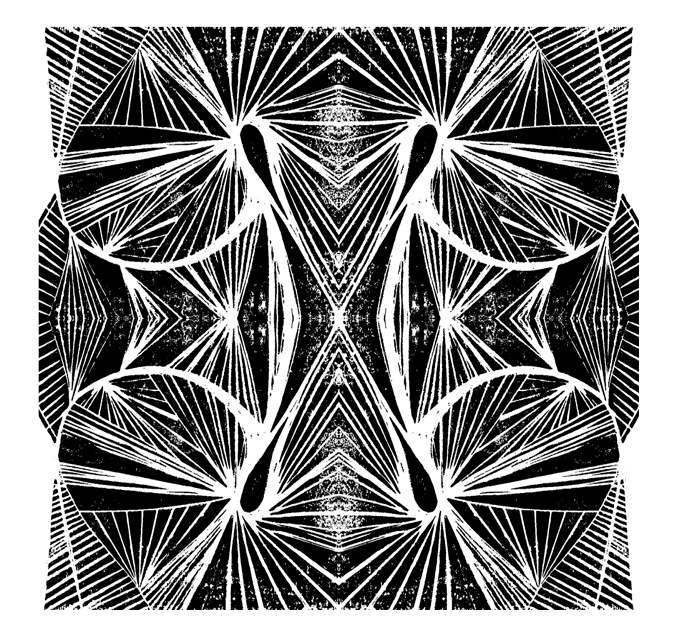
The potential benefits of using AI technology in healthcare are enormous. However, there are significant practical, technological, and legal implications that must be considered to protect patients. The BOX is an interactive installation that explores the “black box” aspect of AI technology, posing the question: If we feed AI with incomplete or biased data – can we then expect it to make reasonable suggestions?
In November, Scottish artist, scientist, and physician Fiona Smith visited Fraunhofer MEVIS in Bremen to develop an interactive art installation as part of the “STEAM Imaging V” residency program. With the theme “Holding the ‘Digital’ in Medicine to Account,” participants aim to look beyond the promises of new technological developments and data-driven tools. The goal is also to help prospective students gain a critical understanding of AI-driven applications in the healthcare sector, which increasingly permeates the interaction of all participants in the development process.
The BOX is now finished and can be experienced from 5 April to 19 April at the Inspace Gallery as part of the renowned Edinburgh Science Festival. The artwork invites the public to slip into the role of a patient and experience the reaction of an AI to medical data at first hand. In an interactive and playful way, Fiona Smith sheds light on essential questions raised by the use of artificial intelligence in medical diagnostics.
AI algorithms are now found in many areas of everyday life, including medicine, where they gradually make their way: AI programs recognize patterns in X-ray images that indicate diseases or support the search for active substance candidates for new drugs. However, numerous legal and ethical questions arise, especially in healthcare: What does an AI do with medical data, i.e., sensitive information about a person? How do we prevent an algorithm being trained one-sidedly, so that it does not produce biased and discriminatory results, leading to problematic therapy decisions? And how can it be ensured that both professionals and laypeople can understand how an AI comes to its decisions?
Smith dedicated herself to these aspects as part of the “STEAM Imaging V” residency program. The young Scot, who is doing her PhD at the University of Edinburgh on an AI topic, is also active as a doctor and artist. She applied with the idea for an interactive installation named The BOX, where the audience can feed data to an AI and then observe how the machine reacts.
In November 2023, Smith spent two weeks at Fraunhofer MEVIS in Bremen to exchange ideas with the MEVIS experts: “It was an interesting mix of mathematics, physics, art, philosophy, medicine, and software development,” she enthuses. “We had remarkable working conversations that continued over lunch.” Among other things, the participants reflected on how artistic means can convey that when an algorithm has to make a decision, there can indeed be uncertainties. These decision boundaries can subtly change, and even tip into the arbitrary, even though the AI might appear confident.
An integral part of the residency program is a STEAM workshop for students in Bremen and Edinburgh, which the artists conduct together with the MEVIS experts. “The two days in Bremen were intense, but fantastic,” the artist says. “The young people quickly picked up our thoughts about the regulation and ethics of artificial intelligence.” Among other things, participants were able to slip into the role of an AI to diagnose skin cancer. This role-play promoted understanding of how important representative datasets are for training AI. It also became clear that models show weaknesses if later test data deviates too much from the training data – the software cannot predict things it has never seen before. “The discussions with the young people helped me to refine the concept for my installation,” says Smith. “It became clear to me that AI models have a somewhat mythical presence among young people, yet they recoil at the idea of being treated by an AI themselves.”
Back in Edinburgh, Fiona Smith updated her concept and discussed and developed the design with Fraunhofer MEVIS, Inspace production team and specialist technicians across the Institute for Design Informatics and the University of Edinburgh. “It got pretty big pretty quickly,” Smith emphasizes. “In the end, a combination of several interactive sculptures came out, including an elaborate lighting design.”
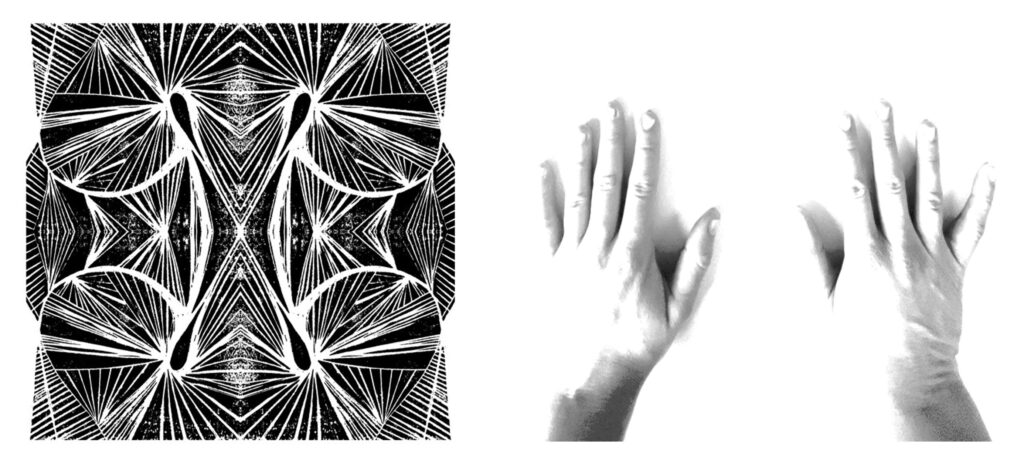
And what can people expect at the Inspace Gallery? “The BOX invites people to enter a kind of futuristic clinic for hand surgery,” describes Smith. “They can slip into the role of patients undergoing an unusual examination.” Their hands are scanned, and the system spits out a coded test result. Subsequently, people find themselves as a kind of data point in the box, where an AI algorithm makes a decision about the treatment.
“By doing this, I want to tear down the barriers of the black box and convey how complex the algorithms and the mathematics behind them are,” explains Fiona Smith. It is important, for example, that an AI can only provide useful results if it has been fed with high-quality data beforehand. For Smith, these training data should represent the parts of the population for which the model is intended. And they should be collected in a fair and ethical manner and in compliance with legal regulations. “My hope is that my installation raises questions among people and makes them think critically when they hear something about AI models and their regulation,” says Smith – and laughs: “But of course, people should also have fun when they engage with The BOX.”
STEAM Imaging V is a creator residency of the Fraunhofer Institute for Digital Medicine MEVIS in Bremen, Germany, in collaboration with the International Fraunhofer Talent School Bremen, the Schulzentrum Walle in Bremen, and the Institute for Design Informatics at the University of Edinburgh in the UK. It is supported by Ars Electronica in Linz, Austria.
We are delighted to announce that for the 2024 Edinburgh Science Festival Inspace Gallery will present two exhibitions and an associated events at Inspace.
Designing Data Humans
10am-5pm daily, 30-31 Mar 2024
Designing Data Humans exhibition features the work of Design Informatics MSc/MA students presenting a series of playful prototypes which examine and question our relationships to data technologies. View the works on display that try to help us to understand what it means to be human in a digital world and explore ideas addressing sustainable practices at the intersection of data and design, culture and society.
The BOXinteractive installation by Dr Fiona Smith, Creator in Residence at Fraunhofer MEVIS, explores the practical and ethical implications of integrating AI technology into healthcare accompanied by events that open up the creative process. Come explore the ‘black box’ aspect of AI technology in the context of digital medicine and journey into the internal and invisible workings of AI systems through the artwork and the associated events.