
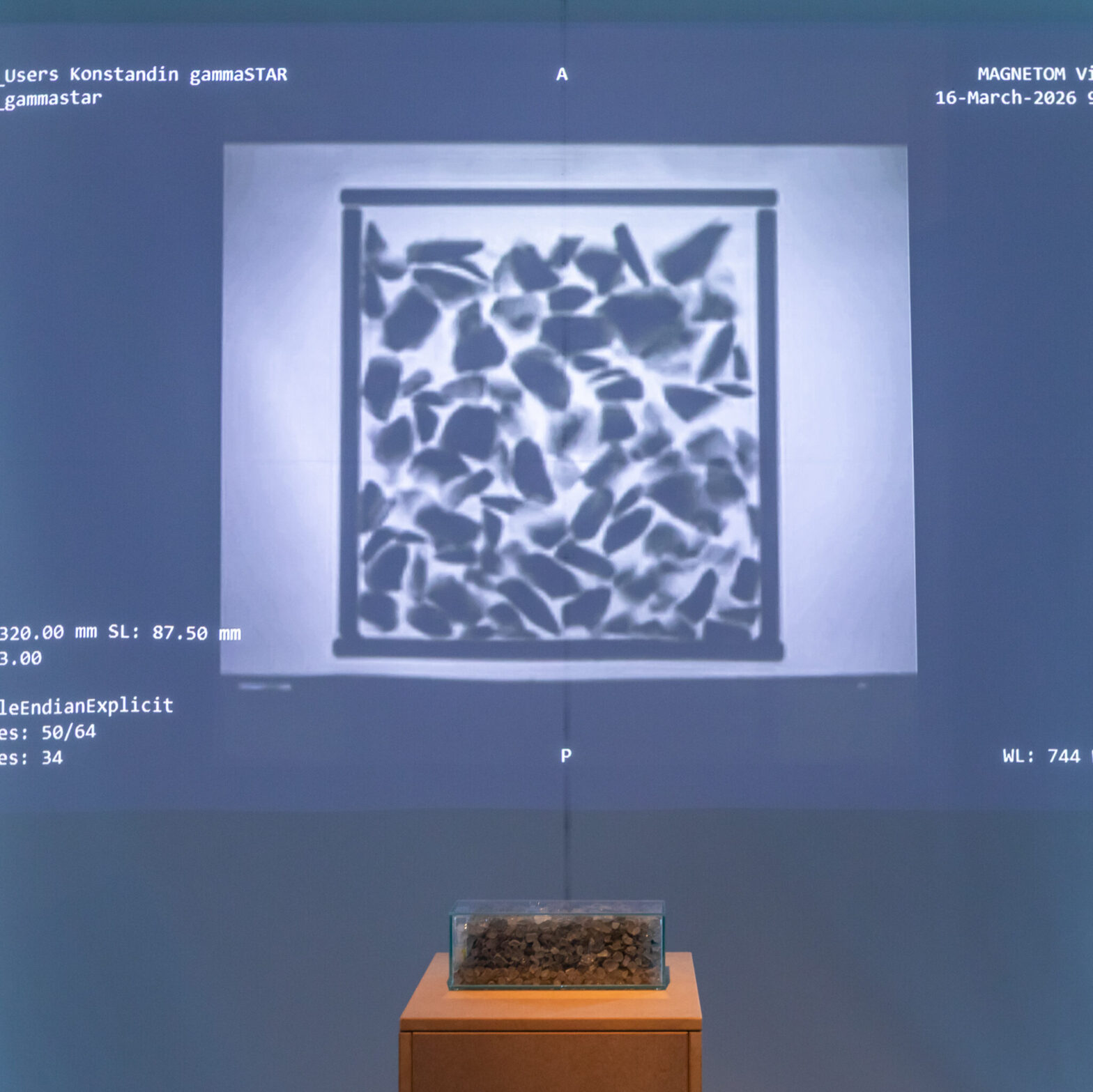
By Edinburgh College of Art PhD student Gregory Alliss, this year’s STEAM Imaging Creator in Residence.
Written by Bianka Hofman
The exhibition Between Glass and Magnetic Fields emerged from the STEAM Imaging VI residency program, developed by Fraunhofer MEVIS. This program set out to create a framework in which the abstract processes of Magnetic Resonance Imaging (MRI) could be encountered differently, not only explained, but explored, shared, and critically reflected upon through artistic practice. Presented in Inspace, as part of the 2026 Edinburgh Science Festival and hosted in collaboration with the Institute for Design Informatics, the project situates itself within a broader effort to connect scientific research with public engagement.
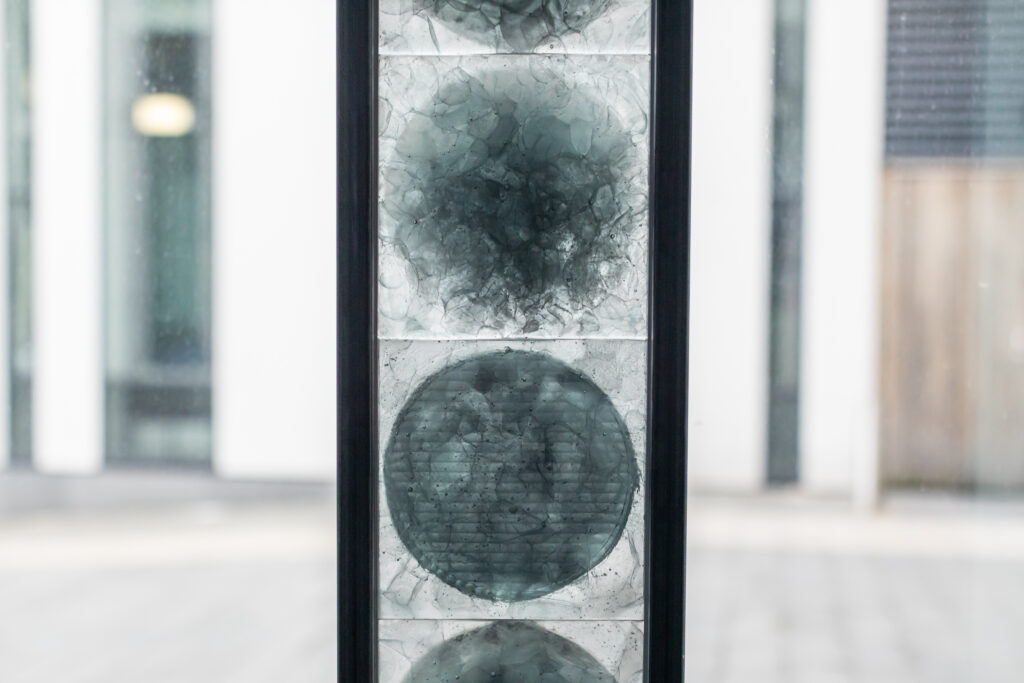
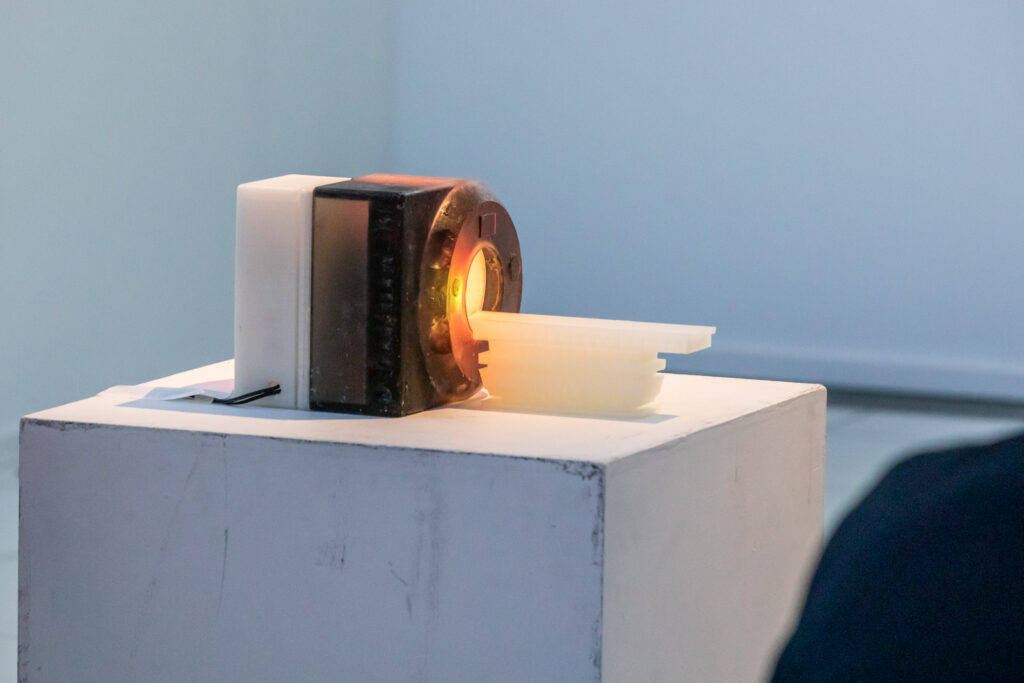
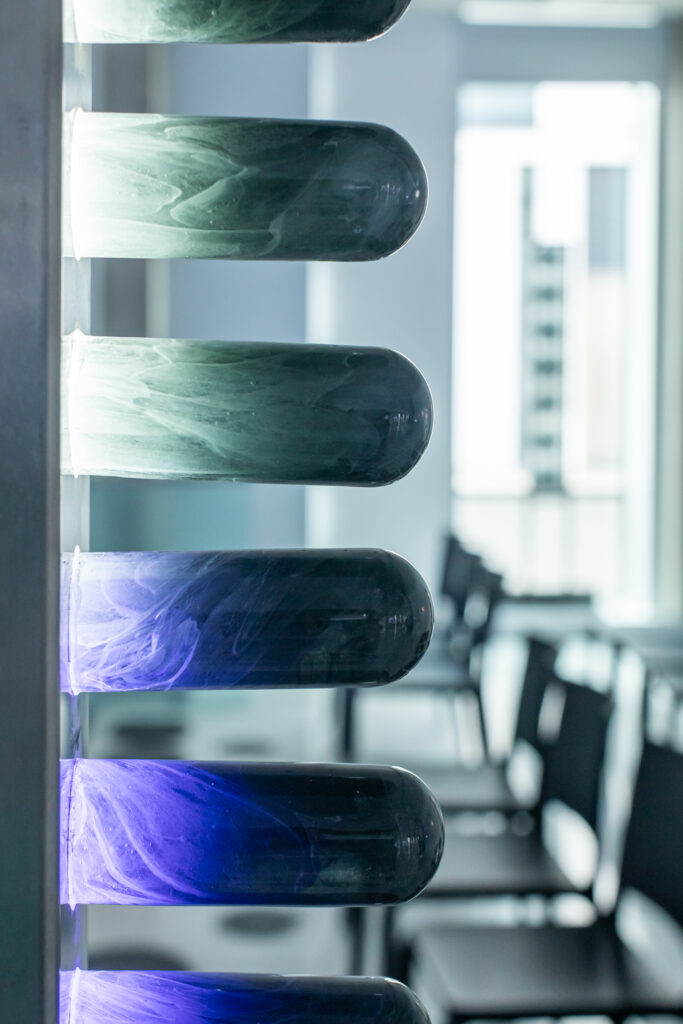
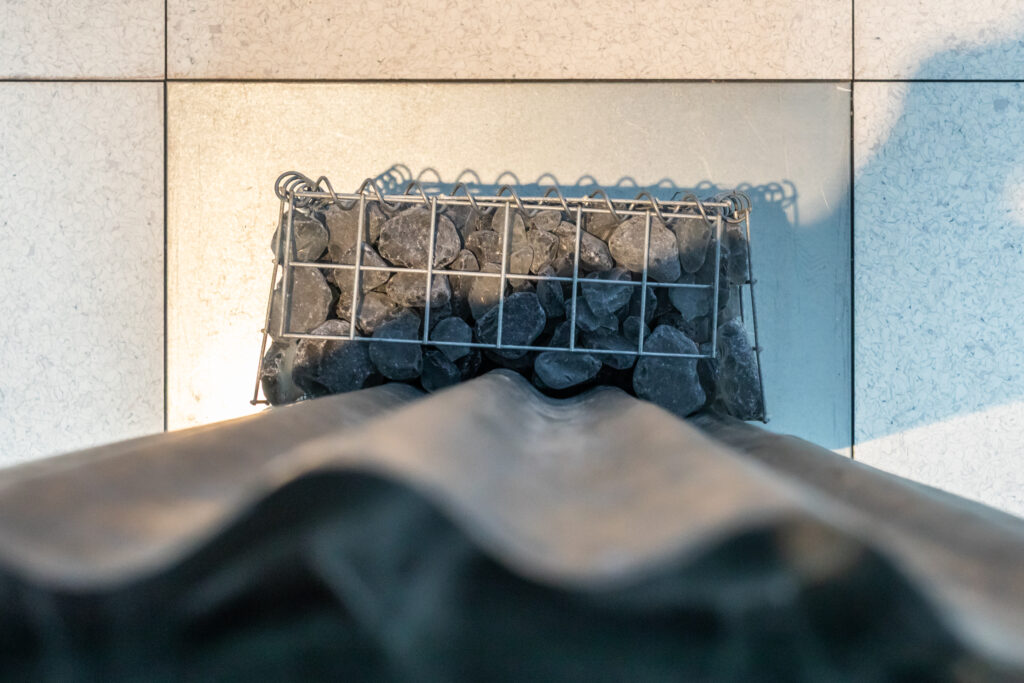
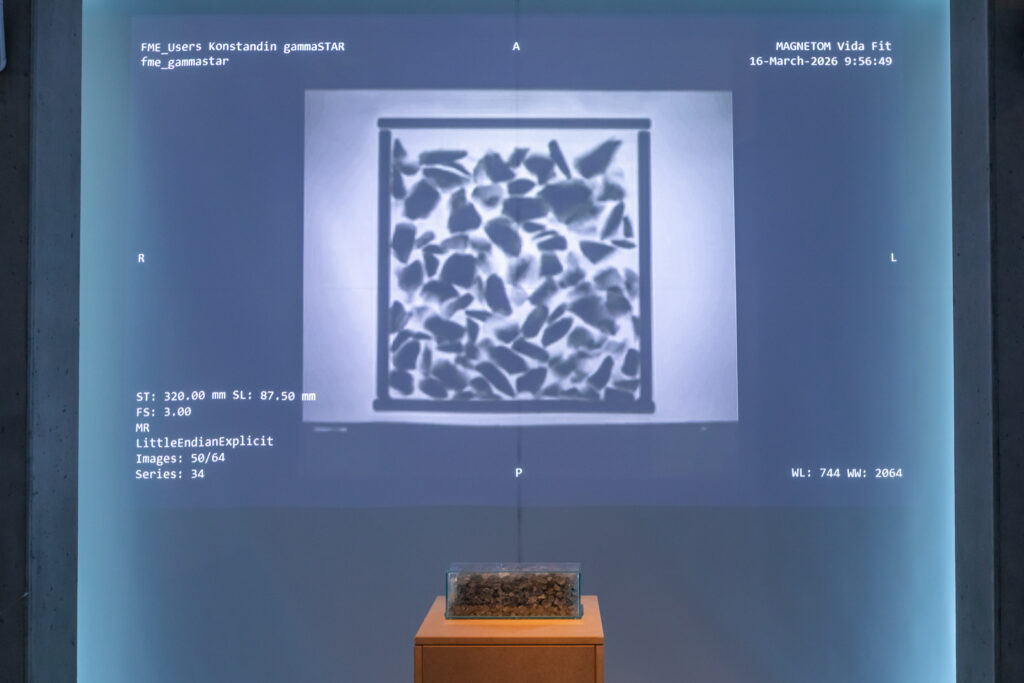
As a radiation-free imaging technique, MRI uses magnetic fields and precisely timed radio-frequency pulses to generate three-dimensional representations of the body’s interior. Its invisible physics provided the conceptual foundation for this collaboration linking scientific research, artistic inquiry, and public engagement. Within this context, Gregory Alliss developed a series of glass works that closely align with the logic of MRI. Through the exhibition presented at Inspace, his sculptures unfold as a conceptual progression, from Resonance to Interference, Lenses, and Precession, tracing a path from the physical principles of magnetic resonance through signal formation and its mathematical structures, including Fourier-based reconstruction, to the atomic-scale processes underlying MRI.
A key turning point in the residency was the realization that even contaminated waste glass cannot be directly imaged using standard clinical MRI systems. Rather than halting the process, this limitation became generative: by submerging glass objects in water and scanning the surrounding medium, Alliss developed the Negatives series. In these works, the MRI captures the signal of water while the glass appears as an absence, dark, sharply defined voids within luminous fields. Complemented by MR scanning data presented as videos across Inspace’s City Screens, the works translate technical representation into a visual and spatial narrative. In doing so, they transform imaging concepts into tactile forms that bridge scientific explanation, material experimentation, and perceptual interpretation.
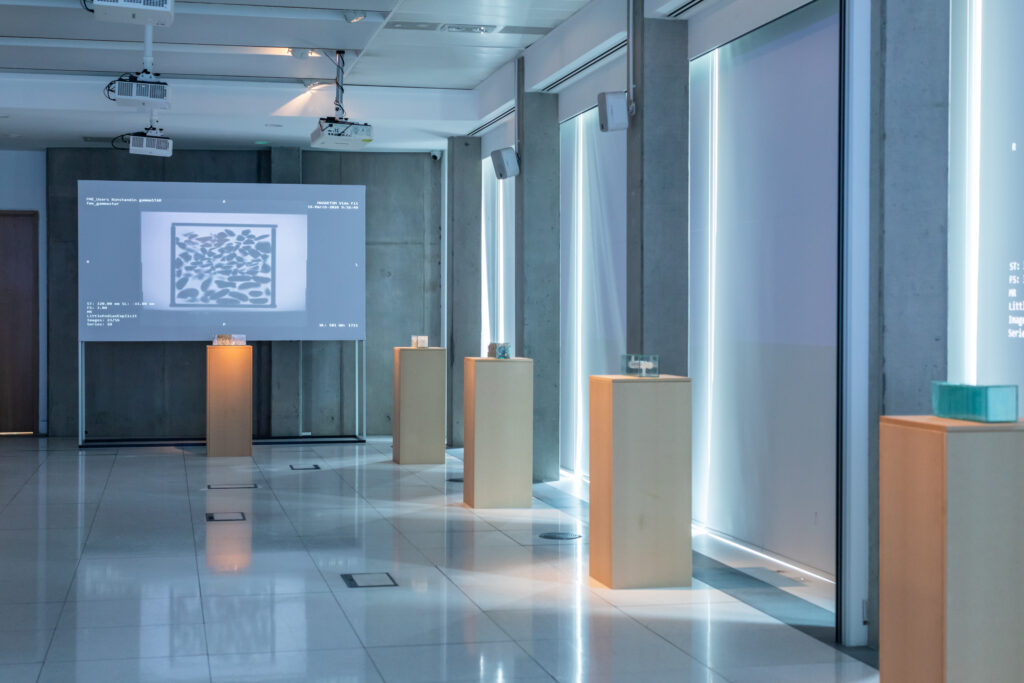
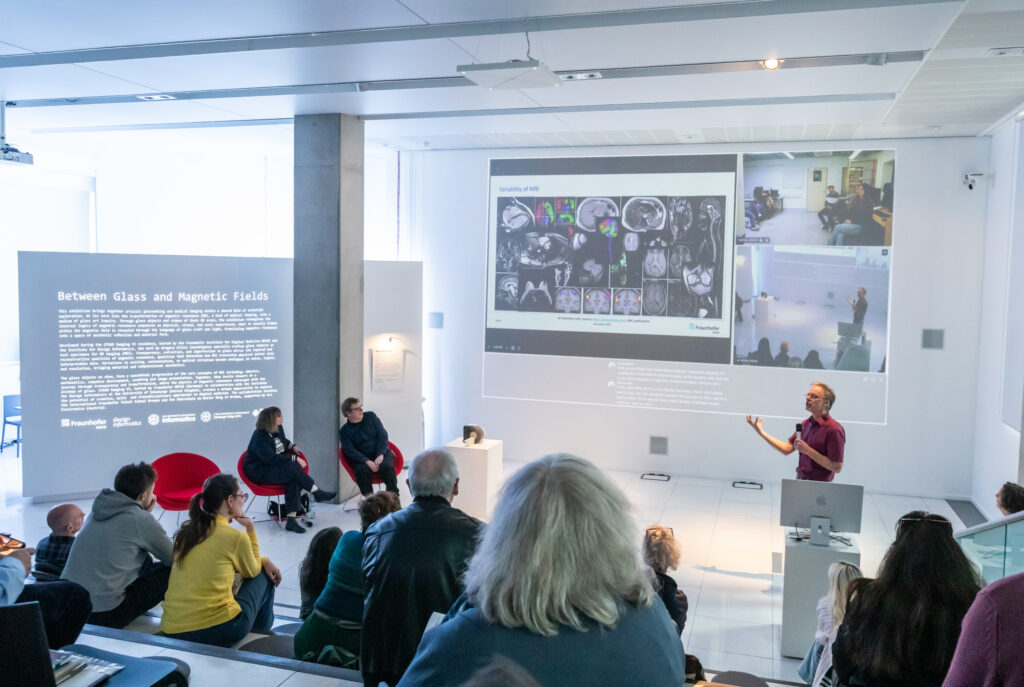
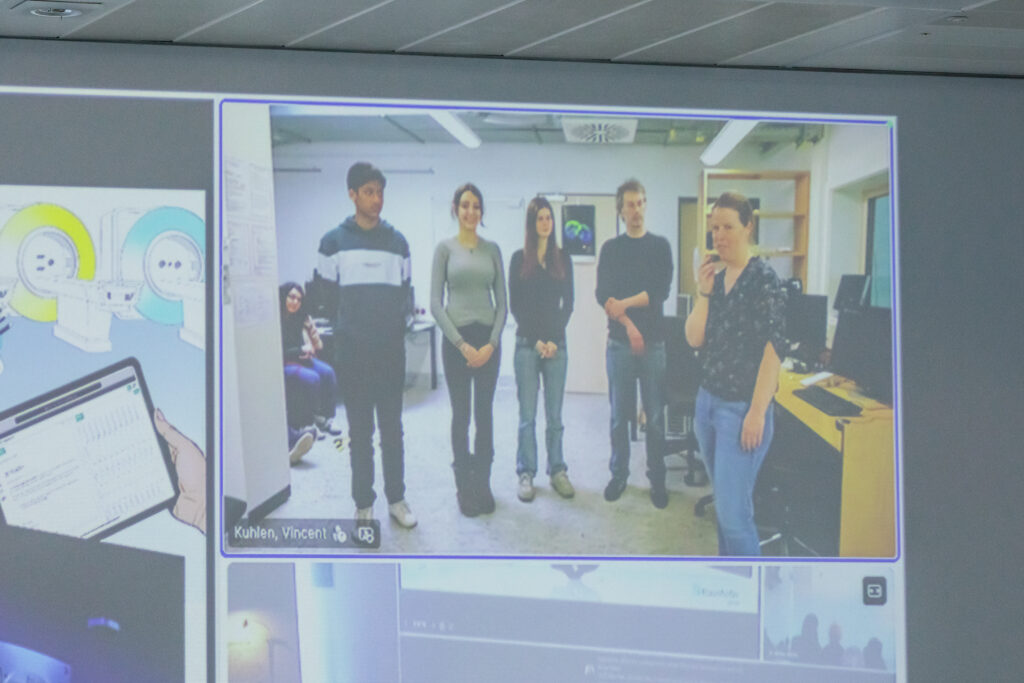
The residency was designed to open specialist tools and research practices to a broader community, bringing together artists, scientists, and school students within a shared framework of learning and exchange. A live scanning session at the opening at Inspace with the artists and MEVIS scientists on site and researchers and school students in the MR Lab in Bremen, allowed the audience to get first hand insights into MRI systems, sequence design, and experimental imaging processes and get into discussion. Gregory Alliss was particularly well suited to this residency and the event. His combined background as an artist and engineer, alongside formal training in physics, enabled a nuanced engagement with both material and concept. His sensitivity to glass as a medium and scientific knowledge allowed art, physics, and perception to intersect in both metaphorical and material terms.
Through both the glass works and their MRI scans, Alliss reveals parallels between transparency, refraction, noise, signal, and resolution. Recycled CRT components embedded in the sculptures, materials rich in metallic contaminants, appear as dense, opaque forms within the imaging process, yet still resist direct signal detection, reinforcing the conceptual tension between visibility and invisibility. The exhibition ultimately demonstrates how scientific processes can be rendered materially and sensorially legible through artistic practice, and how curatorial frameworks can create spaces in which visitors explore resonant connections through design and data, grounded in embodied perception.
This Residency & Science Engagement Program is a partnership between Fraunhofer MEVIS in Bremen, Germany, and the Institute for Design Informatics in Edinburgh to create this unique opportunity to explore the potential for application of creative multi and transdisciplinary approaches in digital medicine. This collaboration involves the International Fraunhofer Talent School Bremen, Oberschule am Waller Ring in Bremen, and is supported by Ars Electronica in Linz, Austria.