DRS P.S!

Join Design Hopes for this panel event and debrief session to unpack (and repack) key Design Research Society 2026 conference themes and questions…

DRS P.S!

Panel Event

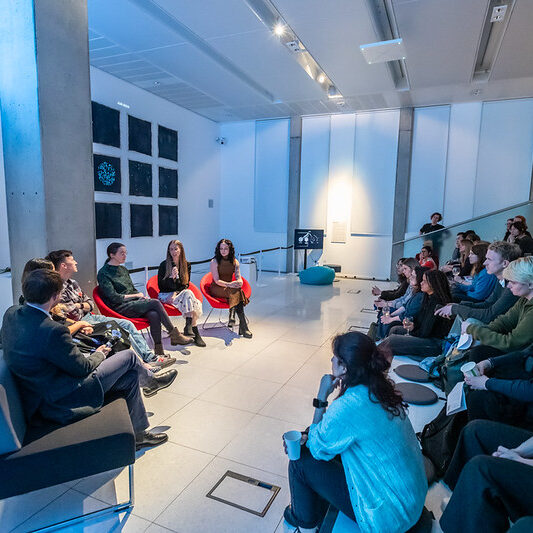
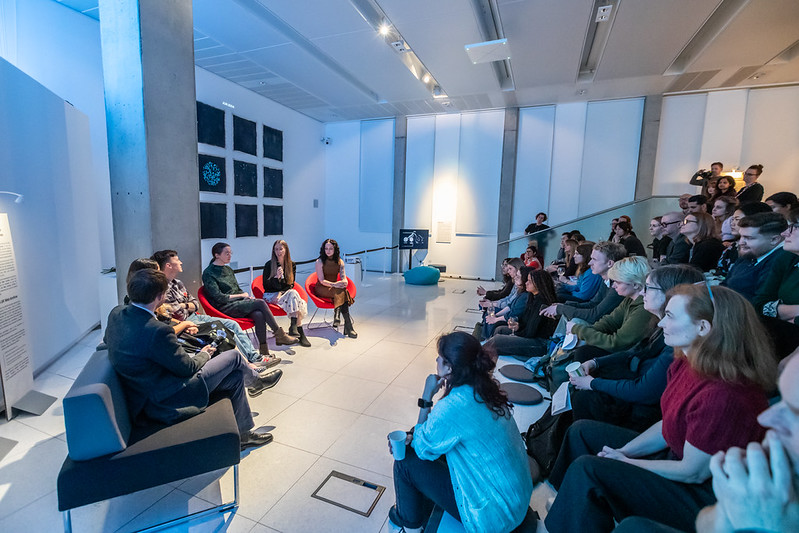
After a week of presentations, workshops, and panels at DRS26, this debrief session will unpack (and repack) key themes and questions…

How do we value (and make best use of) design-led research? In a field noted for its pluralistic approaches, how can we articulate and mobilise the potential and value of this diverse form of practice? What gets lost in translation between design, academia and civic society? In a world that is ‘unthinkable’, how can design-led research help us locate a more hopeful future?

Doors at 10:30am, light refreshments provided, with chances to mingle before and after the event. Part of DRS26 Fringe.

Part 1:

Panel including;

Dr Maria Maclennan, (Edinburgh College of Art)
Dr Silke Hofmann, (Inclusive Clothing Design Practitioner and Researcher)
Dr Iohanna Nicenboim, (IT:U Linz)
Dr Cristina Zaga, (Tu Twente)
Mafalda Gamboa, (Chalmers University of Technology Gothenburg)
Prof Paul Coulton, (Lancaster University)
Prof Dan Lockton, (Norwich University of the Arts)
Prof John Vines, (University of Edinburgh)
Lewis Just, (Andthen)
Helen Milne (Eindhoven University of Technology)
Joanna Boehnert (Bath Spa University)

Hosted by;

Prof Steve Cross
Prof Steve Cross is a research communication consultant and comedian. He used to have real jobs at Wellcome, Nesta and UCL before becoming freelance to support experts of all kinds to communicate their ideas better. Steve works in academia, charities, cultural organisations and corporates to help smart folk to get their knowledge out into the world more effectively. Steve is an Honorary Professor in Practice at UCL, a Wellcome Engagement Fellow, and the founder of Science Showoff, where scientists make jokes about their work on stage. Find Steve every week using academic philosophy to answer kids’ questions on his podcast, Philosophy Playdate or book him at http://drstevecross.com

Part 2:

A facilitated open-mic open forum – bring and share your views on these topics and more!search Society’s 2026 conference Fringe Friday on the 12th June, the Institute for Design Informatics is opening the doors to Inspace for a one-day pop-up showcase of our research exploring the future of design and its implications on society and the world.

The Institute for Design Informatics brings design and data together to create a world that is socially just, where people live well, have agency and autonomy, and are able to adapt and transition how they live to ensure the planet flourishes.

The theme for our pop-up showcase is fab* – fab* speaks to the ways our research seeks to fabricate, fabulate and we’re aiming to make visible the fabric of our work and the connections between us all. There will be over 30 projects on show from our institute’s members – from emergent works-in-progress to situated experiences and polished demos from larger projects.

fab* will be open for drop-ins from 0930 until the end of the day, and there is no need to register. However, we will also be hosting a reception-lunch with food and drink at 1300 – and to help with numbers we’re asking you to register if you would like to attend.

You do not need to be registered for the main DRS 2026 to attend this – it is free and open to all.

See you on the 12th June!

Date: Fri 12 Jun, 2026
Times: 11:00-13:00 (2hrs) | Free/Ticketed 
Location: Inspace, 1 Crichton St, Edinburgh, EH8 9AB
Audience: General public
Venue Access features: Accessible toilets, Assistance dogs welcome, Baby changing facilities, Seating, Step-free access, Wheelchair accessible

This event has limited capacity and so registration is required. If you have any enquiries about the events and venues, please contact event organisers at designinformatics@ed.ac.uk

Please note this event will be recorded and photographed by Design Informatics and Design Hopes – Video and Photographs will be used for future marketing, promotional, reporting and archival purposes. If you would prefer not to be filmed or photographed, please let us know at the event.


Data Protection Statement

How we use and store your data – In providing this information, you are giving explicit consent for us to use your data in our programme and event monitoring, reporting and evaluation processes. The data is managed confidentially. Your data will be collected and held by the Institute for Design Informatics, University of Edinburgh (who operate Inspace), it will also be shared with event partners and organisations for this event. Your data will only be reported or published in anonymous aggregated forms and will always be processed in accordance with the Data Protection Act 2018 and therefore also in accordance with the General Data Protection Regulation (GDPR).
Data retention period – We will hold this information for a maximum period of 5 years from the date of the event, after which it will be disposed of. Please read the University’s privacy and Data Protection notice (https://data-protection.ed.ac.uk/notice) for further information.
Opt out – If you do not wish to share your information, or would like to modify your consent to collection and processing of personal information, please email us at: designinformatics@ed.ac.uk

If you have any enquiries about Inspace programming and the venue, please contact us at designinformatics@ed.ac.uk.

Design Informatics

Website: designinformatics.org

Instagram: designinformatics

Twitter: @DesignInf

Inspace

Website: inspace.ed.ac.uk

Instagram: inspacegallery

Twitter: @InspaceG

fab*: Design Informatics 2026 research showcase reception

Join Design Informatics for a reception to mark this one-day pop-up showcase of our research

Showcase Reception

The Institute for Design Informatics is opening the doors to Inspace for a one-day pop-up showcase of our research

As part of the Design Research Society’s 2026 conference Fringe Friday on the 12th June, the Institute for Design Informatics is opening the doors to Inspace for a one-day pop-up showcase of our research exploring the future of design and its implications on society and the world.

The Institute for Design Informatics brings design and data together to create a world that is socially just, where people live well, have agency and autonomy, and are able to adapt and transition how they live to ensure the planet flourishes.

The theme for our pop-up showcase is fab* – fab* speaks to the ways our research seeks to fabricate, fabulate and we’re aiming to make visible the fabric of our work and the connections between us all. There will be over 30 projects on show from our institute’s members – from emergent works-in-progress to situated experiences and polished demos from larger projects.

fab* will be open for drop-ins from 0930 until the end of the day, and there is no need to register. However, we will also be hosting a reception-lunch with food and drink at 1300 – and to help with numbers we’re asking you to register if you would like to attend.

You do not need to be registered for the main DRS 2026 to attend this – it is free and open to all.

See you on the 12th June!

Date: Fri 12 Jun, 2026
Times: 13:00-15:00 (2hrs) | Free/Ticketed 
Location: Inspace, 1 Crichton St, Edinburgh, EH8 9AB
Audience: General public
Venue Access features: Accessible toilets, Assistance dogs welcome, Baby changing facilities, Seating, Step-free access, Wheelchair accessible

This event has limited capacity and so registration is required. If you have any enquiries about the events and venues, please contact event organisers at designinformatics@ed.ac.uk

Please note this event will be recorded and photographed by Design Informatics – Video and Photographs will be used for future marketing, promotional, reporting and archival purposes. If you would prefer not to be filmed or photographed, please let us know at the event.


Data Protection Statement

How we use and store your data – In providing this information, you are giving explicit consent for us to use your data in our programme and event monitoring, reporting and evaluation processes. The data is managed confidentially. Your data will be collected and held by the Institute for Design Informatics, University of Edinburgh (who operate Inspace), it will also be shared with event partners and organisations for this event. Your data will only be reported or published in anonymous aggregated forms and will always be processed in accordance with the Data Protection Act 2018 and therefore also in accordance with the General Data Protection Regulation (GDPR).
Data retention period – We will hold this information for a maximum period of 5 years from the date of the event, after which it will be disposed of. Please read the University’s privacy and Data Protection notice (https://data-protection.ed.ac.uk/notice) for further information.
Opt out – If you do not wish to share your information, or would like to modify your consent to collection and processing of personal information, please email us at: designinformatics@ed.ac.uk

If you have any enquiries about Inspace programming and the venue, please contact us at designinformatics@ed.ac.uk.

Design Informatics

Website: designinformatics.org

Instagram: designinformatics

Twitter: @DesignInf

Inspace

Website: inspace.ed.ac.uk

Instagram: inspacegallery

Twitter: @InspaceG

Design Informatics 2026 research showcase: fab*

The Institute for Design Informatics is opening the doors to Inspace for a one-day pop-up showcase of our research.

This year the University of Edinburgh is hosting one the largest design research conferences in the world – DRS – with 1000+ delegates on campus for a high programme of talks, workshops, and research experiences.

As part of the DRS 2026 Fringe Friday on the 12th June, the Institute for Design Informatics is opening its doors for a one-day pop-up showcase of our research exploring the future of design, data and its implications on society and the world.

The Institute for Design Informatics brings design and data together to create a world that is socially just, where people live well, have agency and autonomy, and are able to adapt and transition how they live to ensure the planet flourishes.

The theme for our pop-up showcase is fab* – fab* speaks to the ways our research seeks to fabricate (we make things), fabulate (we use design to speculate and tell stories with communities) and we’re aiming to make visible the fabric of our work and the connections between us all. There will be over 30 projects on show from our institute’s members; from emergent works-in-progress to situated experiences and polished demos from larger projects.

fab* will be open from 0930 until the end of the day and there is no need to register if you intend to just drop in. However, we will also be hosting a reception-lunch with food and drink at 1300 and to help with planning we’re asking you to register below if you would like to attend this:

SHOWCASE DETAILS

Dates: Friday, 12 June, 2026
Times: 9:30 – 17:00 | Drop-in
Location:  Inspace, 1 Crichton St, Edinburgh, EH8 9AB
Venue Access features: Accessible toilets, Assistance dogs welcome, Baby changing facilities, Seating, Step-free access, Wheelchair accessible

We will be hosting a reception with food and drinks at 13:00, please register below if you would like to attend this:

You do not need to be registered for the main DRS 2026 to attend this – it is a free event and open to all. Families, friends and children welcome (we will have a corner for the kids!).

Alongside the showcase and public reception, we will be hosting another DRS Fringe Friday event at 11:00 in Inspace – DRS P.S. Organised by the folks behind Design HOPES and Design Research Works, this poses to be a fun and interactive discussion, where design researchers will be getting provoked and poked by a comedian on their thoughts on the value and real-world significance of design research. 

DRS P.S. will also be a public event – which you can sign-up for here:

Right to Roam: Exhibition Preview

Come celebrate the launch of Right to Roam immersive exhibition.

Right to Roam

Exhibition Preview

Join us for the preview and launch of Right to Roam, to celebrate and explore this immersive exhibition featuring multi-sensory installation, moving image and print, inviting you to reflect on the climate crisis and the fundamental freedom to move through the lens of the river Forth.

Date: Thurs 7 May, 2026
Times: 18:00-20:00 (2hrs) | Free/Ticketed 
Location: Inspace, 1 Crichton St, Edinburgh, EH8 9AB
Audience: General public
Venue Access features: Accessible toilets, Assistance dogs welcome, Baby changing facilities, Seating, Step-free access, Wheelchair accessible

This event has limited capacity and so registration is required. If you have any enquiries about the events and venues, please contact event organisers at designinformatics@ed.ac.uk

Please note this event will be recorded and photographed by Design Informatics and Studio Sumlacs – Video and Photographs will be used for future marketing, promotional, reporting and archival purposes. If you would prefer not to be filmed or photographed, please let us know at the event.

Artist

Sarah Calmus, Right to Roam project lead,  is an interdisciplinary artist, programmer, and creator of large-scale immersive installations and provocations, working across a multitude of mediums such as light, sound and print. Accessible, multisensory, sustainably produced experiences are central within Calmus’s practice, where works often draw focus on environmental concerns that build equity for participators and critique and explore ecosystems of varying scales. Interested in building spaces to connect and reflect, her practice is intentionally interdisciplinary and participatory, viewed as a series of experiments underpinned with explorations into interaction.


Data Protection Statement

How we use and store your data – In providing this information, you are giving explicit consent for us to use your data in our programme and event monitoring, reporting and evaluation processes. The data is managed confidentially. Your data will be collected and held by the Institute for Design Informatics, University of Edinburgh (who operate Inspace), it will also be shared with event partners and organisations for this event/talk (e.g. Studio Sumlacs). Your data will only be reported or published in anonymous aggregated forms and will always be processed in accordance with the Data Protection Act 2018 and therefore also in accordance with the General Data Protection Regulation (GDPR).
Data retention period – We will hold this information for a maximum period of 5 years from the date of the event, after which it will be disposed of. Please read the University’s privacy and Data Protection notice (https://data-protection.ed.ac.uk/notice) for further information.
Opt out – If you do not wish to share your information, or would like to modify your consent to collection and processing of personal information, please email us at: designinformatics@ed.ac.uk

If you have any enquiries about Inspace programming and the venue, please contact us at designinformatics@ed.ac.uk.

Supported by

Design Informatics

Website: designinformatics.org

Instagram: designinformatics

Twitter: @DesignInf

Inspace

Website: inspace.ed.ac.uk

Instagram: inspacegallery

Twitter: @InspaceG

Accessibility statement for inspace.ed.ac.uk (Inspace)

This website is run by the School of Informatics. We want as many people as possible to be able to use this website. For example, that means you should be able to:

  • zoom in up to 500% without the text spilling off the screen
  • navigate most of the website using just a keyboard
  • listen to most of the website using a screen reader (including the most recent versions of JAWS, NVDA and VoiceOver)

We’ve also made the website text as simple as possible to understand.

AbilityNet has advice on making your device easier to use if you have a disability. The University also provides advice on how to alter your browser to improve the accessibility of web pages.

How accessible this website is

We know that some parts of this website are not fully accessible:

  • The contrast of some text could be improved.
  • Alt text is missing from some images.
  • Keyboard navigation may not always work.
  • Some text may not be entirely readable.

Feedback and contact information

If you need information on this website in a different format, please contact us using our contact page or call us on 0131 650 4503. We’ll consider your request and get back to you as soon as we can.

Reporting accessibility problems with this website

We’re always looking to improve the accessibility of this service. If you find any problems not listed on this page, or think we’re not meeting accessibility requirements, please contact us using the details on our contact page or call us on 0131 650 4503.

Enforcement procedure

The Equality and Human Rights Commission (EHRC) is responsible for enforcing the Public Sector Bodies (Websites and Mobile Applications) (No. 2) Accessibility Regulations 2018 (the ‘accessibility regulations’). If you’re not happy with how we respond to your complaint, contact the Equality Advisory and Support Service (EASS).

See also Reporting an accessibility problem on a public sector website.

Contacting us by phone or visiting us in person

The Informatics Forum is on the AccessAble accessibility guide. Search for “Informatics”.

The building is fully wheelchair accessible, and the front reception desk has a induction loop.

Find out how to contact us at computing.help.inf.ed.ac.uk/help-desk.

Technical information about this website’s accessibility

The University of Edinburgh is committed to making its website accessible, in accordance with the Public Sector Bodies (Websites and Mobile Applications) (No. 2) Accessibility Regulations 2018.

Compliance status

This website is partially compliant with the Web Content Accessibility Guidelines version 2.1 AA standard, due to the non-compliances listed below.

Non-accessible content

The following items do not comply with the WCAG 2.1 AA success criteria:

  • Some elements don’t have labels.
  • Some heading text does not have a very good contrast ratio. This should be 1.4.3 Contrast (Minimum).
  • Some images do not have alternative text.

We aim to improve our websites accessibility on a regular and continuous basis. See the section below (‘What we’re doing to improve accessibility’) on how we are improving our site accessibility.

Disproportionate burden

We are not currently claiming that any accessibility problems would be a disproportionate burden to fix.

Content that’s not within the scope of the accessibility regulations

PDFs and other documents

Our older PDFs and Word documents may not meet accessibility standards – for example, they may not be structured so they’re accessible to a screen reader. This does not meet WCAG 2.1 success criterion 4.1.2 (name, role value).

The accessibility regulations do not require us to fix PDFs or other documents published before 23 September 2018 if they are not essential to providing our services. For example, we do not plan to fix archive material such as news articles published before 2018.

Regulations for PDFs or other documents published before 23 September 2018

What we are doing to improve accessibility

  • We regularly review the content on our site, and fix and improve any issues discovered.
  • We respond and investigate any accessibility issues brought to our attention.
  • Remove old content that is no longer required.

Preparation of this accessibility statement

This statement was prepared on 25/05/2026. It was last reviewed on 25/05/2026.

This website was last tested on 25/05/2026. The test was carried out by our own computing staff, using a mixture of automated (Lighthouse and Webaim WAVE) and manual testing on the front page and a random sample of other pages.

Here is the Webaim WAVE report.

Change log

Osmosis – Right to Roam Performance & Exhibition Late

Join Sarah Calmus and guests for Osmosis, a unique evening performance, to experience alongside her ongoing exhibition Right to Roam.

Right to Roam

Osmosis – Right to Roam Performance & Exhibition Late

Featuring performers Neena Dhillon, Sky Su, Thomas Götz, and Sarah Calmus, Osmosis is the debut choreographic physical performance from Sarah Calmus, where exploration of systems of movement, human and more-than-human, are in dialogue with each other. Embedded in the Right to Roam installation, film, sound and movement merge toward the voice of water, to which we are drawn.

Date: Thurs 21 May, 2026
Times: 18:00-20:00
Location: Inspace, 1 Crichton St, Edinburgh EH8 9AB
Audience: General public
Venue Access features: Accessible toilets, Assistance dogs welcome, Baby changing facilities, Seating, Step-free access, Wheelchair accessible

This event has limited capacity and so registration is required. If you have any enquiries about this event and venue, please contact event organisers at designinformatics@ed.ac.uk

Please note this event will be photographed by Design Informatics and Studio Sumlacs – Photographs will be used for future marketing, promotional, reporting and archival purposes. If you would prefer not to be photographed, please let us know at the event.

Artist

Sarah Calmus, Right to Roam project lead,  is an interdisciplinary artist, programmer, and creator of large-scale immersive installations and provocations, working across a multitude of mediums such as light, sound and print. Accessible, multisensory, sustainably produced experiences are central within Calmus’s practice, where works often draw focus on environmental concerns that build equity for participators and critique and explore ecosystems of varying scales. Interested in building spaces to connect and reflect, her practice is intentionally interdisciplinary and participatory, viewed as a series of experiments underpinned with explorations into interaction.


Data Protection Statement

How we use and store your data – In providing this information, you are giving explicit consent for us to use your data in our programme and event monitoring, reporting and evaluation processes. The data is managed confidentially. Your data will be collected and held by the Institute for Design Informatics, University of Edinburgh (who operate Inspace), it will also be shared with event partners and organisations for this event/talk (e.g. Studio Sumlacs). Your data will only be reported or published in anonymous aggregated forms and will always be processed in accordance with the Data Protection Act 2018 and therefore also in accordance with the General Data Protection Regulation (GDPR).
Data retention period – We will hold this information for a maximum period of 5 years from the date of the event, after which it will be disposed of. Please read the University’s privacy and Data Protection notice (https://data-protection.ed.ac.uk/notice) for further information.
Opt out – If you do not wish to share your information, or would like to modify your consent to collection and processing of personal information, please email us at: designinformatics@ed.ac.uk

If you have any enquiries about Inspace programming and the venue, please contact us at designinformatics@ed.ac.uk.

Supported by

Design Informatics

Website: designinformatics.org

Instagram: designinformatics

Twitter: @DesignInf

Inspace

Website: inspace.ed.ac.uk

Instagram: inspacegallery

Twitter: @InspaceG

Designing Global Data Interactions: Combining data, research, theory and practice

We were delighted again this year to kick off the Inspace 2026 Edinburgh Science Festival featuring the outputs of rapid prototyping projects, by students, in the lead up to the festival. Read more about the projects below.

By Theodore Koterwas, Design Informatics Lecturer

Our Design Informatics Master students were joined by students from across the University to create this year’s exhibition “Designing Global Data Interactions” to launch this year’s Edinburgh Science Festival programme at Inspace. The 17 creative works explored relationships between diverse sets of data, connecting local and global at multiple physical scales. Culminating weeks of theoretical and practical investigation each project challenged students to examine the interdependence of ecological systems, technology and the body, and to translate these into provocative and informative experiences for the public. The projects on display emerged from two different modules, Fashion Informatics and Design Ecologies, part of the Design with Data course, taught by Lynne Craig, Larissa Pschetz, Theodore Koterwas, ​ Asad Khan and Jiarong Yu.

The work required students to solve physical and spatial problems in an aesthetically sensitive and critically informed way, employing clarity in presentation and interaction design to support rich engagement. Computer vision met human gestures and human bodies met algorithms as visitors stretched and contorted to prove they were human, test social boundaries, and calculate the environmental cost of being polite to machines. Physical efforts were quantised into calories and converted to carbon while the chaotic swing of a pendulum mapped microbial interactions beneath the soil. The impact of urban noise on robins was scrawled by wing-like robotic arms to produce human-sized circular drawings of ominous beauty. Lichens sonically sprang to life when sprayed with water while the polyrhythms of algae and seabird interaction played out on a mechanical musical instrument. 

While this multitude of sensory stimuli might have overwhelmed the message, the elegance with which the students fit their installations to the fabric of Inspace ensured the only distractions were intentional. Video of a conversational companion faded as your gaze was attracted by social media feeds. The multicolour glow of a cloud-like umbrella drew attention to the psychological impact of light and weather in northern latitudes. In some cases the data was hidden, requiring active physical investigation like shining a UV torch to explore the lifecycle of salmon spawned in the River Tay. In another the invisible was made spectacular as you blew across a pipe to see pollen data disperse and reform over a large map of Edinburgh at your feet. “Feeding” seeds into a vitrine triggered a holographic demonstration of eutrophication and peering into a sculpture evoking the cross section of a tree revealed the interactions of beetle and parasitic bees within a forest ecosystem. 

The exhibition once again highlighted how data, research, theory and practice combine to resonate poetically and impactfully. 

Exhibition Video

Right to Roam: Guided Lunchtime Tour

Join the Artist, Sarah Calmus, for a Guided Lunchtime Tour of Right to Roam immersive installation.

Right to Roam

Guided Lunchtime Tour

Join the Artist, Sarah Calmus, for a Guided Lunchtime Tour of Right to Roam immersive installation. This is a one off chance to explore the installation and hear directly from Calmus about the inspiration and process behind the installation on show. Don’t miss this opportunity to pop along to experience the sensory and immersive displays and hear more about the themes and topics it invites you to explore.

Date: Thurs 14 May, 2026
Times: 13:00-14:00 (1hr) | Free/Ticketed 
Location: Inspace, 1 Crichton St, Edinburgh, EH8 9AB
Audience: General public
Venue Access features: Accessible toilets, Assistance dogs welcome, Baby changing facilities, Seating, Step-free access, Wheelchair accessible

This event has limited capacity and so registration is preferred. Drop-ins are welcome, but participants with tickets are guaranteed entry. If you have any enquiries about the events and venues, please contact event organisers at designinformatics@ed.ac.uk

Please note this event will be photographed by Design Informatics and Studio Sumlacs – Photographs will be used for future marketing, promotional, reporting and archival purposes. If you would prefer not to be photographed, please let us know at the event.

Artist

Sarah Calmus, Right to Roam project lead,  is an interdisciplinary artist, programmer, and creator of large-scale immersive installations and provocations, working across a multitude of mediums such as light, sound and print. Accessible, multisensory, sustainably produced experiences are central within Calmus’s practice, where works often draw focus on environmental concerns that build equity for participators and critique and explore ecosystems of varying scales. Interested in building spaces to connect and reflect, her practice is intentionally interdisciplinary and participatory, viewed as a series of experiments underpinned with explorations into interaction.


Data Protection Statement

How we use and store your data – In providing this information, you are giving explicit consent for us to use your data in our programme and event monitoring, reporting and evaluation processes. The data is managed confidentially. Your data will be collected and held by the Institute for Design Informatics, University of Edinburgh (who operate Inspace), it will also be shared with event partners and organisations for this event/talk (e.g. Studio Sumlacs). Your data will only be reported or published in anonymous aggregated forms and will always be processed in accordance with the Data Protection Act 2018 and therefore also in accordance with the General Data Protection Regulation (GDPR).
Data retention period – We will hold this information for a maximum period of 5 years from the date of the event, after which it will be disposed of. Please read the University’s privacy and Data Protection notice (https://data-protection.ed.ac.uk/notice) for further information.
Opt out – If you do not wish to share your information, or would like to modify your consent to collection and processing of personal information, please email us at: designinformatics@ed.ac.uk

If you have any enquiries about Inspace programming and the venue, please contact us at designinformatics@ed.ac.uk.

Supported by

Design Informatics

Website: designinformatics.org

Instagram: designinformatics

Twitter: @DesignInf

Inspace

Website: inspace.ed.ac.uk

Instagram: inspacegallery

Twitter: @InspaceG

Between Glass and Magnetic Fields: A conceptual journey of MRI through glass

By Edinburgh College of Art PhD student Gregory Alliss, this year’s STEAM Imaging Creator in Residence.

Written by Bianka Hoffman

The exhibition Between Glass and Magnetic Fields emerged from the STEAM Imaging VI residency program, developed by Fraunhofer MEVIS. This program set out to create a framework in which the abstract processes of Magnetic Resonance Imaging (MRI) could be encountered differently, not only explained, but explored, shared, and critically reflected upon through artistic practice. Presented in Inspace, as part of the 2026 Edinburgh Science Festival and hosted in collaboration with the Institute for Design Informatics, the project situates itself within a broader effort to connect scientific research with public engagement.

As a radiation-free imaging technique, MRI uses magnetic fields and precisely timed radio-frequency pulses to generate three-dimensional representations of the body’s interior. Its invisible physics provided the conceptual foundation for this collaboration linking scientific research, artistic inquiry, and public engagement. Within this context, Gregory Alliss developed a series of glass works that closely align with the logic of MRI. Through the exhibition presented at Inspace, his sculptures unfold as a conceptual progression, from Resonance to Interference, Lenses, and Precession, tracing a path from the physical principles of magnetic resonance through signal formation and its mathematical structures, including Fourier-based reconstruction, to the atomic-scale processes underlying MRI.

A key turning point in the residency was the realization that even contaminated waste glass cannot be directly imaged using standard clinical MRI systems. Rather than halting the process, this limitation became generative: by submerging glass objects in water and scanning the surrounding medium, Alliss developed the Negatives series. In these works, the MRI captures the signal of water while the glass appears as an absence, dark, sharply defined voids within luminous fields. Complemented by MR scanning data presented as videos across Inspace’s City Screens, the works translate technical representation into a visual and spatial narrative. In doing so, they transform imaging concepts into tactile forms that bridge scientific explanation, material experimentation, and perceptual interpretation.

The residency was designed to open specialist tools and research practices to a broader community, bringing together artists, scientists, and school students within a shared framework of learning and exchange. A live scanning session at the opening at Inspace with the artists and MEVIS scientists on site and researchers and school students in the MR Lab in Bremen, allowed the audience to get first hand insights into MRI systems, sequence design, and experimental imaging processes and get into discussion. Gregory Alliss was particularly well suited to this residency and the event. His combined background as an artist and engineer, alongside formal training in physics, enabled a nuanced engagement with both material and concept. His sensitivity to glass as a medium and scientific knowledge allowed art, physics, and perception to intersect in both metaphorical and material terms.

Through both the glass works and their MRI scans, Alliss reveals parallels between transparency, refraction, noise, signal, and resolution. Recycled CRT components embedded in the sculptures, materials rich in metallic contaminants, appear as dense, opaque forms within the imaging process, yet still resist direct signal detection, reinforcing the conceptual tension between visibility and invisibility. The exhibition ultimately demonstrates how scientific processes can be rendered materially and sensorially legible through artistic practice, and how curatorial frameworks can create spaces in which visitors explore resonant connections through design and data, grounded in embodied perception.

This Residency & Science Engagement Program is a partnership between Fraunhofer MEVIS in Bremen, Germany, and the Institute for Design Informatics in Edinburgh to create this unique opportunity to explore the potential for application of creative multi and transdisciplinary approaches in digital medicine. This collaboration involves the International Fraunhofer Talent School Bremen, Oberschule am Waller Ring in Bremen, and is supported by Ars Electronica in Linz, Austria.

Right to Roam: Immersive Installation

An expansive enquiry into freedom of movement through the lens of the river Forth using multi-sensory installation, moving image and print.

Right to Roam

An exploration of natural methods of connection, communication and movement

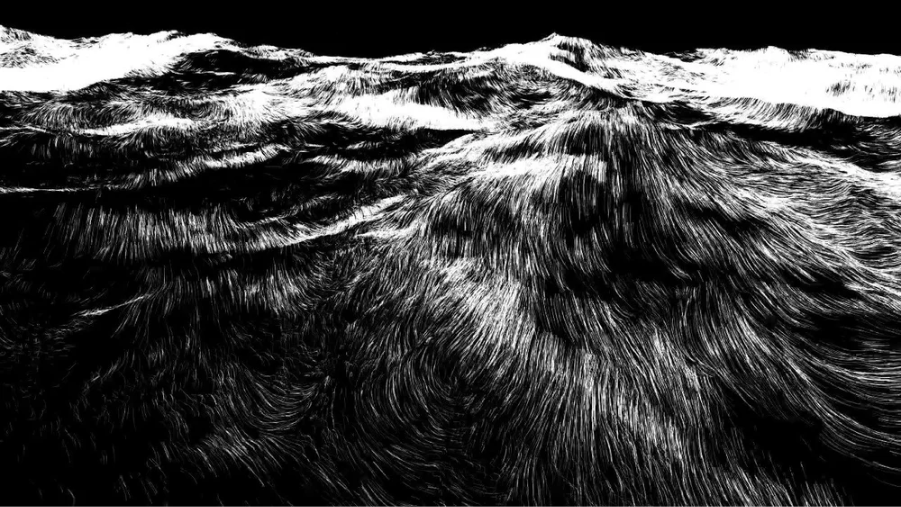
Right to Roam is an expansive inquiry into freedom of movement through the exploration of water by artist Sarah Calmus. Centered on the Firth of Forth, Scotland’s major estuary where the River Forth meets the North Sea, the project explores water not merely as a resource, but as a living body with its own voice. Following a seven screen projected moving image piece, Uisge, featured on Inspace City Screens this February, and we are delighted to announce that the Right to Roam extended immersive installation will launch in Inspace this May.

Reflecting on the climate crisis and the fundamental freedom to move, Calmus explores the intersection of movement, data and technology by utilising environmental data and sensor-reactive technology to interrupt and reshape foraged moving imagery and audio field recordings gathered directly from the Forth. Sat alongside soft, tactile, interactive sculptural works, the environment will present a reflective atmosphere, giving space for the Forth to speak. Utilising a combination of accessible multisensory elements, the installation touches on human and non-human ecosystems, inviting you to connect and find commonality through conversations of movement, migration and gathering through the lens of water.

This is part of an ongoing body of work by Calmus, asking us to consider incremental effect with regards to environmental concerns, locally and globally.

Exhibition details

Dates: Wed-Sun, 8-24 May, 2026
Times: 10:00 – 17:00 Daily | Drop-in [Closed Mon/Tues]
Location:  Inspace, 1 Crichton St, Edinburgh, EH8 9AB
Venue Access features: Accessible toilets, Assistance dogs welcome, Baby changing facilities, Seating, Step-free access, Wheelchair accessible

If you have any enquiries about Inspace programming and the venue, please contact us at designinformatics@ed.ac.uk.

Event Programme

Exhibition Preview

Date: Thurs 7 May, 2026
Times: 18:00 – 20:00
Location: Inspace, 1 Crichton St, Edinburgh EH8 9AB
Audience: General public

Join us for the preview and launch of Right to Roam, to celebrate and explore this immersive exhibition featuring multi-sensory installation, moving image and print inviting you to reflect on the climate crisis and the fundamental freedom to move through the lens of the river Forth.

Guided Lunchtime Tour

Date: Thurs 14 May, 2026
Times: 13:00 – 14:00
Location: Inspace, 1 Crichton St, Edinburgh EH8 9AB
Audience: General public

Join the Artist, Sarah Calmus, for a Guided Lunchtime Tour of Right to Roam immersive installation. This is a one off chance to explore the installation and hear directly from Calmus about the inspiration and process behind the installation on show. Don’t miss this opportunity to pop along to experience the sensory and immersive displays and hear more about the themes and topics it invites you to explore.

About the Artist

Sarah Calmus, Right to Roam project lead,  is an interdisciplinary artist, programmer, and creator of large-scale immersive installations and provocations, working across a multitude of mediums such as light, sound and print. Accessible, multisensory, sustainably produced experiences are central within Calmus’s practice, where works often draw focus on environmental concerns that build equity for participators and critique and explore ecosystems of varying scales. Interested in building spaces to connect and reflect, her practice is intentionally interdisciplinary and participatory, viewed as a series of experiments underpinned with explorations into interaction.

Right to Roam is a project by led by Sarah Calmus, funded by Creative Scotland and supported by Inspace and the Institute for Design Informatics.

Supported by

Design Informatics

Website: designinformatics.org

Instagram: designinformatics

Twitter: @DesignInf

Inspace

Website: inspace.ed.ac.uk

Instagram: inspacegallery

Twitter: @InspaceG