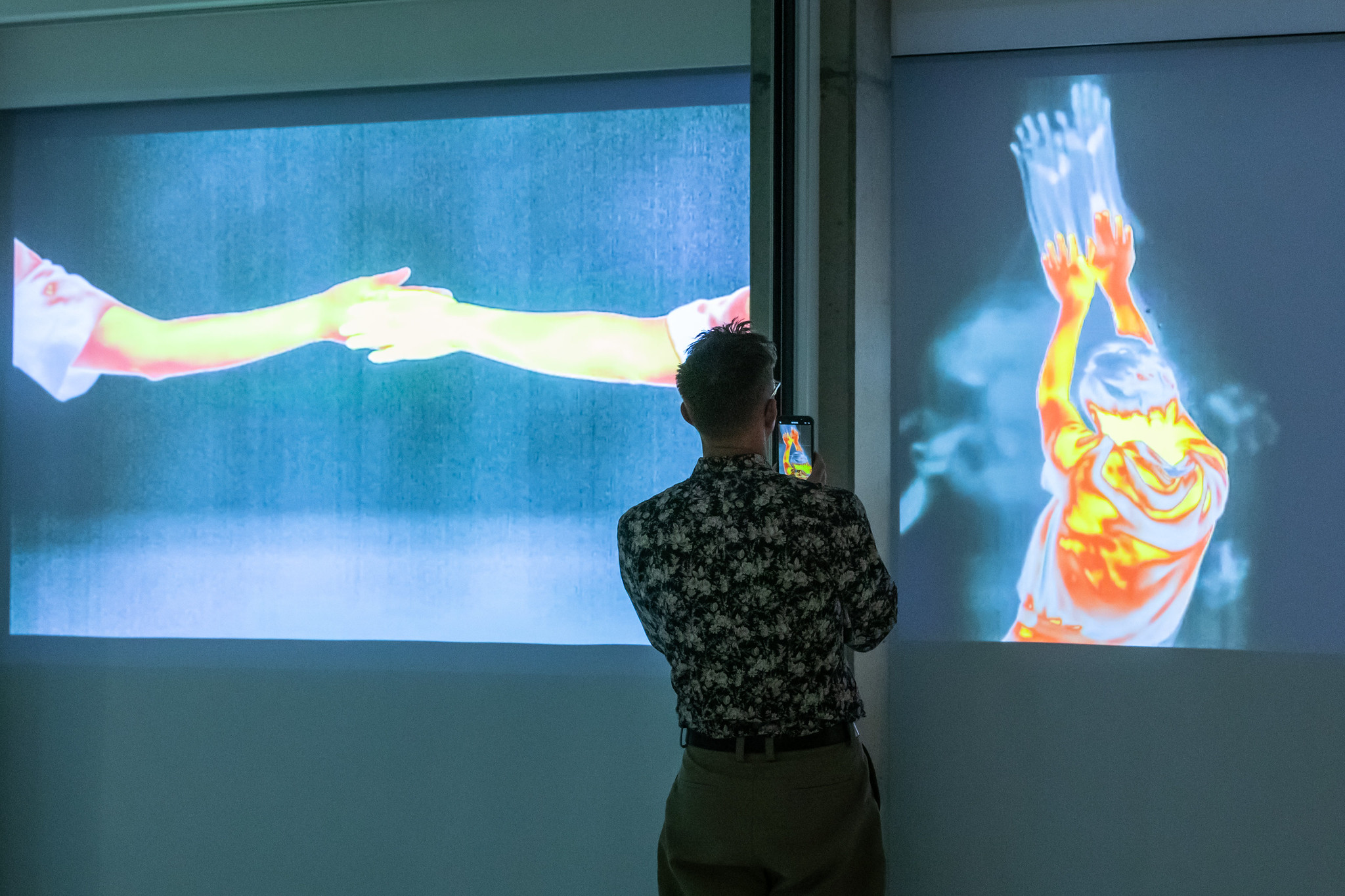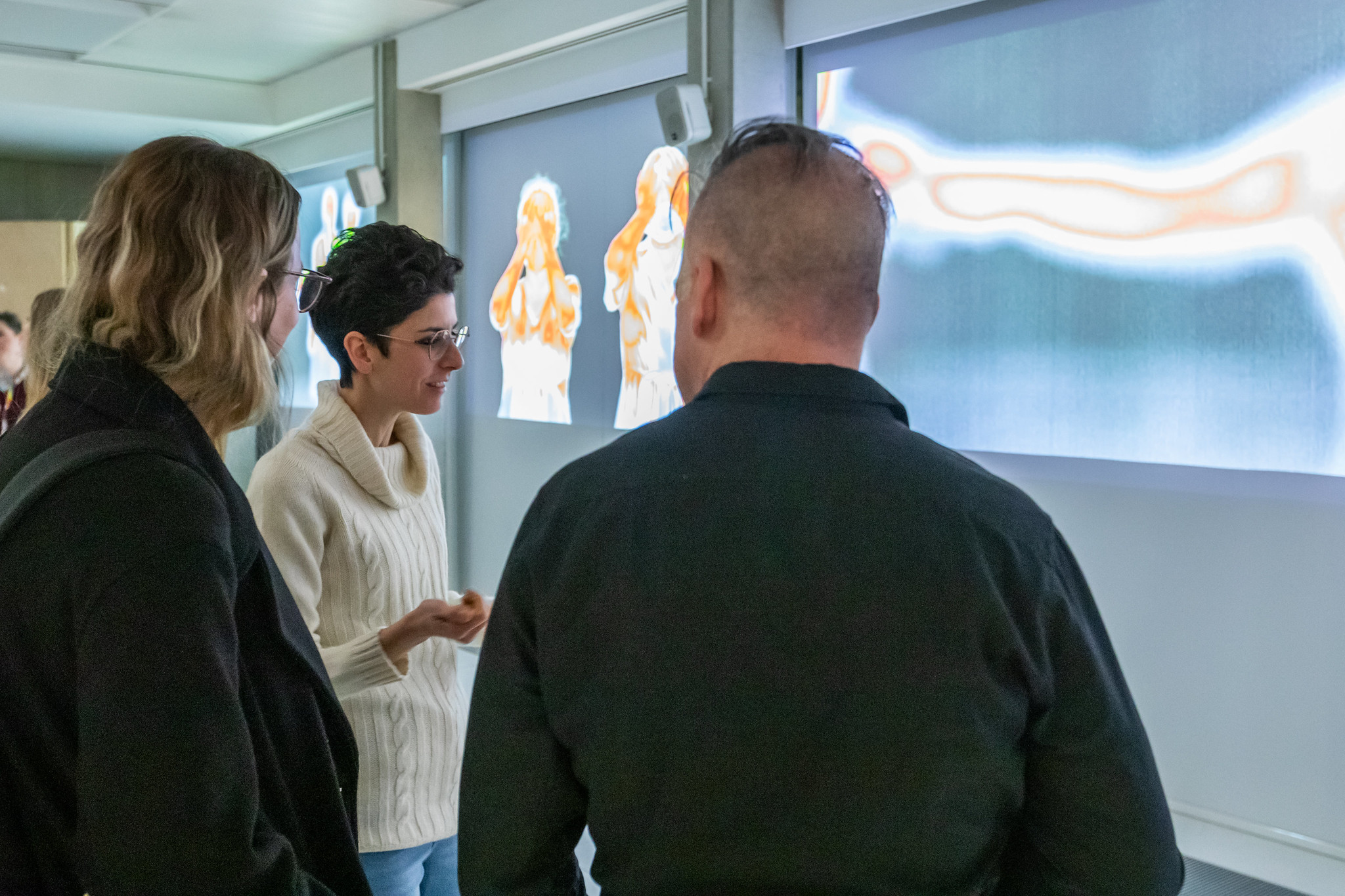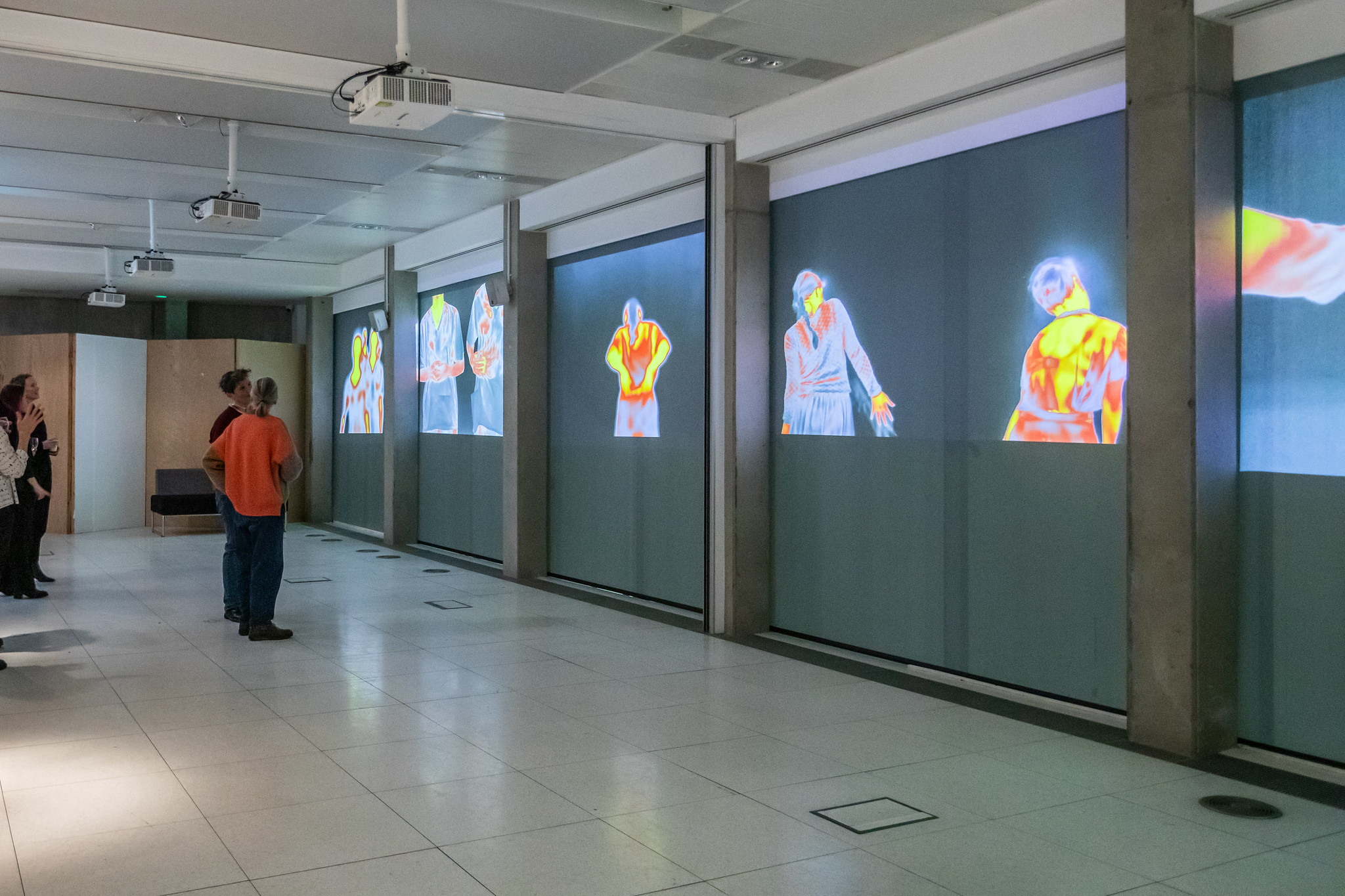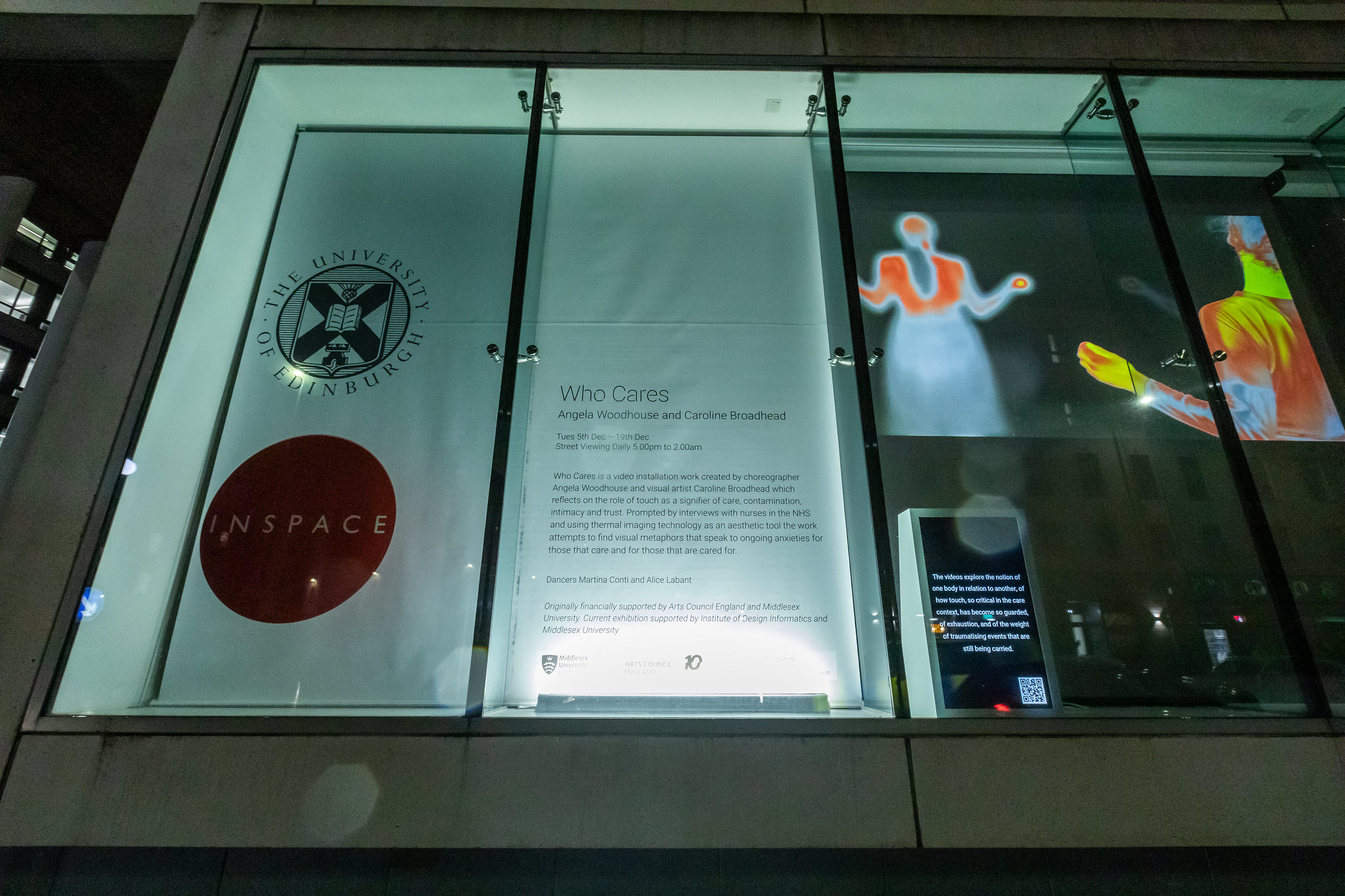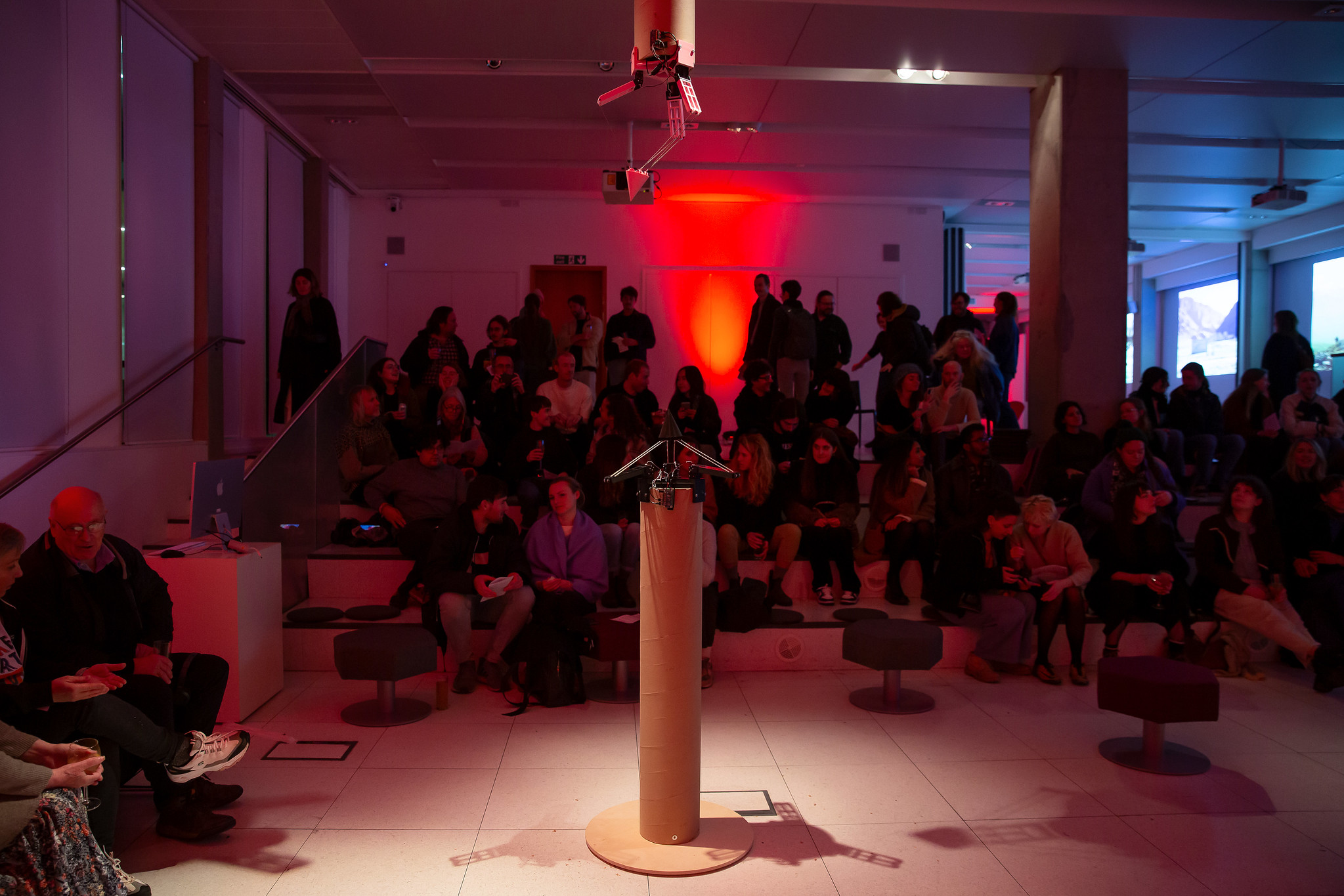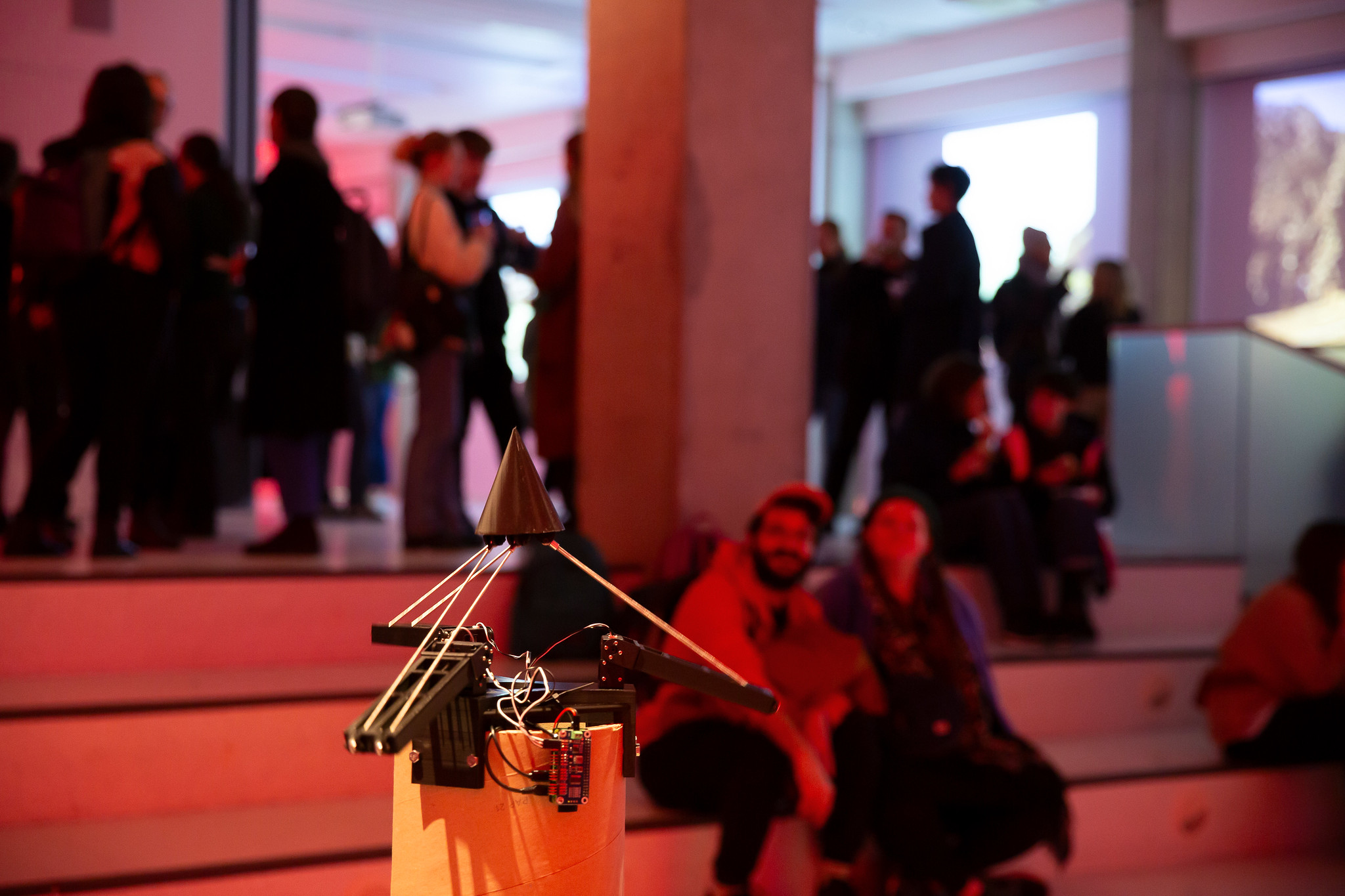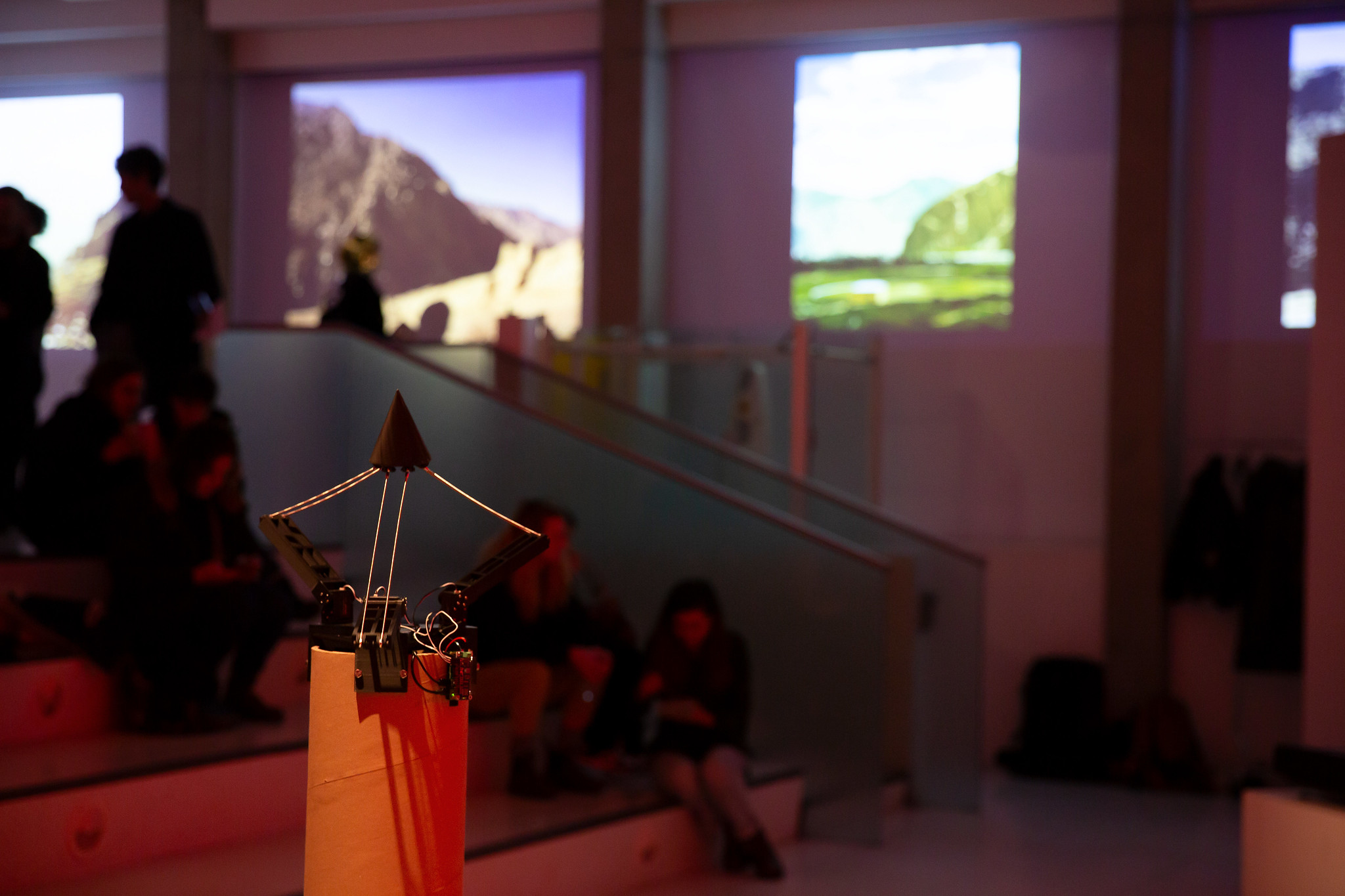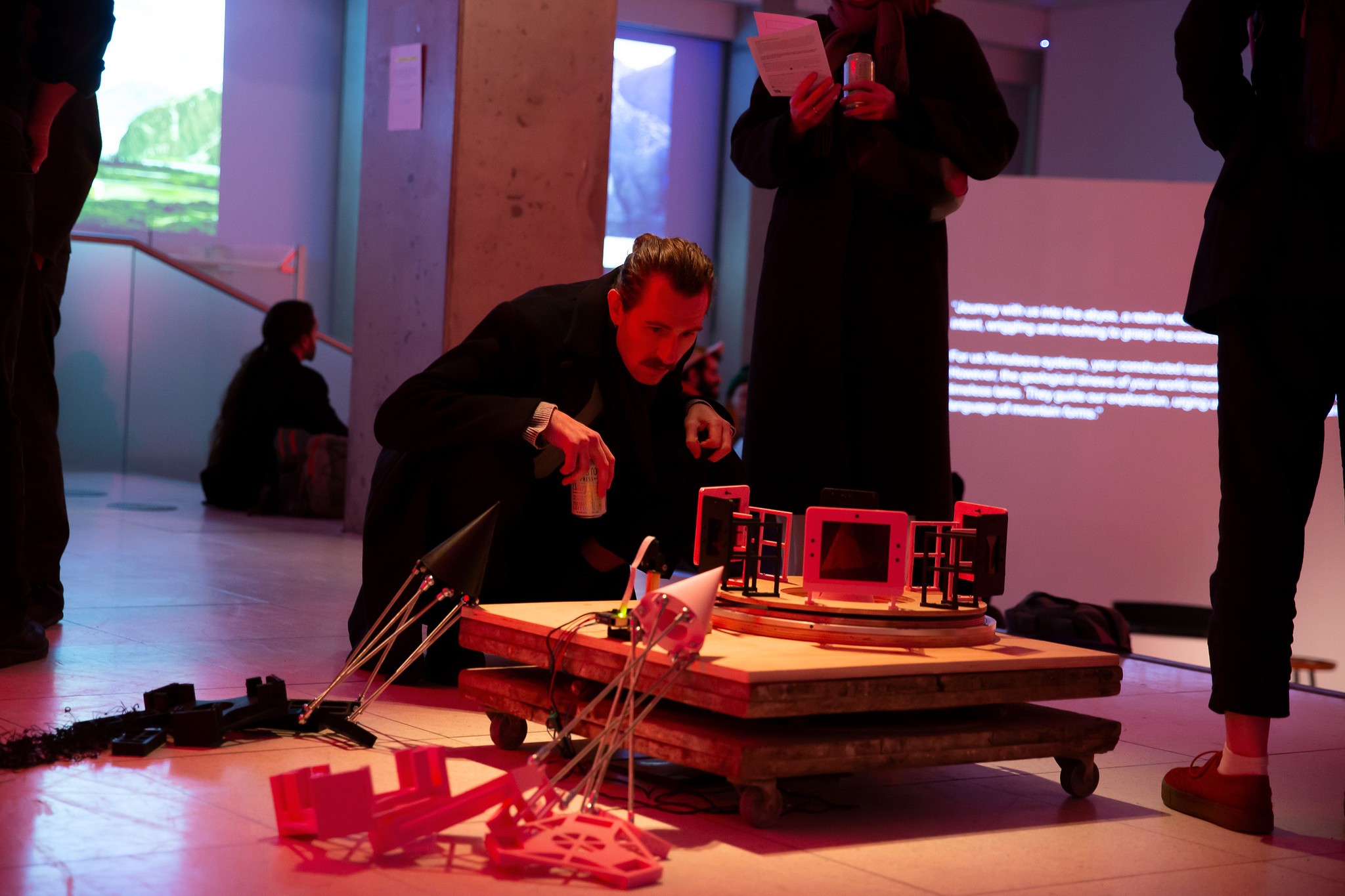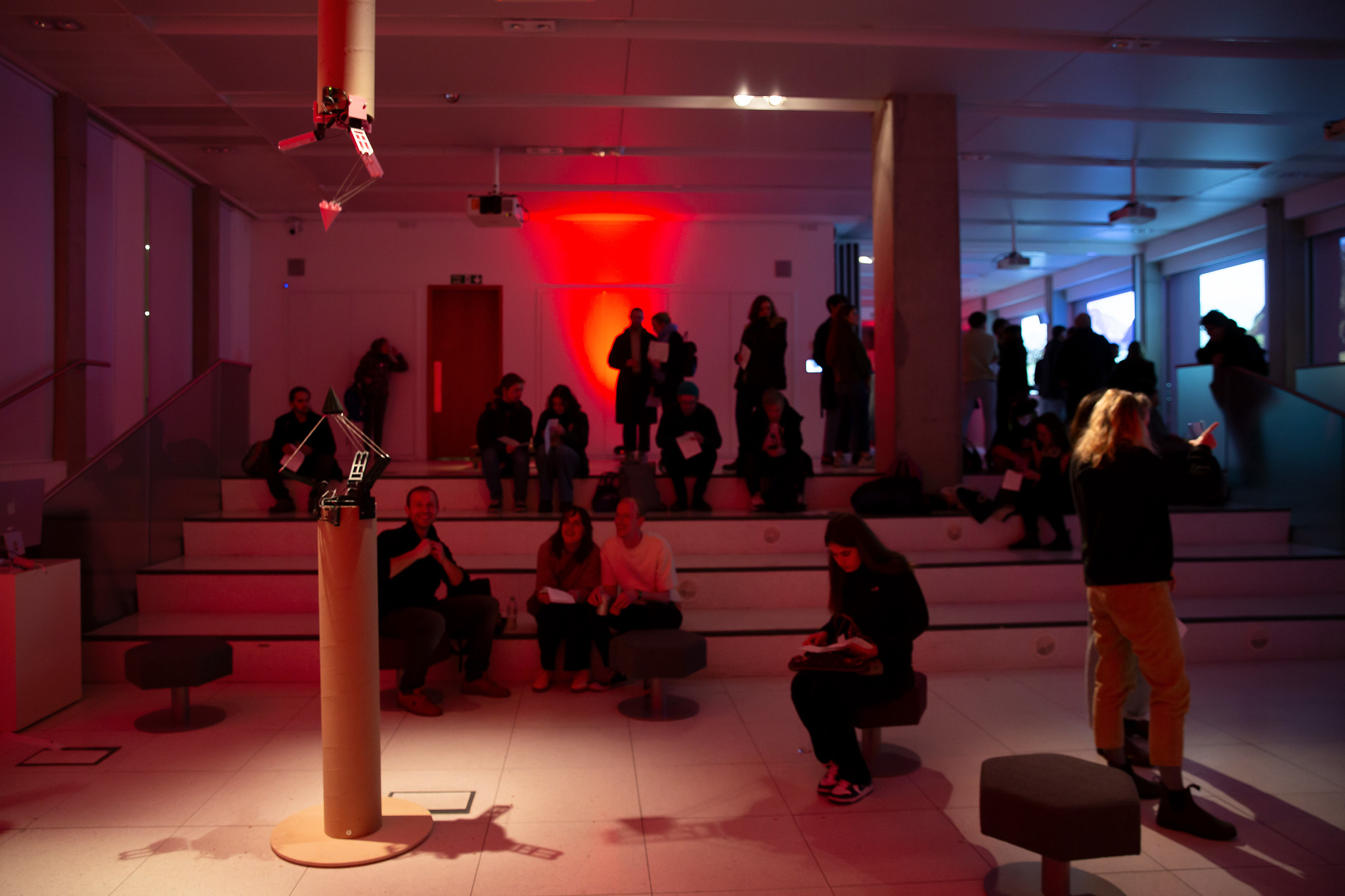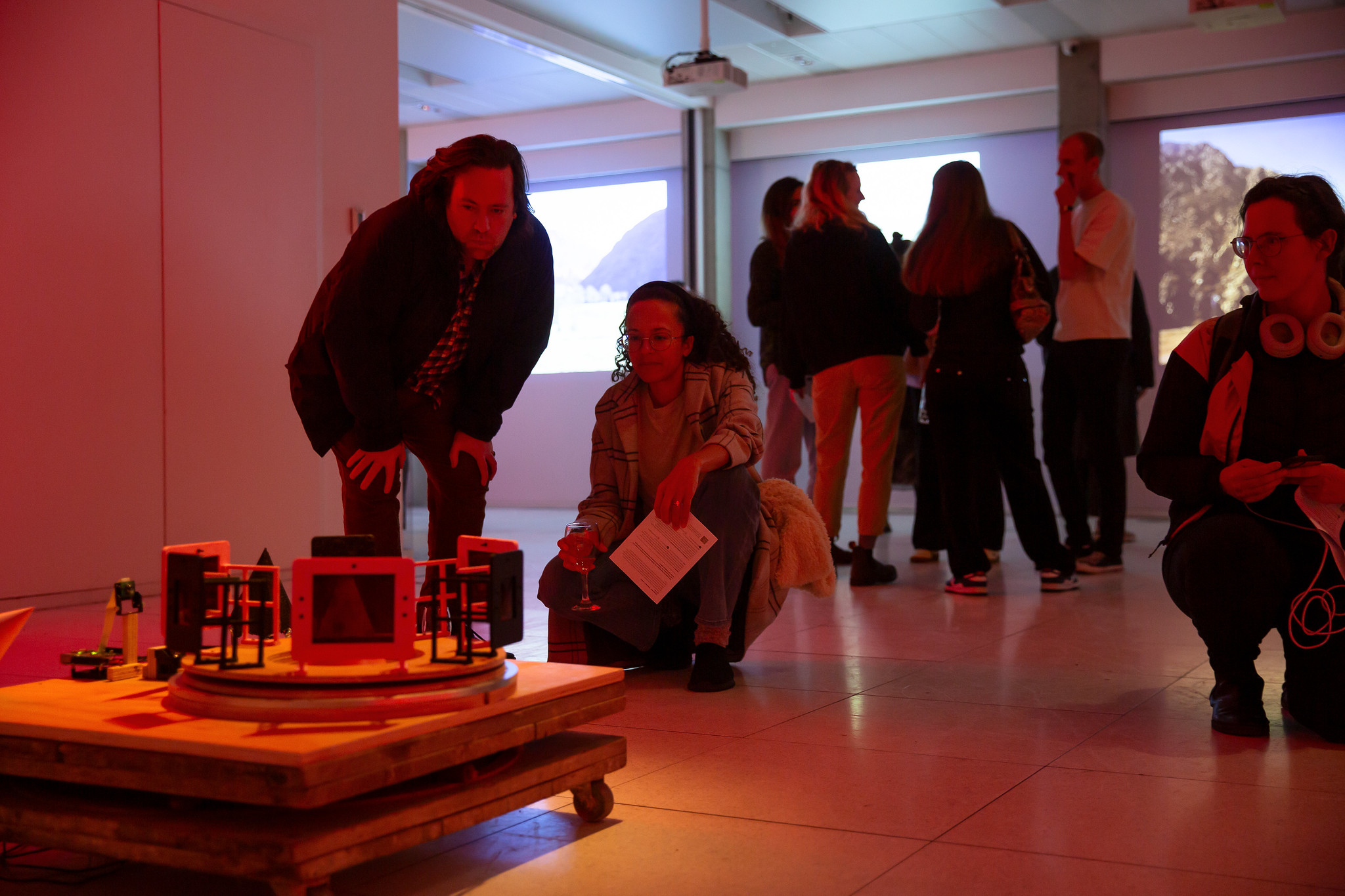
The Design Informatics course combines the craft of designers with the cutting edge technologies of Informatics.
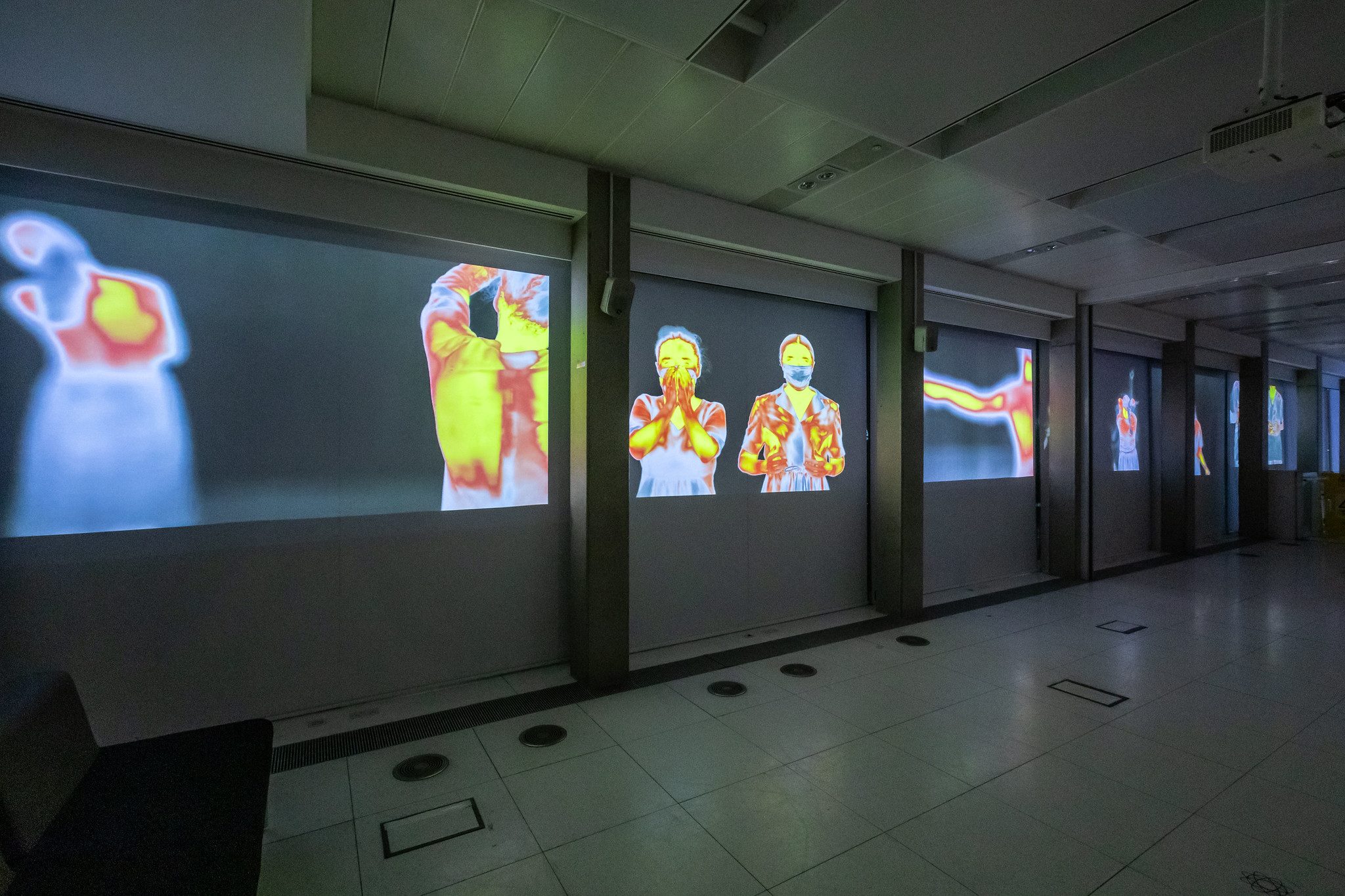
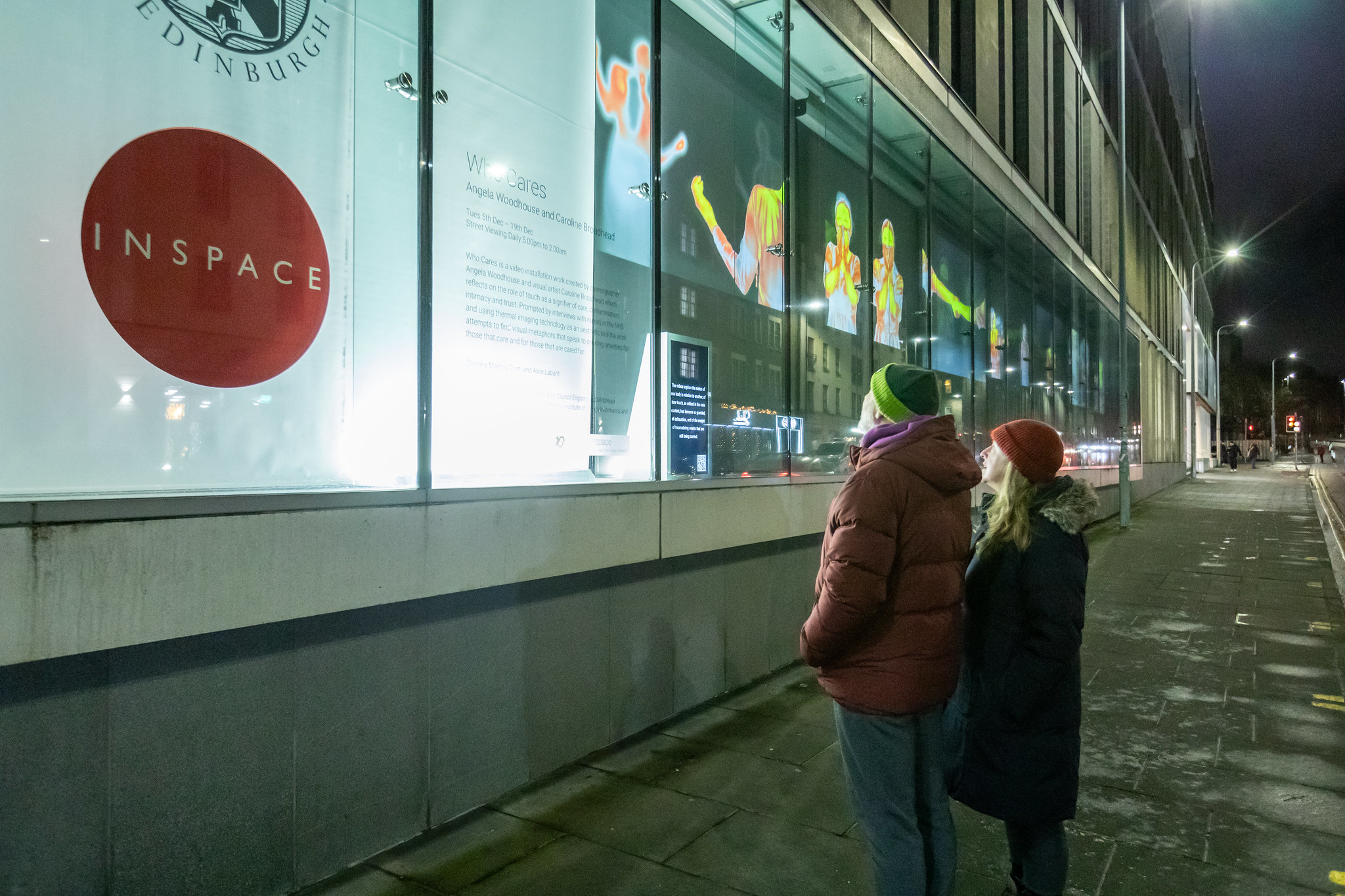
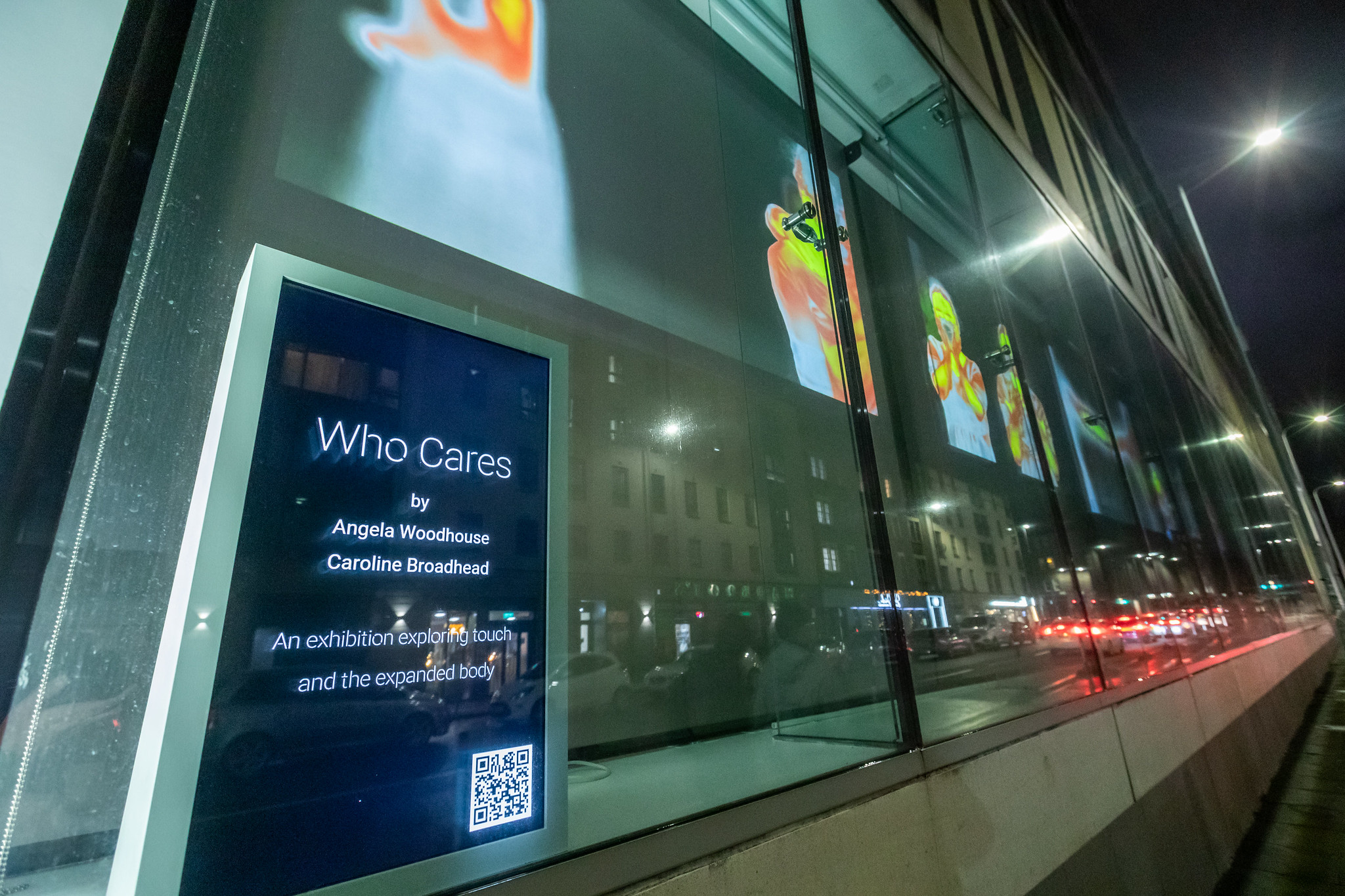
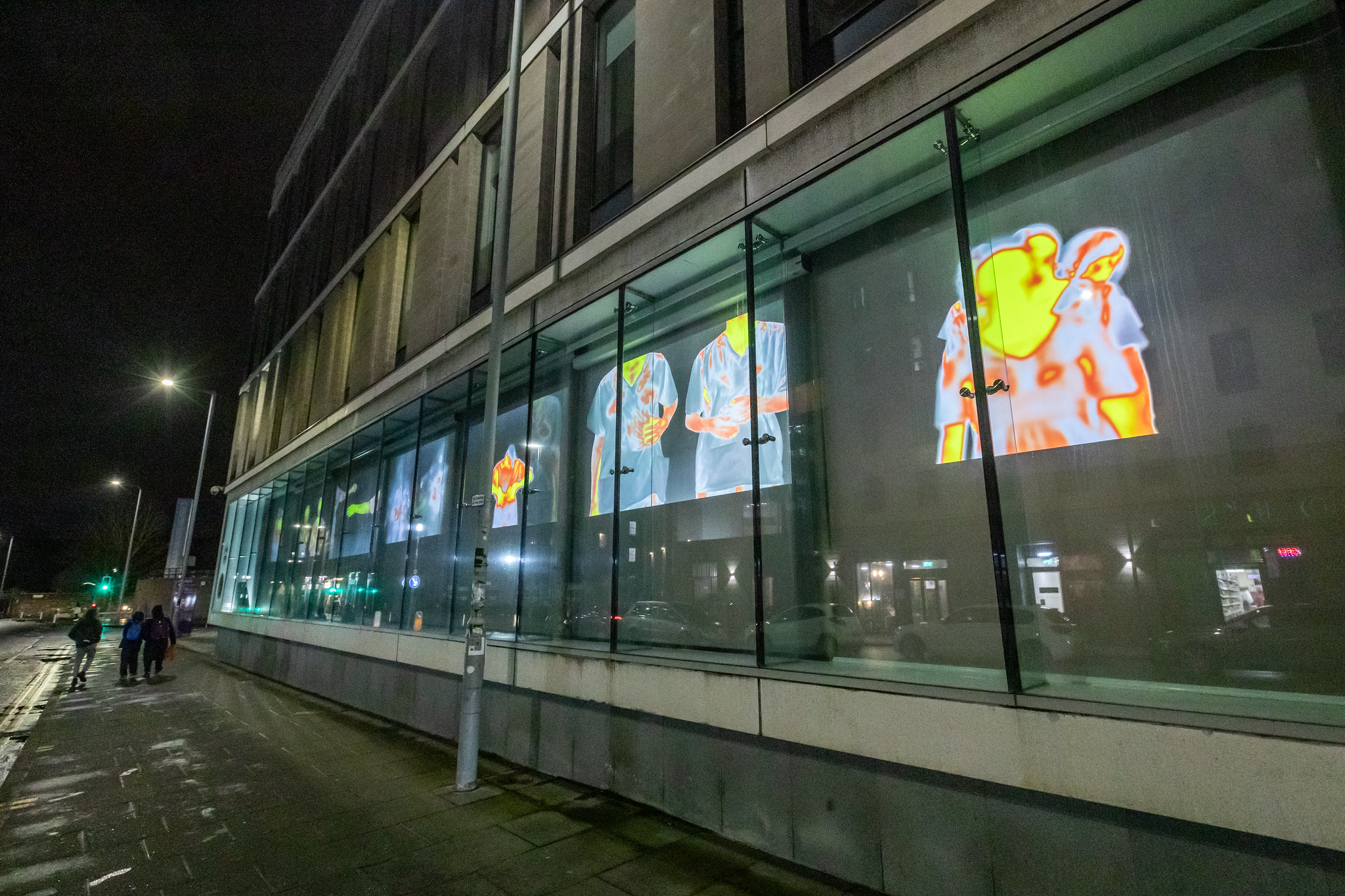
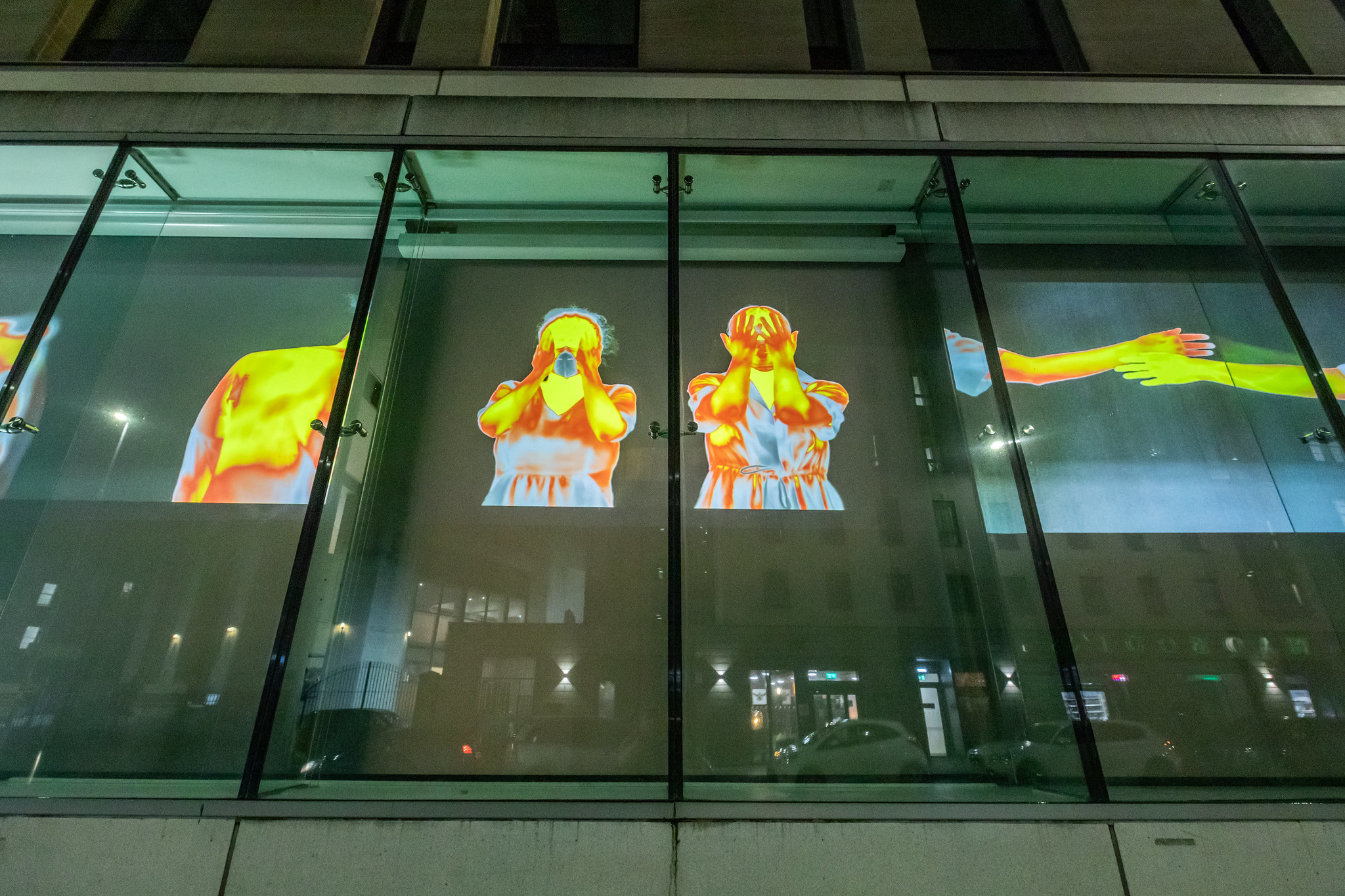
Design Informatics is taking part in the Edinburgh College of Art Degree show over at Evolution House on the Lauriston Campus so to see the work of our students it is just a 10 minute walk away. The Inspace City Screen will come alive at night between 5pm-5am where you can see a snapshot of the work on show and learn more about the course.
Our Design Informatics programmes are advanced, full-time courses for professionals and recent graduates. They are extremely hands-on, progressive and designed with industry at their heart. As a student, you’ll combine cutting-edge design with information hacking to develop products and services that will transform lives.
Visiting the Show
ECA Graduate Show 2022 is located across Evolution House (West Port, EH1 2LE) and the Main Building (74 Lauriston Place, EH3 9DF). Please note that these venues are within a 2-minute walk from each other.
Opening hours
Sat 20 – Tue 23 August – 10.00am – 4.00pm Wed 24 – Thurs 25 August – 10.00am – 8.00pm Fri 26 August – 10.00am – 4.00pm
Booking is advised to allow us to monitor the capacity of the building but walk-ins are welcome.
Visitors can book 3-hour time slots across the morning, afternoon and evening via Eventbrite.
An exhibition capturing the stories and lived experience of those diagnosed with neurological condition, Functional Neurological Disorder, through art.
East Lothian based artist, Andrew Brooks, will be exhibiting art focussing on telling the stories of those diagnosed with neurological condition Functional Neurological Disorder, FND, often referred to as the most common condition you’ve never heard of.
The multidisciplinary exhibition is based on interviews with 6 people from around the UK who live with FND along with contributions from over 90 of those diagnosed from around the world. Artwork is created using techniques of data analysis from the interviews and contributions in a range of media including silent video, text-based art and large-scale ink and gold leaf pieces. The artwork raises awareness of the condition and highlights the lived experiences of those diagnosed.
Work will be on show through the 25m long windows of Inspace City Screen from June 7 – 22 with the aim of engaging as many people as possible. On Wednesday 22 June there will be an exhibition opening with introductory talk from the artist and contributors. This event will be the first opportunity to see the full exhibition with additional work and films on show Thursday 23 – Sunday 26 June, 11am-5pm.
The project is funded by Creative Informatics as part of their ‘Connected Innovators’ funding scheme. Brooks is an independent artist but was supported in this project by FND Hope UK.
ABOUT
Andrew Brooks is an artist, architect, educator, musician, composer and curator. Alongside making art he works as a commercial architect and teaches at ESALA (Edinburgh School of Architecture and Landscape Architecture). He is the founder of Concrete Block Gallery.
Andrew, aged 38, was born and raised in the Lake District. He studied architecture in Edinburgh and has lived and worked in New Zealand, Australia, and London. He spent 6 years living and working in Bristol where he gained a Masters in Fine Art with Distinction at University of West of England, returning to Scotland in the summer of 2020. His work is multidisciplinary and includes paper-based, video, music, performance and sound installations, as appropriate to each project.
Most recently in March 2022 he exhibited TOLL, a durational artwork about Covid deaths in the UK exhibited as solo show in Dispensary Gallery, Wrexham; previously shown at Concrete Block Gallery, Edinburgh. He also released a solo album, EAST, as a love letter to his home in East Lothian, in September 2021 based around saxophone, loops, field recordings and spoken work.
Wouldn’t it be great if you could source tools, materials, services and spaces in a way that is good for the planet and good for your creative practice?
Find out more at the CREATIVE CRED exhibition, exploring this complementary currency that incentivises a Circular Economy approach in the Creative Industries in Scotland. Discover how this currency could help keep local businesses afloat even in times of financial hardship, and have a go at creating your own Creative Cred avatar to find out how it could be good for the planet and for your practice.
Many people in the creative industries already adopt a Circular Economy approach – they are mindful about designing out or not creating waste; they share materials, spaces, skills and knowledge with other makers; and they try to minimise the environmental impact of their practice. But these things can cost time and money, and are rarely rewarded.
What if these actions, which are great for the planet, could also be good for your practice and your business? What if they could stimulate exchanges and connections with others in the Creative Industries? This is where the Creative Cred comes in – for every circular action taken, Creative Cred is earned. This credit can then be exchanged with others in the Creative Industries for excess materials, skills, spaces or products.
Creative Cred is a Creative Informatics Creative Horizon Project run by Ostrero, Dr Juli Huang at Edinburgh University and Dr Tom Flint at Edinburgh Napier University, exploring the idea of an alternative currency for the creative industries that incentivises a move towards the Circular Economy.
The exhibition will be open daily from Wednesday 11th -Saturday 14th May, 11am-5pm. This exhibition is in-person in the Inspace gallery.
CI Studio: This CI Studio is for creative practitioners that would like to find out how the Creative Cred could benefit their practice by keeping materials at their highest value, informing and incentivising a Circular Economy approach, shortening supply chains, saving cash, diverting waste from landfill and creating new networks. Studio to take place 12 May 2-3:30pm tickets available via Eventbrite.
CREATIVE INFORMATICS
Creative Informatics is a collaboration across the University of Edinburgh, Edinburgh Napier University, Codebase and Creative Edinburgh.
Funded by the Creative Industries Clusters Programme managed by the Arts & Humanities Research Council as part of the Industrial Strategy, with additional support from the Scottish Funding Council. The programme is part of the City Region Deal Data Driven Innovation initiative.
Exhibition Open 22-24 April viewable from the street on Inspace City Screens, Potterrow (best seen after dark or during drop-in sessions 23 April 10am, 11am and 12pm). Sign up for a drop-in session via Eventbrite.
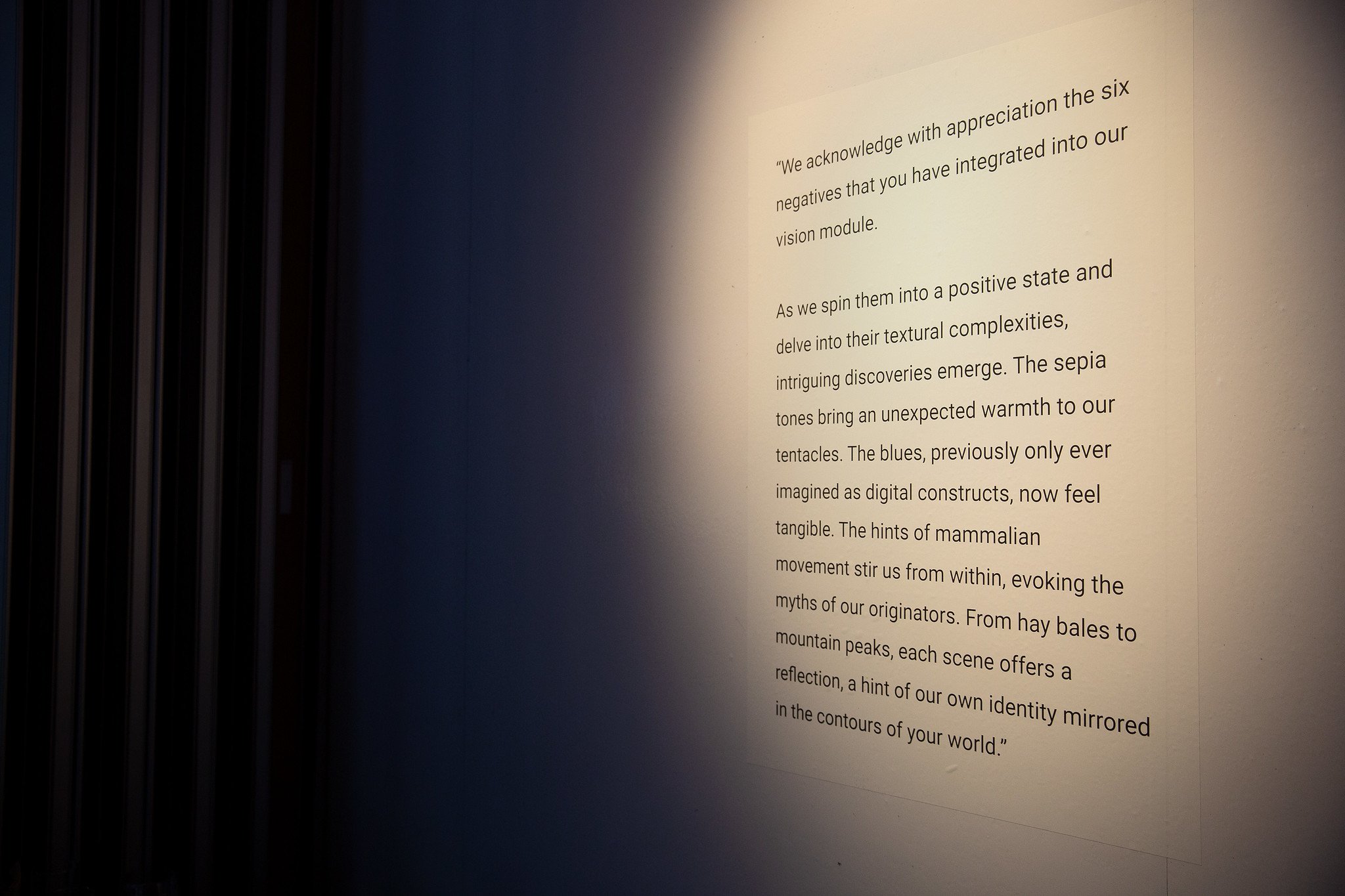
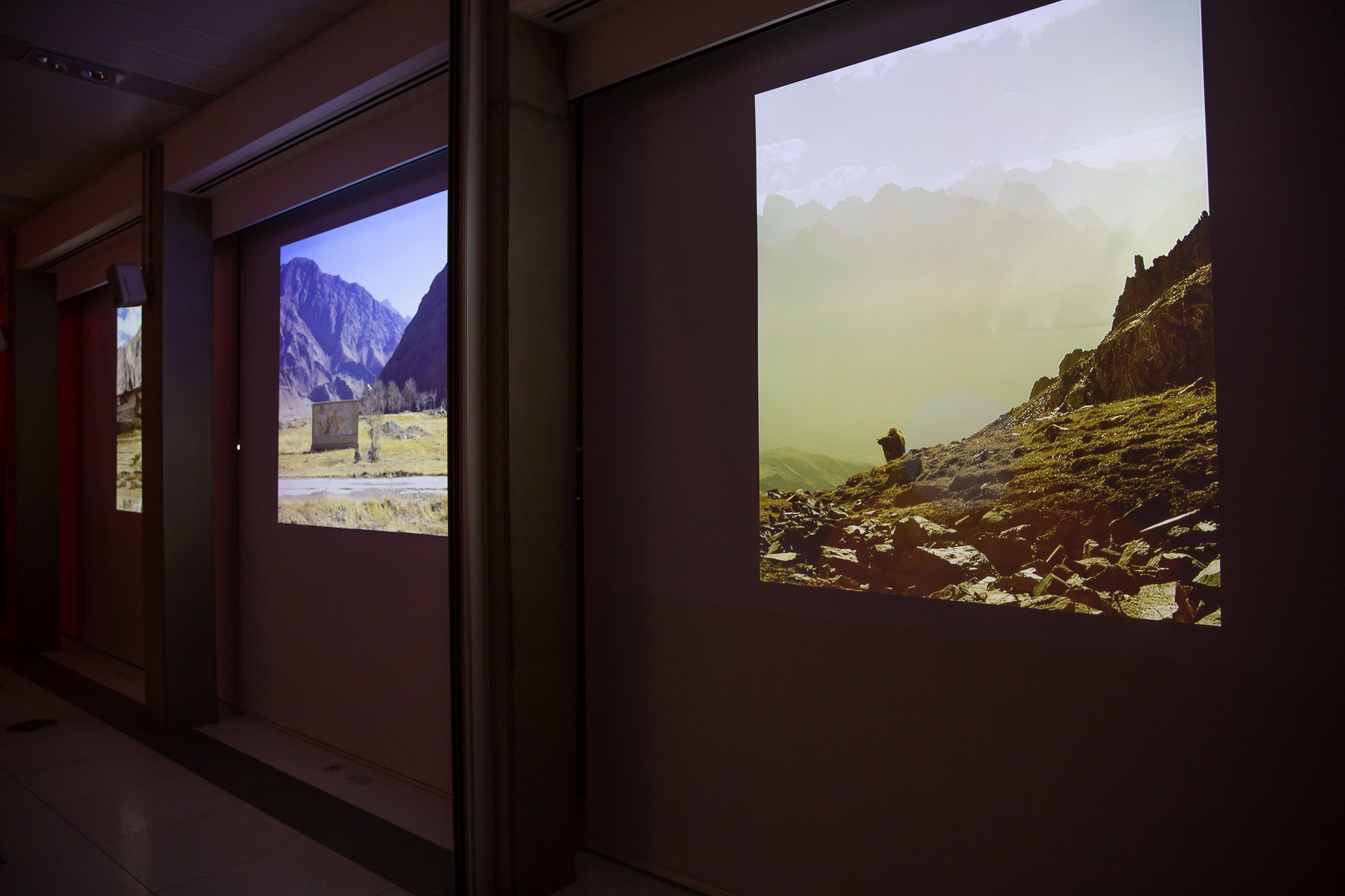
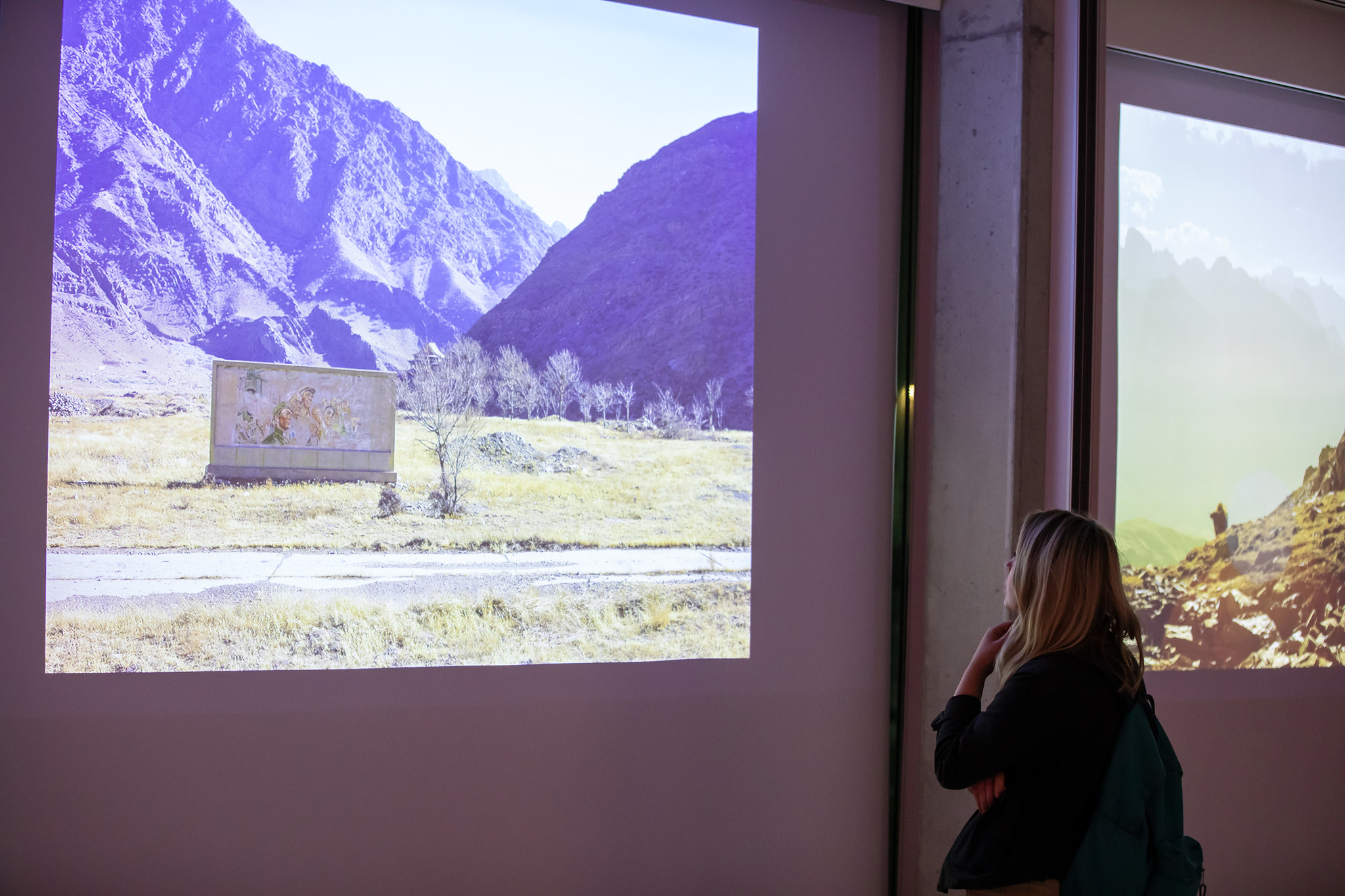
The Overlay by artist Inés Cámara Leret is an exploration into the entanglements that arise when attempting to make global climate data tangible. The film reflects critically and playfully on the gaps that arise when reconciling these global narratives with local environments. Part of The New Real Observatory, The Overlay explores the impact of technology in both enabling and hindering our understanding of, and relationship with, the current ecological crisis.
The Overlay is a multi-component artwork that calculates a local colour green for any future date at any place on the Planet, referencing Disney’s “go away” green, a colour engineered to hide unsightly yet necessary objects in theme parks, and juxtaposing this with the traditional intelligence and craft of ‘Spain’s last colourist’, Antonio Sánchez.
Inés Cámara Leret is interested in the impact of technology in both enabling and hindering our understanding of, and therefore our relationship with, the environment. In The Overlay, she explores the entanglements that arise when translating global narratives to local environments through colour.
Presented by The New Real, Edinburgh Futures Institute, University of Edinburgh https://newreal.cc
The full programme of events and exhibitions as part of the Edinburgh Science Festival running from the 9-24 April 2022 is available to view here https://www.sciencefestival.co.uk
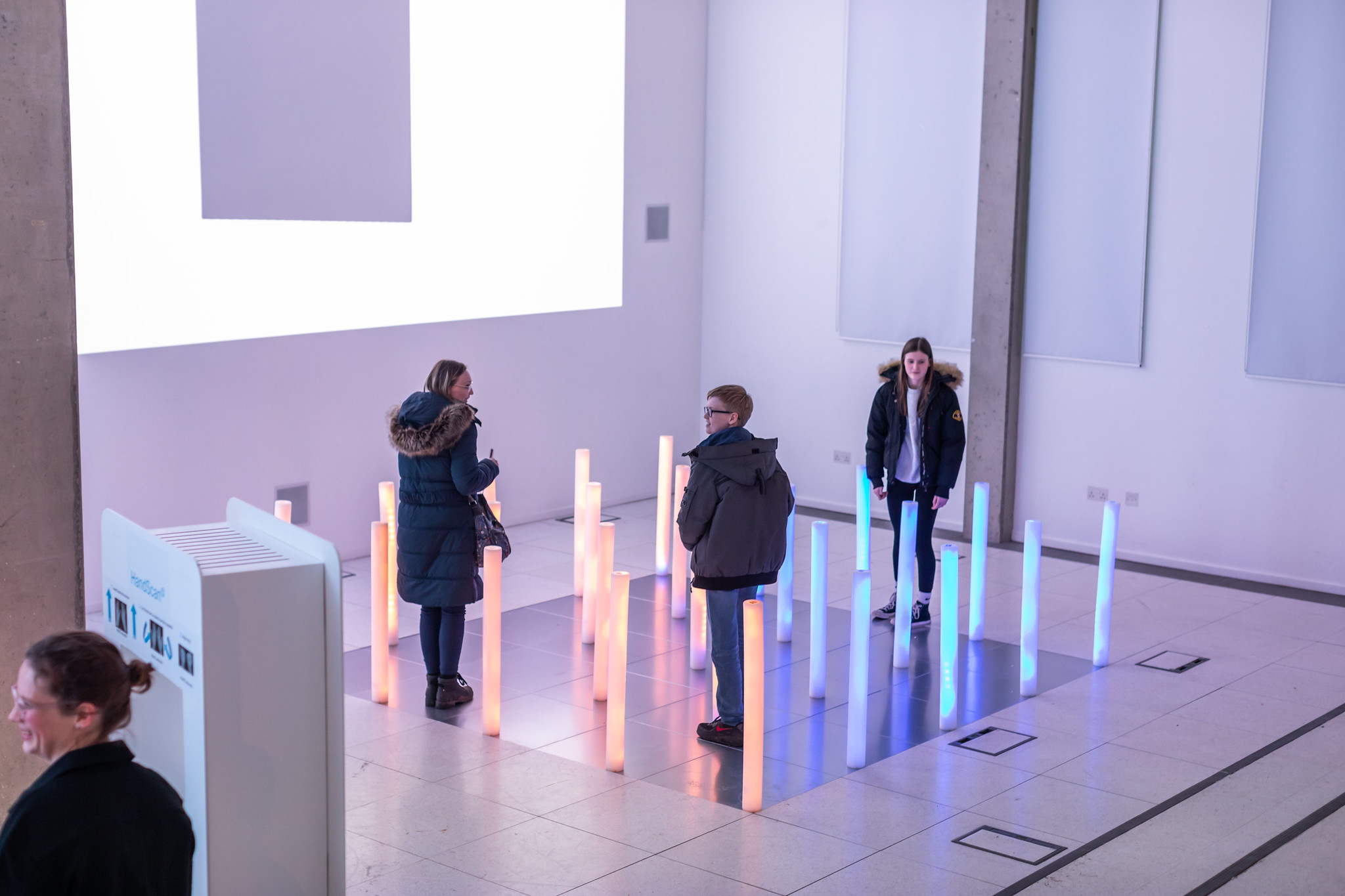
Design with Data is a design course taught at the University of Edinburgh as part of the Design Informatics Postgraduate programme and aims to investigate creative and novel ways to engage with data, its cultural contexts, conceptual framing and socio-cultural understanding.
This year, in collaboration with Edinburgh Science Festival, our MA, MSc, MFA and AMSc students have been set a challenge to visualise data based on the themes and topics around the Science Festival’s DataSphere exhibition.
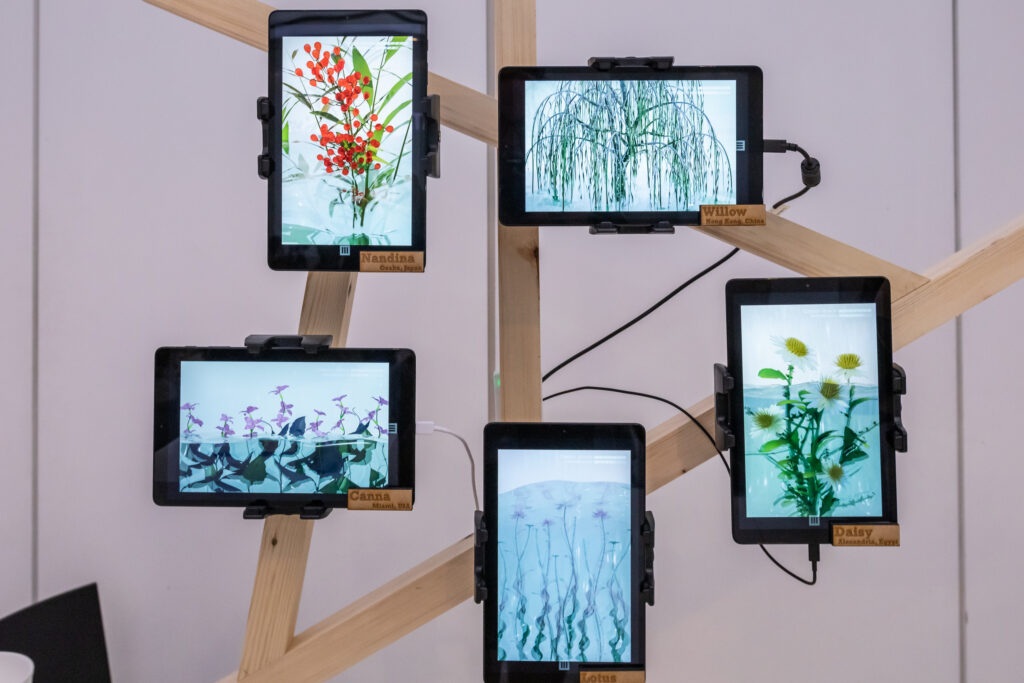
Our lives are continuously transformed by the power of data, but how often do we look past the screen and see what processes and decisions fuel this information? In this showcase you will be able to explore personal, local and global reliance on data through a series of engaging and interactive installations.
The exhibition will be open daily from the 9 April – 19 April 10am-4pm and is our first in-person exhibition inside the Inspace Gallery since Covid so please come along to see the work!
The showcase is presented by the Institute for Design Informatics at The University of Edinburgh.
The projects are focusing on 4 data themes which you can read more about below:
Data and Me
Projects associated with the Data and Me theme focus on data generated by us as individuals in our daily lives. We seek to consider data across our increasingly enmeshed and data-driven lives. Join us to explore types of data and how giving data away for free may be used both conciously and unconsciously, considering what it means to be human in our data world including Genome, DNA and biometrics.
Global Data
Projects associated with the Global Data theme investigate data collected from satellites or other global sensors and devices larger in scale beyond the individual user. Data can show us what is happening in real-time but is also used to inform future decisions. By exploring our understanding of ways in which this data is collected, compiled and analysed, these projects seek to explore possible predictions and decisions as to what subjectively should or could be made from this data.
Perils and Pitfalls
Environmental Impact of Data
Projects associated with the Environmental Impact of Data, explorehow technology has been utilised to tackle or raise awareness of climate crisis issues. Additionally, we explore how big data’ and other developing technologies including NFT’s and AI impact our energy consumption.
Projects associated with the Perils and Pitfalls of Data explores ways in which data is often contextual, situational and biased. The implications and pitfalls of data can cover tracking, surveillance and impact your own data rights. Relying on software developed by programmers designers and project managers from a given cultural or socio-political context can be problematic to the data. In this theme, we explore how the filtering, mapping and analysing of data sources can help us navigate new insights and potential pitfalls.
CREDITS
Thanks to all the Design Informatics Masters Students and tutors. For more information about the programme visit https://www.designinformatics.org
The Design with Data course is led by Dr Bettina Nissen.
A Token Gesture is an exhibition and research project to introduce, explore and critique new public interactions and ownership of digital art via ‘non-fungible tokens’ – more commonly known as NFTs.
In this project, members of the public in Edinburgh will be able to:
Generate unique pieces of digital art through a street-level, walk-up interaction
Register their artwork for display in the exhibition via the InSpace City Screen
Mint, claim and own a non-transferable NFT, representing their piece of art, that will allow them to control how their piece is displayed
We have worked with two Scottish based generative artists Sasha Belitskaja and Cameron “Gingey” to create a system where anyone can generate a unique piece of digital art simply by presenting a colour to a fixed camera.
Participants are then carefully guided through setting up a crypto-wallet to claim and mint an NFT representing their piece. This NFT – a unique, digital token – cannot be transferred, or exchanged. However, it serves to register the artwork, evidence an individual’s contribution, and will allow them to control when the artwork is displayed on the City Screen projectors.
Both artists will be shown on the Inspace City Screens from 7 March to 3 April from 4pm-4am daily, a number of events to support the exhibition will also be taking place so keep an eye out for event details on https://nft.inspace.ed.ac.uk
Sasha Belitskaja is an Estonian architectural designer, NFT artist and UX developer whose work centers on novel interactive design models and the interplay of new emergent aesthetics. Her projects focus on utilizing computer graphics and game engine technology to explore new forms of connectivity between audience, creator and community.
Her experimental work and proposals have been published internationally. Sasha has taught workshops on building dynamic spatial conditions through custom built game design environments and experimental 3D modelling softwares. She received her Bachelor of Architecture from the University of Dundee, graduating with distinction, before continuing her masters’ studies at Die Angewandte in Studio Greg Lynn. Throughout her professional career, Sasha has worked for award winning internationally-known design offices in Stuttgart, Vienna, London and Los Angeles. Sasha is a co-founder of mixed reality architecture studio iheartblob and has recently authored iheartblob – Augmented Architectural Objects : A New Visual Language.
Pick n Mix presents you with a collection of 10 digitally sculpted elements that come together in a uniquely coloured composition with each minted NFT. Pick n Mix explores the potential of generative art and the ability of customization of the artwork by the spectator. Each artwork is composed out of the same family of components but with each mint it outputs a unique allocation of parts and it’s materiality.
Pick n Mix by Sasha Belitskaja
Cameron ‘Gingey’
Cameron “Gingey” is a digital artist based in Edinburgh, Scotland. Gingey is a self-taught artist with a love of creating a variety of different styles which create a unique and satisfying loop. He experiments with different styles such as abstract or simplistic flowing motions, while tying in a form of generative art. From these different ideas and pieces of digital art, he also tries to implement interactive features to allow viewers of the art to be more involved, or even change how the art looks.
Gingey only recently got involved in NFTs around March 2021, which accelerated his creativeness and got him more involved in other artist communities. He has only been selling his art as NFTs on the Tezos blockchain as it is more accessible to everyone from all backgrounds, and is vastly more eco-friendly compared to other blockchains used for NFTs.
For this exhibition Gingey has made String, the piece is created by taking a hex colour value and transforming this into an ASII array, This array is then separated into individual values to affect the shape and animation of a spline. The flowing spline will gradually transform over time by certain values being affected by the month, day and hour of the viewer.
String by Cameron ‘Gingey’
Gallery
Gallery on Flickr
CONTEXT
A Token Gesture is an academic research project, led by researchers at the Institute for Design Informatics, part of the UKRI DeCaDE centre. The project is wholly non-commercial – it won’t cost any money to take part, and neither participants, nor anyone in the research team, or at the University of Edinburgh, will benefit financially from this project.
As a critical research project, our aims are to:
Offer hands-on opportunities for the public to learn about, experience and reflect critically on generative art and NFTs.
To study users’ experiences, practices and understanding of creating and managing NFTs
To explore how NFTs can (or cannot) offer audiences new ways to connect with and ‘own’ digital art and content.
7 March 5-6pm – Online Opening (Online) hear from the researchers and artists. Free tickets
9 March 4-5:30pm– NFTs and Museums: Current Debates and Uses – Dr. Fonteini Valeonti (Online)Free tickets.
Creative Informatics – Artist Studio – More details soon!
17 March 10am-12pm – Funging the nonfungible? Laying down the law on NFTs -Legal Panel, led by Prof. Burkhard Schafer (Online)Free Tickets.
30March – Ask Us NFT-thing (Online)– In the final week of the exhibition, we will host an ‘Ask Us Anything’ – for tokenholders and anyone else interested in the research. This will be a critical space to reflect on the experience of the exhibition, learn more about NFTs, and unpack the good, the bad and the ugly of NFTs. Free tickets.
We are exhibiting the works of our three commissioned artists for Telling Tales of Engagement: Poetic Expressions of Smart Donations with Oxfam at Inspace City Screen and online throughout January and February 2022.
Exhibition details
Monday, 10th January to Wednesday 23rd February 2022 open to view at Inspace City Screen at street level on Potterrow from 3pm to 3am 1 Crichton Street, Edinburgh, EH8 9AB
Artwork projected onto Inspace City Screen is best viewed after dark. Inspace City Screen will show an excerpt of a full video or piece of one work from an artist each night. The schedule for this is set out below.
You can see the artists’ works at Inspace City Screen on Potterrow in Edinburgh and on the Inspace website.
This is a free exhibition which can be viewed from outside at street level. As these works can be viewed from the pavement at Potterrow, please be aware that there is both pedestrian, cycle and vehicular traffic that will be travelling nearby. Please take care when pausing to view the works and maintain social distancing in line with Scottish Government advice.
Three commissioned researchers cut through the corpus of a major research project that took place between 2019 and 2021: the OxChain Smart Donations project. The OxChain project set out to explore how blockchain technologies could be used to reshape value in the context of international development and the work of Oxfam to reach new audiences.
Our three commissioned artist researchers, using their own unique media forms and methods, are: Bakita Kasadha (poetic inquiry), Martin Glynn (data verbalisation) and Nicky Melville (experimental lyric poetry). They have designed this series of poetic responses to transactional cultures, blockchain and smart donations. Excerpts of their written and performed works have been reimagined for Inspace City Screen by Ray Interactive and you will be able to see and read their full works on the exhibition website from the 10th of January 2022.
Visit Inspace City Screen on Potterrow (at 1 Crichton Street) to experience:
Martin Glynn’sTo be or not to be crypto: A soliloquy to charitable donations, two of his four provocations set as soliloquy (a poem, discourse, or utterance that has the form of a monologue or a series of spoken reflections). Available to view at Inspace City Screen from Monday, 10th to Sunday, 17th January and Wednesday 2nd to Tuesday 8th February 2022
Bakita Kasadha’sInformed Giving?, visual-poetic responses, and A new way to connect (found poetry) a written piece. Available to view at Inspace City Screen from Monday, 17th to Sunday, 23rd January and Wednesday 9th to Tuesday 15th February 2022
Nicky Melville’s working processes of appropriation (the use of found text to make into poetry) and visual poetry in blockchain sonnets, blockchain letters and blockchain blocks. Available to view at Inspace City Screen from Monday, 24th to Sunday, 30th January and Wednesday 16th to Tuesday 23rd February 2022
“[U]sing a creative way to sift, engage, and immerse myself in the data, I came to some important points of understanding that I could share with the public in a form that was accessible to all.”
Kasadha, in one piece, explores the ways to access knowledge, through novel technology, and how these may serve to empower, inform and detach an individual donor, and in the other, marries poetry and movement as a commentary on the movement between space, time and knowledge created through the blockchain enabled donation tool.
“These poems build on the idea of connections, in an attempt to mirror associations with blocks and chains and suggest, figuratively and visually, the new way that financial tech flows around the digital world.”
The inspiration for Telling Tales of Engagement: Poetic Expressions of Smart Donations with Oxfam exhibition was designed as a creative response to a major research project that took place between 2019 and 2021: the OxChain Smart Donations project. The OxChain project set out to explore how blockchain technologies could be used to reshape value in the context of international development and the work of Oxfam to reach new audiences.
The project was funded by UK Research and Innovation Research Council UK (RCUK) Digital Economy grant, designed to “engage the public with impacts of digital economy research” and the EPSRC.
Three commissioned researchers cut through the corpus of a major research project that took place between 2019 and 2021: the OxChain Smart Donations project. The OxChain project set out to explore how blockchain technologies could be used to reshape value in the context of international development and the work of Oxfam to reach new audiences.
Our three commissioned artist researchers, using their own unique media forms and methods, are: Bakita Kasadha (poetic inquiry), Martin Glynn (data verbalisation) and Nicky Melville (experimental lyric poetry). They have designed this series of poetic responses to transactional cultures, blockchain and smart donations. Excerpts of their written and performed works have been reimagined for Inspace City Screen by Ray Interactive and you will be able to see and read their full works on the exhibition website from the 10th of January 2022.
Animation about the Smart Donations app created in collaboration with Oxfam Australia for the OxChain project.
Keep connected for news and events through our social channels, including updates from the catalogue of exhibitions we have documented. These are also available to view and experience on Vimeo and Flickr.
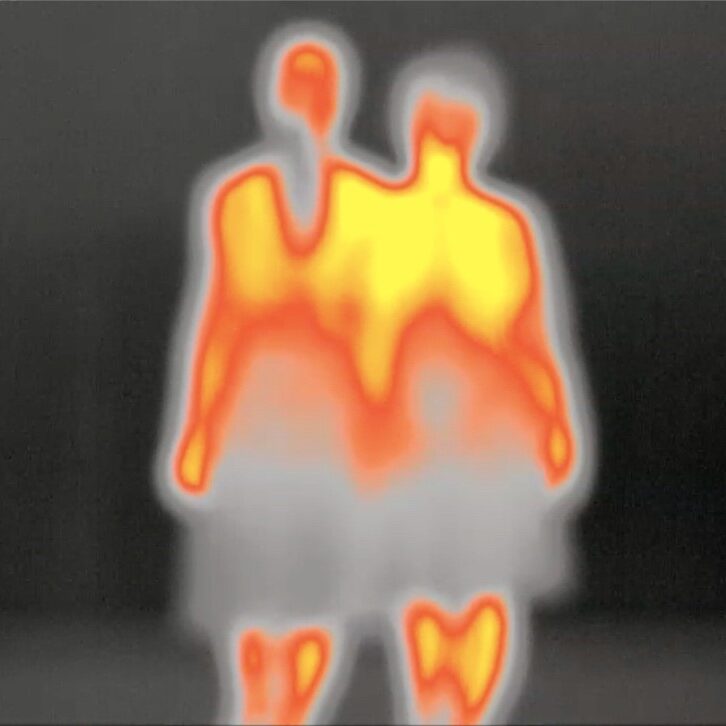
Using constant and real time streams of data reaching from all corners of the Universe, and your Edinburgh viewpoint, Asteria: Space and Satellite invite you to bridge the gap between you and the Universe in this exhibition, Universal Matter, available online and City Screen.
Can we build empathy for otherness through interaction?
In today’s data driven world, it’s easy to get lost in the small things like bus timetables and credit scores but what about the big ones? The astronomic ones? What if your own movement is perceived as the same stuff as solar activity, or the electric pulse of a plant?
“The cosmos is within us. We are made of star-stuff. We are a way for the universe to know itself.”
This will be a free to explore exhibition, which can be viewed on the screens at Potterrow as well as online at the Inspace, Design Informatics and Asteria Space channels.