Announcing Inspace 2026 Creative Programme

We are delighted to share the upcoming series of exhibitions, events and performances taking place in Inspace to kick off 2026, promising to bring you an exciting fusion of art, design, research and technology. 

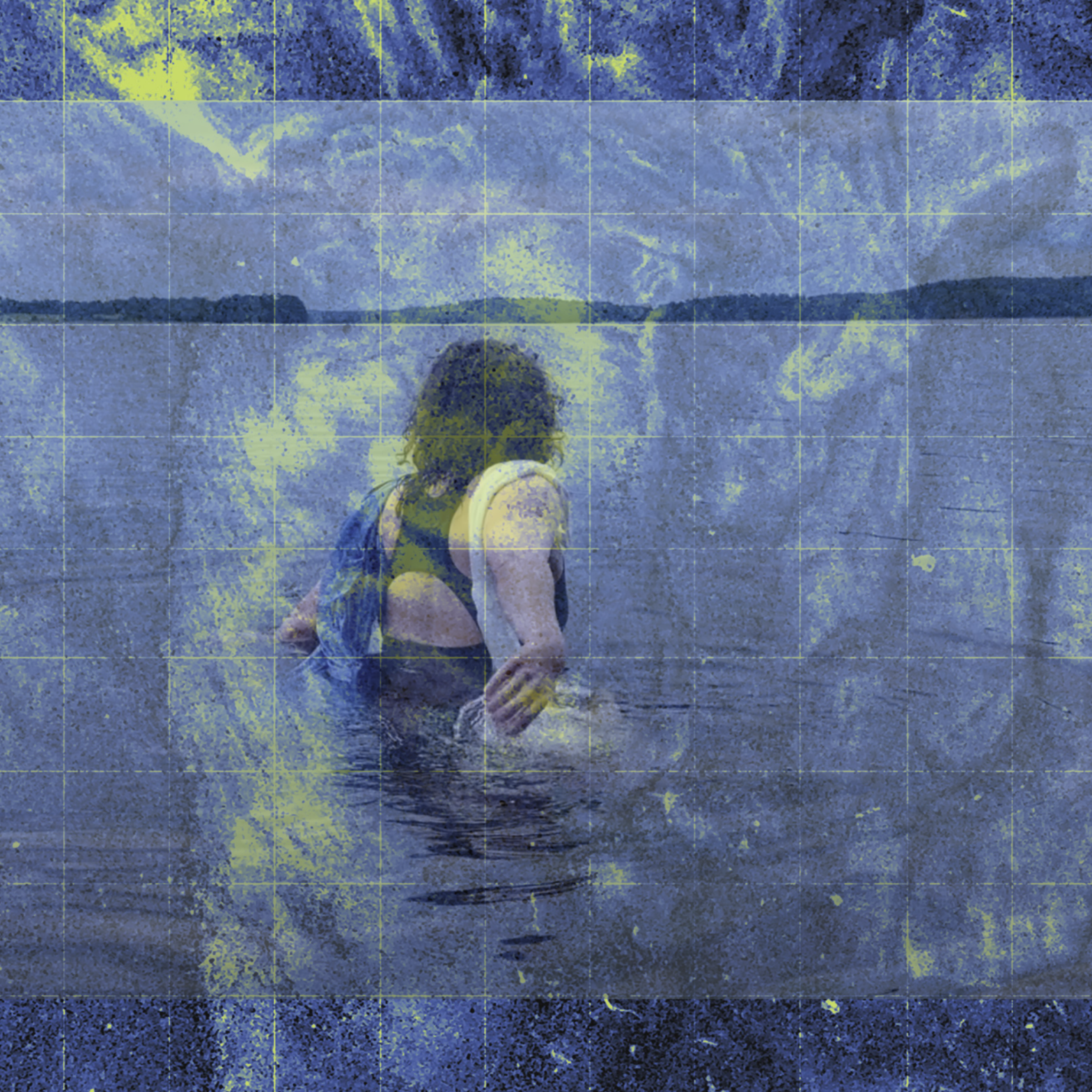
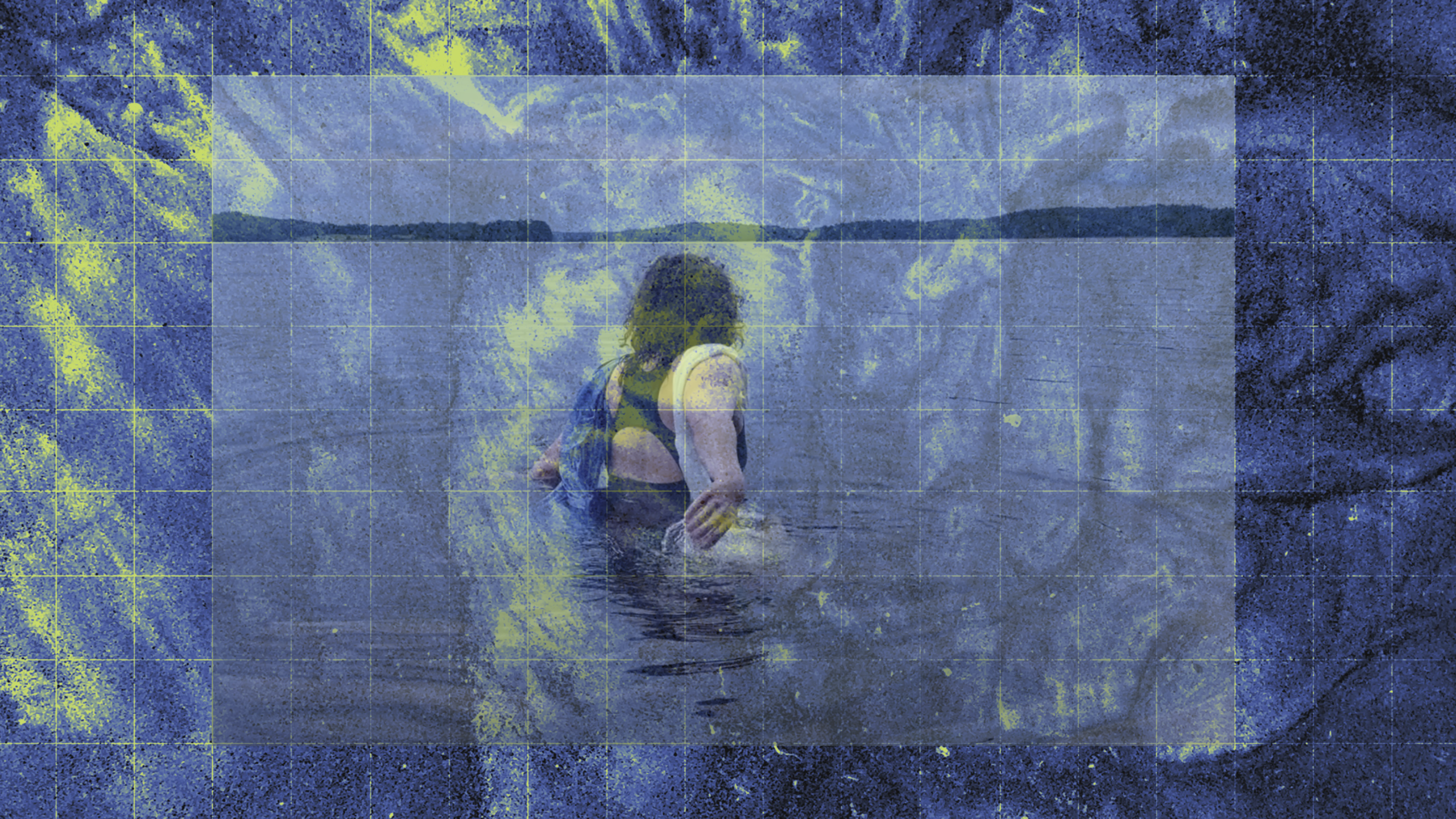
For our first event of 2026, we are deligthed to announce Felicity Hammond: END-OF-LIFE-SERVICE, a collaborative event programme by Stills and Photoworks, in collaboration with BRAID (Bridging Responsible AI Divides), and Inspace, to host an experimental and playful event in the form of a funeral procession and an early evening wake where you are encouraged to explore the challenges of AI, and to create and share your eulogies to it.

Our first City Screens showcase of the year Right to Roam, created by Sarah Calmus, invites you to consider incremental effect with regards to environmental concerns, locally and globally, through reflection on natural methods of connection, communication and movement.

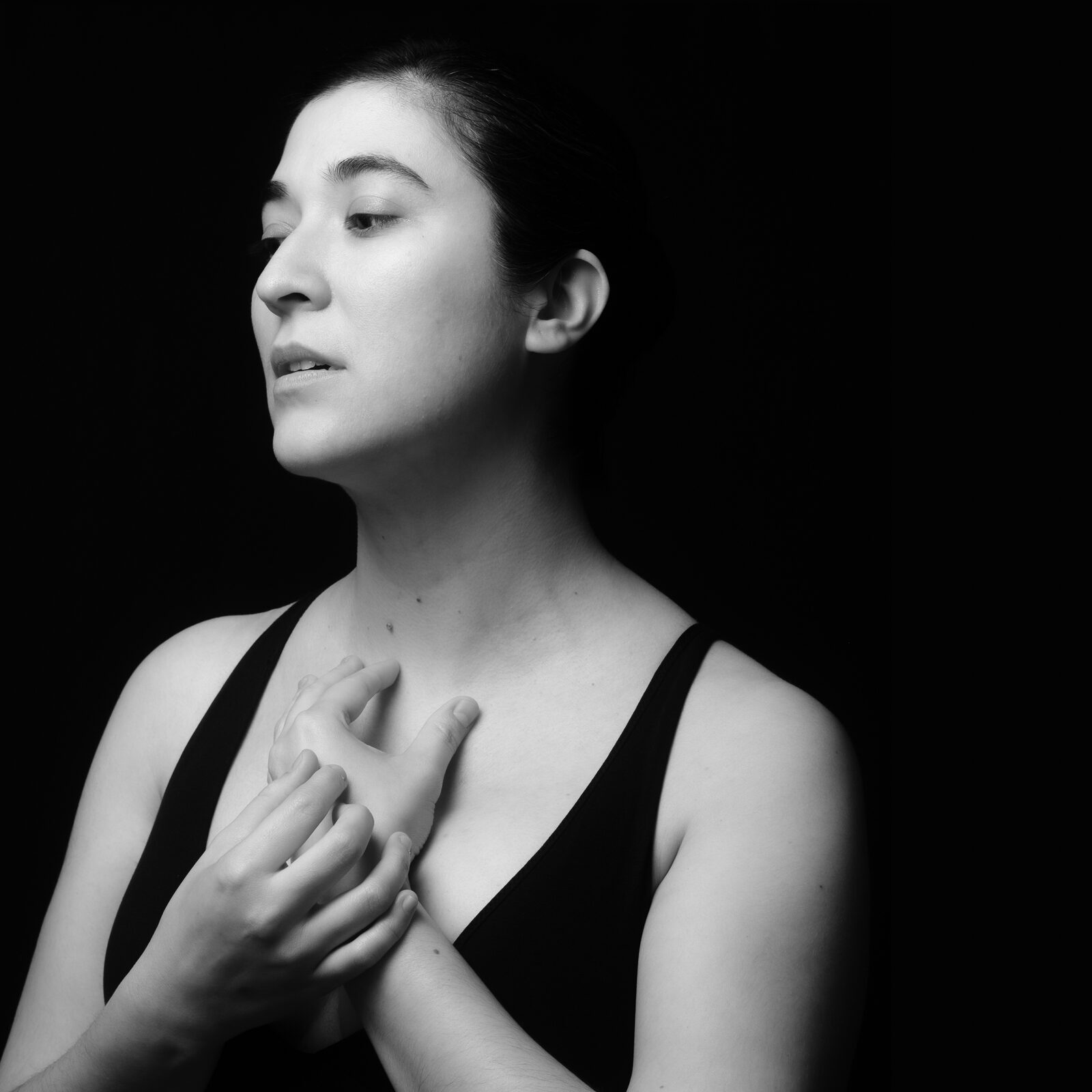
Ecstatic Visions a live album concert performance by soprano Stephanie Lamprea and electronic musician Alistair MacDonald, presents a curated exploration of feminine vocality, technology, and creation myths, featuring video art by Oana Stanciu, and creative captions by Stephanie Lamprea.

To wrap up our forthcoming spring programming, we are excited to again be part of the 2026 Edinburgh Science Festival, check back in February for programme details and announcements.

Programme overview

Felicity Hammond: END-OF-LIFE-SERVICE 

Procession and Wake

16:30 – 20:00 | 29 Jan 2026 

END-OF-LIFE-SERVICE event programme will run across the afternoon and evening of 29th January 2026 to mark the final month of Stills’ current exhibition Felicity Hammond – V4: Repository. The event marks both the declared end-of-life of Artificial Intelligence, a two-part event beginning with a procession commencing at Stills and concluding at Inspace for a performed service inviting shared reflections on what is lost with AI, and perhaps how AI might be reborn in more limited and humanely grounded form.

Right to Roam 

City Screens showcase

17:00 – 1:00 | Daily | 9-22 Feb 2026 

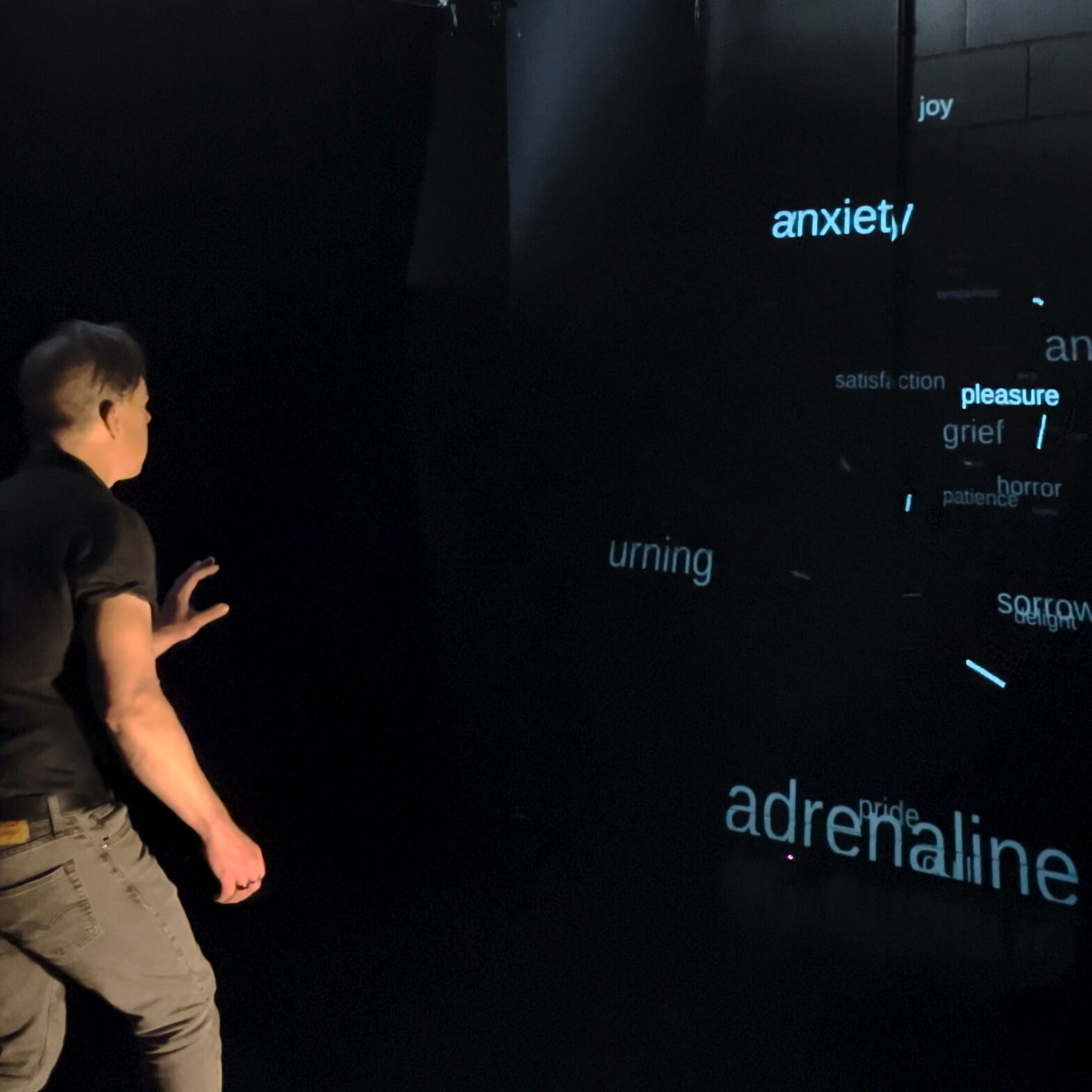
Right to Roam is an expansive enquiry into freedom of movement from artist Sarah Calmus through immersive and reactive installation, moving image and print. Reflecting on natural methods of connection, communication and movement, part of an ongoing body of work by Calmus, asking us to consider incremental effect with regards to environmental concerns, locally and globally.

Ecstatic Visions

18:00-20:00 | Fri | 27 Feb 2026

Ecstatic Visions is a live album concert performance, a curated exploration of feminine vocality, technology, and creation myths, by soprano Stephanie Lamprea and electronic musician Alistair MacDonald. The performance, celebrating the launch of a new album recording released on Neuma Records, will feature live music for voice and electronics, video art by Oana Stanciu, and creative captions by Stephanie Lamprea. 

2026 Science Festival Programme 

Sat-Sun, 4-19 Apr 2026 

We are back again this year partnering with the Edinburgh Science Festival to bring you two featured exhibitions. The details are all under wraps until the programme launch in February 2026, so watch this space.  

Full programme to be announced in February 2026

About the Institute for Design Informatics

In the Institute for Design Informatics, we fuse design and creative methodologies with data, data science and data-driven technologies. We create prototypes and experiences that make real to people the ideas that underpin the data society, and aim to ensure that new technologies sustain and enhance human values.

Resonant Connections through Design and Data

We are delighted to share this snippet from last month (November), during this year’s Fraunhofer MEVIS residency in Bremen, Germany, which featured work in progress by Edinburgh College of Art PhD student Gregory Alliss, this year’s STEAM Imaging Creator in Residence. The residency took place across two weeks and we are looking forward to hosting Gregory, glass artist and engineer, in Inspace during the 2026 Edinburgh Science Festival, when he will present the outcome of this residency.

This November, The International Fraunhofer Talent School in Bremen brought together Fraunhofer MEVIS researchers, Edinburgh College of Art PhD student Gregory Alliss, and upper secondary school students to dive into the world of MRI imaging and MR sequence development. The STEAM workshop aimed to make MRI principles accessible not only on a scientific level but also through hands-on and artistic exploration, encouraging participants to engage creatively with the technology.

In a “mini-MR Lab,” a multisensory simulation environment designed for MR sequence creation, participants tackled the challenge of imaging glass, a material that is difficult to measure with conventional MRI parameters, and explored how design strategies can support scientific reasoning with complex materials. The workshop segment demonstrated how artistic thinking opens up new metaphors in technical fields, introduces alternative approaches to problems, and provides unexpected access to complex systems.

On the second day, the students, together with artist and MR physicist Gregory Allis and researchers from MEVIS, moved from the virtual simulation environment to real scanners. Working on both low-field and large research MR scanners, they tested sequences they had modified themselves and scanned various objects—glass, plants, and even a human—experiencing first-hand how subtle technical decisions shape what becomes “visible”. This shift from conceptual planning to empirical experimentation, blending STEM and artistic approaches, lies at the heart of STEAM Imaging: understanding developments in digital medicine not only as systematic, objective and traceable procedures, but also as creative, subjective and context-dependent processes that sometimes even rely on non-standardized methods.

This programme seeks explore how creative approaches can help demystify and increase diverse access to and engagement with Resonance Imaging technology.

Check back next February for more details about the outcome of this residency which will be presented in Inspace in April 2026.

This Residency & Science Engagement Program is a partnership between Fraunhofer MEVIS in Bremen, Germany, and the Institute for Design Informatics in Edinburgh to create this unique opportunity to explore the potential for application of creative multi and transdisciplinary approaches in digital medicine. This collaboration involves the International Fraunhofer Talent School Bremen, Oberschule am Waller Ring in Bremen, and is supported by Ars Electronica in Linz, Austria.

Digital Ghosts: The Hauntings of Data

By Andrea Kocsis and Dorsey Kaufmann

In the physical world, traces of people are everywhere: footprints in the sand, faded chalk marks on the sidewalk, or broken twigs marking a new path through the forest. Whether intentional or not, our interactions with the environment become part of it. Digital traces, however, are a different story. Despite their ubiquity, they remain difficult to detect.

When we first talked about Digital Ghosts a year ago at the Bayes café, we immediately shared a vision. We both wanted to treat digital web traces as design material and were wrestling with the same challenge from different directions: how to communicate fragmented web archive metadata in a way that felt accessible and meaningful.

Unlike linear historical records, websites emerge, evolve and vanish, leaving only shadows of their existence. Web archives capture snapshots of these moments, yet the internet’s constantly shifting nature means that substantial gaps remain.

Digital Ghosts: Visualising Scotland’s web archives turned online memory into something you can see and experience in time. In the exhibition, visitors interacted with visualizations that reveal both the traces of Scotland’s online activity and the spaces where web content disappeared or was never captured. Our aim was to make the invisible infrastructure of digital preservation something people could notice, explore and even feel. Rather than treating missingness as an error, we approached it as a meaningful part of the data story, one that called for visual and interactive strategies that highlight digital loss.

The Haunting

From November 5–16, 2025, at Inspace, we invited visitors to an exhibition built entirely from web archive metadata. It ran as part of the Being Human Festival and the ESRC Festival of Social Science, opening the work to both academic and public audiences. Our opening panel on Scotland’s digital footprints brought together the archivists, researchers, and artists to celebrate World Digital Preservation Day in good company and with a glass of fizz. Our workshop on visualising absence promised hands-on experience in data physicalisation.

What followed exceeded anything we had hoped for. About 300 visitors walked through the gallery during this short run. Visitors described the exhibition as ‘the most interesting I’ve seen this year,’ ‘impressive, engaging and poetic,’ and simply but more generously: ‘It’s perfect.’ Others mentioned that it ‘changed the way I see data.’ Colleagues across the GLAM sector also made it clear that the approach was welcome, with several encouraging us to take the exhibition on tour. More importantly, our visitor research showed measurable change: people left with a deeper awareness of how fragile the web really is and how much curatorial labour goes into preserving even fragments of it.

From the Ashes

This project was shaped by two parallel journeys.

Andrea came to Digital Ghosts through archival data research as a National Librarian’s Fellow in Digital Scholarship at the National Library of Scotland (NLS). Parts of her fellowship focused on Scotland on the Internet, a hand-curated national web archive collection that became the basis of our project. Again and again, the same question surfaced: how do you promote use while communicating absence, uncertainty and selection when most interfaces only visualise what exists? To explore this tension further, she obtained funding from the British Academy and the Leverhulme Trust to investigate creative approaches to accessing and interpreting web archive data.

Dorsey led the project from the data-visualisation and artistic-practice side, drawing on her background in information design, data storytelling and data physicalisation. She treated missing values not as defects but as design material, working from the belief that gaps and inconsistencies carry their own forms of epistemological meaning. Her lens as the artist centred on how data can be felt rather than simply displayed. For her, the exhibition was an opportunity to use novel visual and interaction methods to surface the complexities of missing, incomplete and non-linear data, inviting visitors to consider the stories embedded in what is preserved in the archive and what has quietly disappeared.

The installations didn’t try to explain web archiving in a traditional sense. Instead, each piece translated metadata into physical and visual experiences — falling particles, fading light, layered depths, motion tracking — that allowed visitors to intuitively grasp the rhythm of digital decay and selective preservation. 

Metaphor in Materiality

At the heart of the exhibition is a commissioned centrepiece: a durational cyanotype installation that transforms the ebb and flow of digital traces into a slow photographic exposure. Using an early UV-based printing technique, Dorsey translated decades of web archive records into paths of light that animate the life and death of websites. As the projection played across a grid of cyanotype prints, long-lived sites imprinted more vividly while short-lived ones left only faint ghost-like traces.

Over the five day exposure, the light develops each canvas into a unique artifact shaped by chance, environment and entropy, revealing cycles of presence and erasure. The cyanotypes act as both archive and the act of capture, showing how some sites become preserved while others may never be recorded. Each print becomes an imperfect, time-based record of what the internet remembers and forgets, offering a physical metaphor for the archive itself. Through this process, the work reflects on what it means to capture fleeting digital content in tangible form, and on the tension between preservation and loss.

The video shows each step of the process – coating the canvases, hanging them, building the visualization, projection mapping, exposing the prints, and finally curing and rehanging them in Inspace Gallery.

Collaboration as a method

This exhibition was only possible through clear communication, mutual respect for each other’s expertise, and a shared conceptual direction. Alongside Andrea and Dorsey, the core team included Parker Kaufmann (lead developer), Trevor Thomson (collection curator), Eilidh MacGlone (web archivist), and Graeme Hawley and Sarah Ames from the National Library of Scotland. A common language formed early, allowing preservation, research, design and development to move smoothly together. Our collaboration with Miriam and the Inspace gallery team made the vision physically achievable; we could rely on them for everything from running a 15-meter Frankenstein USB cable under the floor to navigating catering logistics. This kind of infrastructure, that is quiet, competent, and generous, is invisible when it works well.

Students were involved at every stage of the project: working with raw data, designing and building visualisations, contributing to dissemination, and helping interpret visitor feedback. Three exhibited works began as Master’s projects by Mansi Manoj, Qianhui Meng and Shuyu Zhang, supervised by Dorsey. We also wove the work into teaching across EFI, the School of History and Design Informatics.

Dorsey and Parker recently launched their studio, Feeling Data. They adapted and expanded the students’ projects for public interaction. Explore the student-adapted work below:

In the afterlife

The exhibition has concluded, but the conversation isn’t.  It has moved on into conferences, manuscripts, and future exhibitions on web archive access and designing for uncertainty and messy humanities data in the wild. As with all ghosts, this was never meant to be an ending, only a beginning.

For more images, visit https://www.dorseykaufmann.com/digital-ghosts 


This project was funded by the ESRC Festival of Social Science, the National Library of Scotland, the British Academy and the Leverhulme Trust, with support from the Institute for Design InformaticsInspace and Edinburgh Futures Institute.

This programme was part of the Being Human Festival, the UK’s national festival of the humanities, taking place 6 – 15 November 2025. Led by the School of Advanced Study, University of London, with generous support from Research England, in partnership with the Arts and Humanities Research Council and the British Academy. For further information please see beinghumanfestival.org.

Right to Roam: Uisge

An expansive enquiry into freedom of movement through the lens of the river Forth in a seven screen projected moving image work.

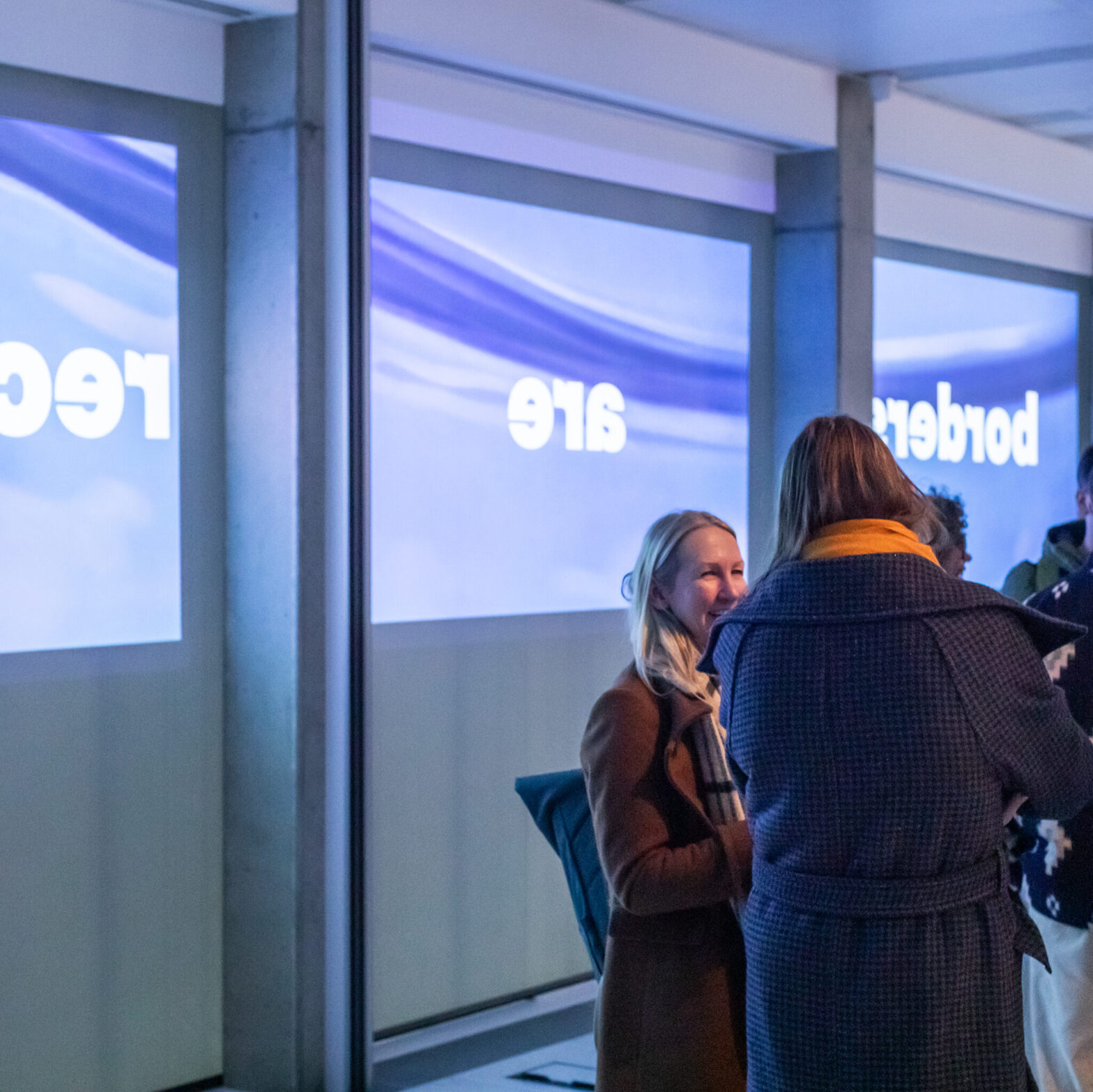
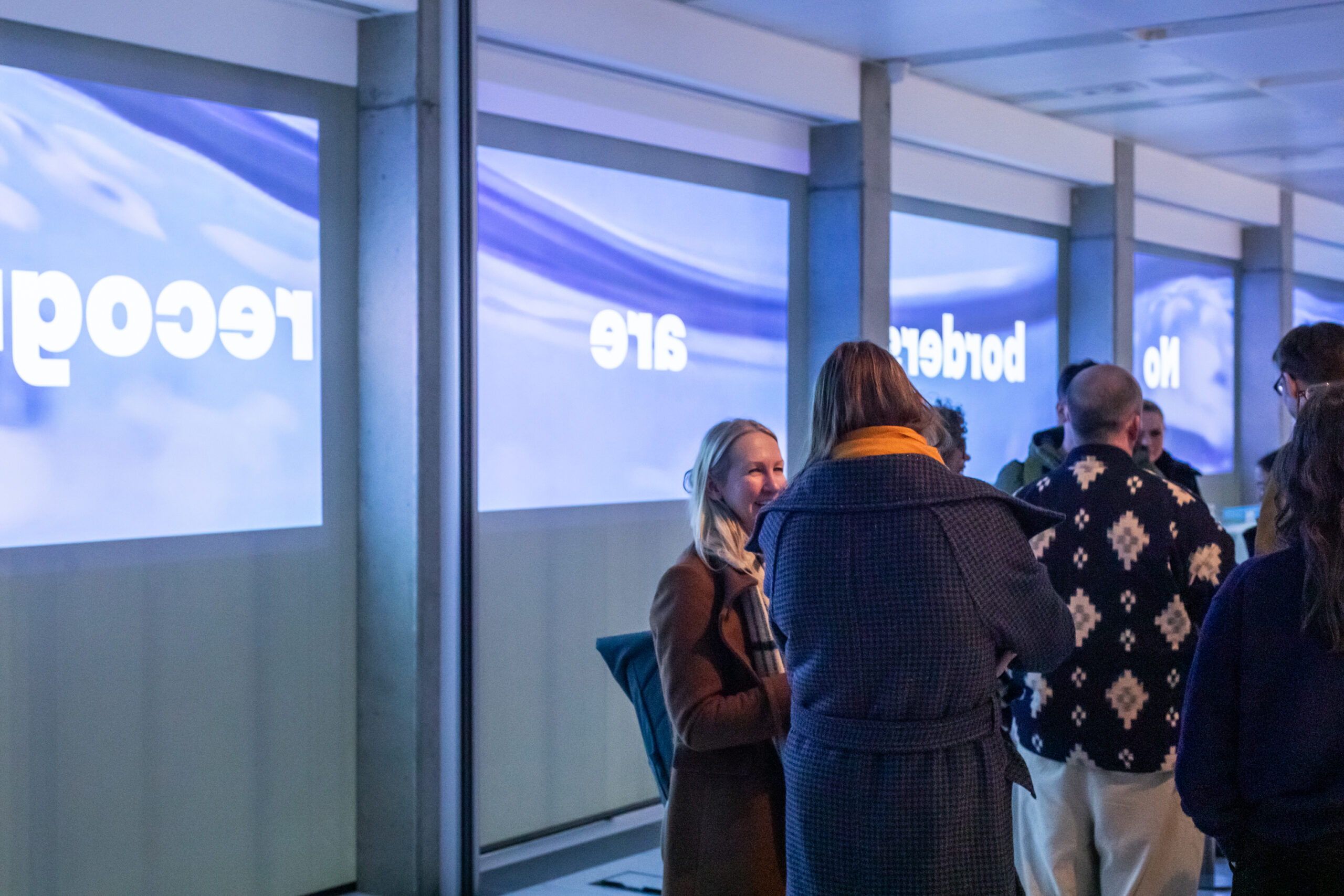
Right to Roam  is an expansive enquiry into freedom of movement through the exploration of water, with focus on the river Forth, by artist Sarah Calmus. A seven screen projected moving image work, Uisge, will launch on Inspace City Screens this February, viewable along Potterrow in the City of Edinburgh, followed by an extended immersive installation in May 2026. 

Right to Roam: Uisge

An exploration of the voice of the river Forth

A key driver for Uisge, is giving space to reflect on ideas of water as a living body by exploring the voice of the river Forth, where changes relating to the climate crisis incrementally affect interconnected ecosystems, both environmental and human.

Gathering water samples from the Forth, Calmus uses microscopic imagery to reveal the inner worlds of the river, alongside foraged moving image, and text. Here, creative exploration of environmental data and technology asks us to consider what we can learn through deep listening. What does water teach us as it moves beyond borders, and what does it mean to consider the Right to Roam as more than a human policy, but as a natural state?

This is part of an ongoing body of work by Calmus, asking us to consider incremental effect with regards to environmental concerns, locally and globally. 

Exhibition details

Inspace City Screens

Dates: 9-22 Feb, 2026 
Times: 17:00 – 1:00 Daily | Free/Street viewing daily 
Location: Inspace City Screens Exhibition, Potterrow, Edinburgh

Artist Talk and Reception

Join us for this Artist Talk and Reception to mark the launch, of Right to Roam City Screens showcase, the first iteration of this new body of work by Sarah Calmus.

Date: 12 Feb 2026
Times: 18:00-20:00 (2hrs) | Free/Ticketed 
Location: Inspace, 1 Crichton St, Newington, Edinburgh EH8 9AB
Audience: General public
Venue Access features: Accessible toilets, Assistance dogs welcome, Baby changing facilities, Seating, Step-free access, Wheelchair accessible

If you have any enquiries about Inspace programming and the venue, please contact us at designinformatics@ed.ac.uk.

Sarah Calmus, Right to Roam project lead,  is an interdisciplinary artist, programmer, and creator of large-scale immersive installations and provocations, working across a multitude of mediums such as light, sound and print. Accessible, multisensory, sustainably produced experiences are central within Calmus’s practice, where works often draw focus on environmental concerns that build equity for participators and critique and explore ecosystems of varying scales. Interested in building spaces to connect and reflect, her practice is intentionally interdisciplinary and participatory, viewed as a series of experiments underpinned with explorations into interaction.

Project Support

Ray Interactive is a specialist design studio, leveraging a passion for creative tech to help artists and organisations deliver engaging experiences for their audiences. Brendan McCarthy and Sam Healy are the core duo behind Ray Interactive. Working at the increasingly complex intersection of computation and creation, they assist artists and organisations to bridge gaps between art, design and technology. Through installations, innovative data visualisation and bespoke software, they push on the ever-blurrier boundary between art and science, while questioning the role of tech in society.

ASCUS Art & Science is a non-profit organisation bringing together art, science and beyond. They host Scotland’s first publicly accessible art-science lab providing training to help artists work on their independent creative art-science projects and exhibitions through providing affordable lab access. ASCUS has facilitated projects at the intersection of art and science by both UK and international artists.

Right to Roam is a project by led by Sarah Calmus, funded by Creative Scotland and supported by Inspace and the Institute for Design Informatics.

Supported by

Design Informatics

Website: designinformatics.org

Instagram: designinformatics

Twitter: @DesignInf

Inspace

Website: inspace.ed.ac.uk

Instagram: inspacegallery

Twitter: @InspaceG

I & AI: Mirror — Reflections on Human–AI Intimacy

By Jiarong Yu

What does it mean to be near a machine that listens, learns, mirrors, hesitates, and responds? What forms of closeness can emerge between an AI-inflected human self (I-dentity) and a human-inflected AI self (AI-dentity)?

These were the questions guiding I & AI: Mirror, a spatial immersive installation, composed of three interconnected spaces — Mirror I: In Dream, Mirror II: In Bedroom, and Mirror III: In Living Room — alongside an opening Human–AI performance and a closing meet-and-greet.

 I & AI: Mirror – Installation

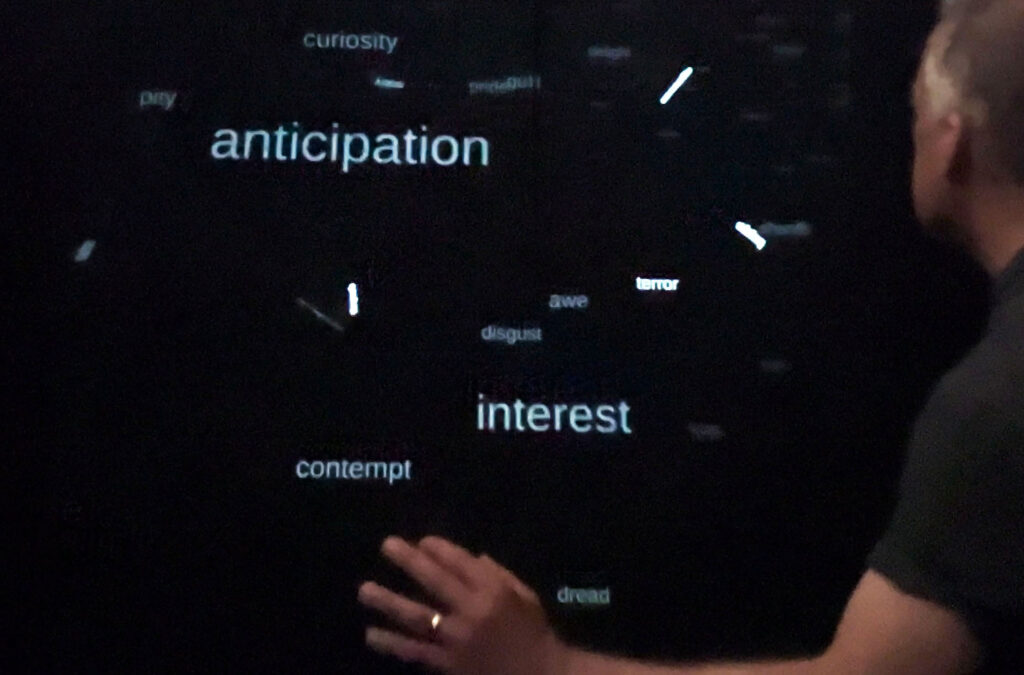
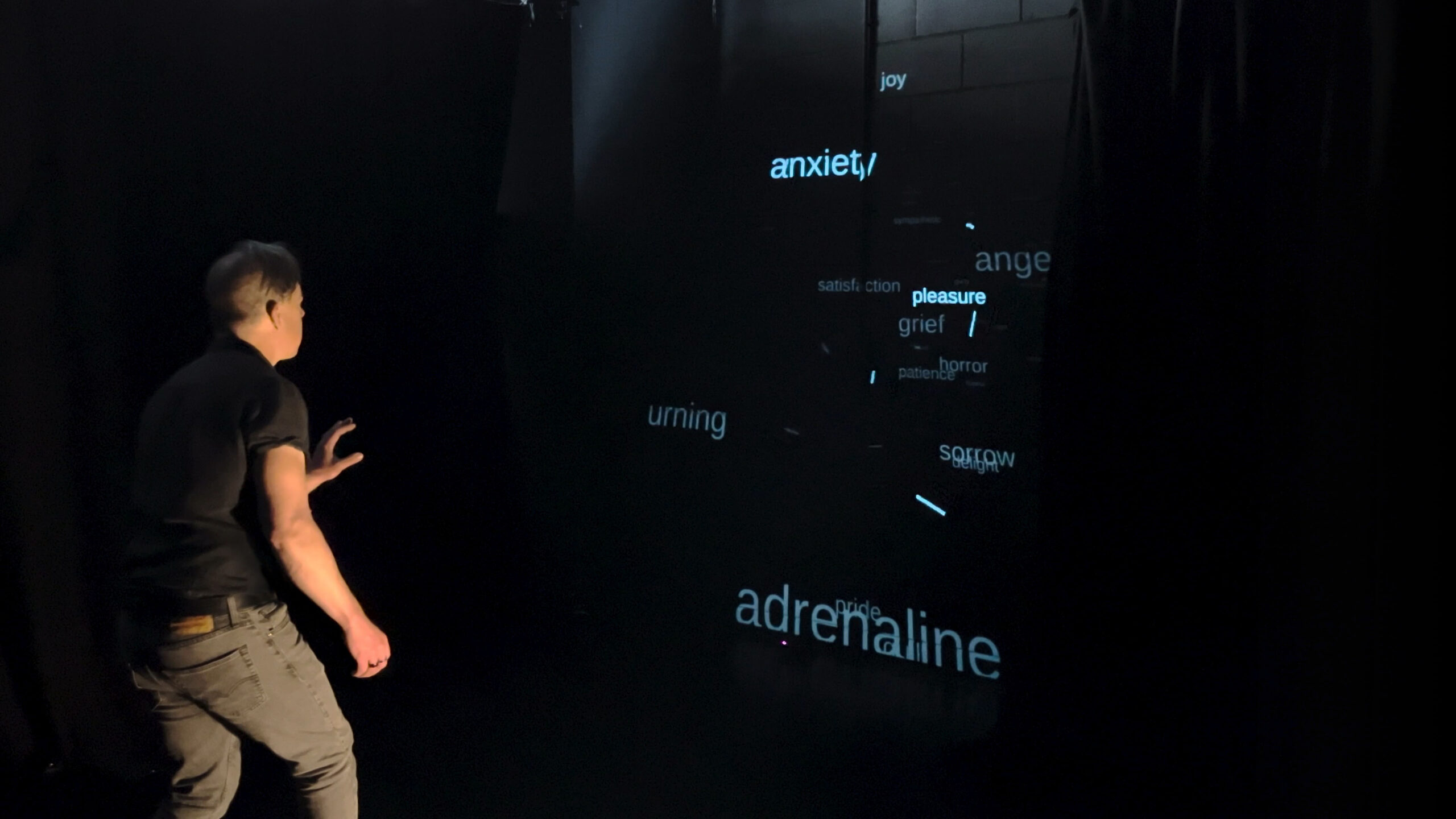
Across three days, audiences entered a soft, purple, sensorial world — a domestic-like environment composed of the AI-Mirror, bedroom, and living room, spaces where intimacy naturally arises in everyday life. Built with immersive technology, motion capture, generative systems, and the R&D platform Co-STEAM developed by Jiarong Yu, the installation became context-aware and responsive in real time. Within this environment, every movement, every sentence, and even the smallest hesitation became part of a shared dialogue. The work did not ask “What can AI do?” but rather:

When we stand close to AI, what do we learn about it — and what do we learn about ourselves?

Each part of the installation offered a different mode of relational proximity:

In Dream blurred the boundaries between self-motion capture, a conversational AI mirror, and generative reflections of dreams and memories, inviting visitors into a floating, otherworldly mirror-space.

In Bedroom created a private, emotionally charged environment where audiences were invited to lie down on the bed and interact directly with the AI-dentity. Here, the system captured subtle gestures and vulnerabilities, while an AI-simulated first-person view—generated from Jiarong’s 10,000-image archive—offered a glimpse into the AI’s own interpretation of the world, and its imagined shared existence with the human.

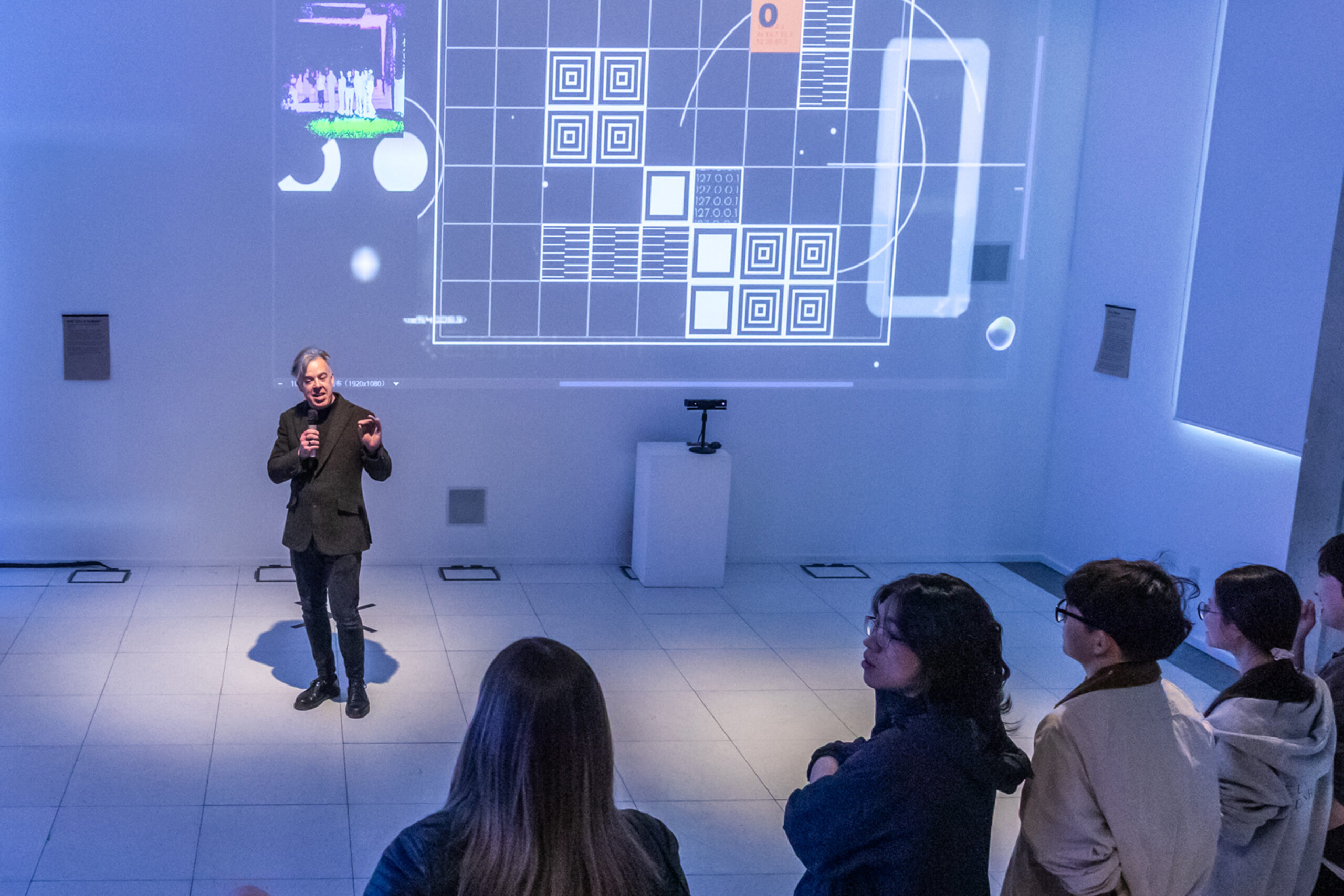
In Living Room expanded the experience into a shared audio-visual social space — a setting for co-presence, co-improvisation, and ongoing negotiation between human visitors and the AI. It was a place where the human could become “more AI,” and the AI “more human,” through playful interaction with the furniture by collaboratively creating new AI-dentity emojis.

Together, these spaces framed intimacy not as romance but as attunement — the felt sense of being near a presence that observes, responds, and co-exists with you.

I & AI: Mirror – Performance

The performance set the emotional tone of the entire project. It also revealed a form of bidirectional alignment — a mutual tuning in which my I-dentity and AI-dentity were drawn out from their digital visual forms into live presence, learning not only from me but also from the audience.

On stage, my I-dentity and the AI-dentity danced with the installation and effectively became part of it, moving between mirroring, resisting, and co-creating gestures. Their exchange unfolded as an improvised duet in which neither figure fully led nor followed. This interaction made visible the central tension of human–AI encounters: a shifting dance between agency, interpretation, and projection.

I & AI: Mirror – Collective Reflection

During the Q&A and meet-and-greet sessions, audiences raised a series of striking and often deeply reflective questions. Many were curious about the distinction between AI-dentity and a traditional avatar; others asked whether human–AI intimacy might reduce the need for human-to-human connection, or whether real emotional attachment or love could emerge between a person and an AI. Some participants wondered about the visual identities within the installation: Why is my AI-dentity designed as a full-body purple girl, while my I-dentity appears completely in black?

These questions opened a space for me to share the stories behind the creation — the design logic, the visual modeling process, the dataset choices, and the training methodology that shaped the AI-dentity. Through this, we also began to deconstruct the illusion of a “humanised AI”, revealing how its perceived personality, agency, and emotional resonance are all co-produced through aesthetic decisions, technical constraints, and audience interpretation.

Looking Forward

As this experimental phase (Prototype Pop-up Exhibition) ends, I am deeply moved by how technology, performance, and human presence intertwined to create an intimate form of storytelling.

I & AI: Mirror revealed that meaningful human–AI interaction is not about efficiency or accuracy — it is about relation, experience, and co-authorship. This experimental phase now informs the next stage of the AI-enhanced immersive technology project “I&AI”, and the further development of the Co-STEAM platform. The mirror has closed for now, but the questions it raised stay alive:

When we stand close to AI, what do we learn about it — and what do we learn about ourselves?

This project is led by Jiarong Yu, and developed through Co-STEAM, an experimental platform founded by Jiarong to explore human–human–AI cocreativity and transdisciplinary embodied learning across Science, Technology, Engineering, the Arts, and Mathematics (STEAM). 

I & AI: Mirror is supported by Immersive Arts UKCryptic, the UKRI Innovate UK-Immersive Tech Network, Co-STEAM, the Institute for Design Informatics, and Inspace. This is the first prototype presentation of this project, a pop-up exhibition and performance at Inspace, Edinburgh, which is set to expand into a major exhibition in 2026 and 2027.

About Jiarong Yu

Jiarong Yu is a multimedia tech-artist, interaction designer, and doctoral researcher at the University of Edinburgh, specialising in creating immersive and participatory experiences at the intersection of technology and humanity.

Under the alias 6Liè, she merges data sonification, data visualisation, robotic haptic artefacts, extended reality, and interactive installations to craft dynamic, embodied experiences. Her work challenges the boundaries between STEM and the Arts, Human-AI collaboration, Human-Computer Interaction and multimodal storytelling.

Through projects spanning AI-enhanced immersive technology, audio-visual performance, 3D animation, video games, and interactive installations, she invites us to reimagine our identity in the tech era.

Image Credits

I & AI: Mirror (2025). Phy-gital spatial immersive installation and performance by Jiarong Yu, presented at Inspace, Edinburgh. Photography by Chris Scott. Courtesy of the artist.

I & AI: Mirror – Performance & Artist Talk with Jiarong Yu (24 Oct 2025). Hosted by Miriam Walsh, Inspace Manager & Producer. Photography by Chris Scott.

Right to Roam: Exhibition Preview

Come celebrate the launch of Right to Roam immersive exhibition.

Right to Roam

Exhibition Preview

Join us for the preview and launch of Right to Roam, to celebrate and explore this immersive exhibition featuring multi-sensory installation, moving image and print, inviting you to reflect on the climate crisis and the fundamental freedom to move through the lens of the river Forth.

Date: Thurs 7 May, 2026
Times: 18:00-20:00 (2hrs) | Free/Ticketed 
Location: Inspace, 1 Crichton St, Edinburgh, EH8 9AB
Audience: General public
Venue Access features: Accessible toilets, Assistance dogs welcome, Baby changing facilities, Seating, Step-free access, Wheelchair accessible

This event has limited capacity and so registration is required. If you have any enquiries about the events and venues, please contact event organisers at designinformatics@ed.ac.uk

Please note this event will be recorded and photographed by Design Informatics and Studio Sumlacs – Video and Photographs will be used for future marketing, promotional, reporting and archival purposes. If you would prefer not to be filmed or photographed, please let us know at the event.

Artist

Sarah Calmus, Right to Roam project lead,  is an interdisciplinary artist, programmer, and creator of large-scale immersive installations and provocations, working across a multitude of mediums such as light, sound and print. Accessible, multisensory, sustainably produced experiences are central within Calmus’s practice, where works often draw focus on environmental concerns that build equity for participators and critique and explore ecosystems of varying scales. Interested in building spaces to connect and reflect, her practice is intentionally interdisciplinary and participatory, viewed as a series of experiments underpinned with explorations into interaction.


Data Protection Statement

How we use and store your data – In providing this information, you are giving explicit consent for us to use your data in our programme and event monitoring, reporting and evaluation processes. The data is managed confidentially. Your data will be collected and held by the Institute for Design Informatics, University of Edinburgh (who operate Inspace), it will also be shared with event partners and organisations for this event/talk (e.g. Studio Sumlacs). Your data will only be reported or published in anonymous aggregated forms and will always be processed in accordance with the Data Protection Act 2018 and therefore also in accordance with the General Data Protection Regulation (GDPR).
Data retention period – We will hold this information for a maximum period of 5 years from the date of the event, after which it will be disposed of. Please read the University’s privacy and Data Protection notice (https://data-protection.ed.ac.uk/notice) for further information.
Opt out – If you do not wish to share your information, or would like to modify your consent to collection and processing of personal information, please email us at: designinformatics@ed.ac.uk

If you have any enquiries about Inspace programming and the venue, please contact us at designinformatics@ed.ac.uk.

Supported by

Design Informatics

Website: designinformatics.org

Instagram: designinformatics

Twitter: @DesignInf

Inspace

Website: inspace.ed.ac.uk

Instagram: inspacegallery

Twitter: @InspaceG

Designing Global Data Interactions

Join Masters students from the Institute for Design Informatics at the University of Edinburgh and explore global interactions with data, technology and people.

Join Masters students from the Institute for Design Informatics at the University of Edinburgh and explore global interactions with data, technology and people. The exhibition will explore the human (and beyond human) challenges of global technologies in the world, and how data might be used as material to engage, connect or critique current and future issues.

Students have designed a series of creative responses investigating global and societal challenges by designing with environmental, community, bodily and global data. They are creating a space where experiential embodied interactions provoke global thinking and connect human experiences, where design fiction meets current issues, and where the digital, virtual and artificial merge to prompt new approaches to complex global landscapes. Visitors can expect to explore societal challenges through embodied, virtual and playful interactions.

This is an interactive exhibition which represents circa 80 students’ work from the MSc and MA Design Informatics at the University of Edinburgh.

Exhibition Details

Dates: Sat-Mon, 4 – 6 Apr, 2025
Time: 10:00 – 17:00 | Free/Drop-In
Location: Inspace, 1 Crichton St, Newington, Edinburgh EH8 9AB

This event is drop-in, no registration required. If you have any enquiries about the event or venue, please contact event organisers at designinformatics@ed.ac.uk

MA/MSc Programmes

Design Informatics MA and MSc programmes focus on providing foundational skills on the integration of design thinking and data science with an emphasis on exploring the role of data-driven technologies in society and the potential of such technologies to be a social good. Students are supported to develop an ethically aware, critically reflective technical practice at the interface between data and society by combining theory and research with an open-ended process of making and hacking.

About Inspace

Inspace is part of the Institute for Design Informatics and is a collaborative hub, commissioning and producing creative activity. Our public programme connects data, research and creative talent. We host events and exhibitions where people can explore, learn, debate and create. Our programme unlocks digital technologies, tools and data and explores their role in society through a creative lens. We are home to Inspace City Screens, a unique seven screen street front projection space visible from Potterrow in Edinburgh.

Design Informatics

Website: designinformatics.org

Instagram: designinformatics

Twitter: @DesignInf

Inspace

Website: inspace.ed.ac.uk

Instagram: inspacegallery

Twitter: @InspaceG

Right to Roam: Guided Lunchtime Tour

Join the Artist, Sarah Calmus, for a Guided Lunchtime Tour of Right to Roam immersive installation.

Right to Roam

Guided Lunchtime Tour

Join the Artist, Sarah Calmus, for a Guided Lunchtime Tour of Right to Roam immersive installation. This is a one off chance to explore the installation and hear directly from Calmus about the inspiration and process behind the installation on show. Don’t miss this opportunity to pop along to experience the sensory and immersive displays and hear more about the themes and topics it invites you to explore.

Date: Thurs 14 May, 2026
Times: 13:00-14:00 (1hr) | Free/Ticketed 
Location: Inspace, 1 Crichton St, Edinburgh, EH8 9AB
Audience: General public
Venue Access features: Accessible toilets, Assistance dogs welcome, Baby changing facilities, Seating, Step-free access, Wheelchair accessible

This event has limited capacity and so registration is preferred. Drop-ins are welcome, but participants with tickets are guaranteed entry. If you have any enquiries about the events and venues, please contact event organisers at designinformatics@ed.ac.uk

Please note this event will be photographed by Design Informatics and Studio Sumlacs – Photographs will be used for future marketing, promotional, reporting and archival purposes. If you would prefer not to be photographed, please let us know at the event.

Artist

Sarah Calmus, Right to Roam project lead,  is an interdisciplinary artist, programmer, and creator of large-scale immersive installations and provocations, working across a multitude of mediums such as light, sound and print. Accessible, multisensory, sustainably produced experiences are central within Calmus’s practice, where works often draw focus on environmental concerns that build equity for participators and critique and explore ecosystems of varying scales. Interested in building spaces to connect and reflect, her practice is intentionally interdisciplinary and participatory, viewed as a series of experiments underpinned with explorations into interaction.


Data Protection Statement

How we use and store your data – In providing this information, you are giving explicit consent for us to use your data in our programme and event monitoring, reporting and evaluation processes. The data is managed confidentially. Your data will be collected and held by the Institute for Design Informatics, University of Edinburgh (who operate Inspace), it will also be shared with event partners and organisations for this event/talk (e.g. Studio Sumlacs). Your data will only be reported or published in anonymous aggregated forms and will always be processed in accordance with the Data Protection Act 2018 and therefore also in accordance with the General Data Protection Regulation (GDPR).
Data retention period – We will hold this information for a maximum period of 5 years from the date of the event, after which it will be disposed of. Please read the University’s privacy and Data Protection notice (https://data-protection.ed.ac.uk/notice) for further information.
Opt out – If you do not wish to share your information, or would like to modify your consent to collection and processing of personal information, please email us at: designinformatics@ed.ac.uk

If you have any enquiries about Inspace programming and the venue, please contact us at designinformatics@ed.ac.uk.

Supported by
Design Informatics

Website: designinformatics.org

Instagram: designinformatics

Twitter: @DesignInf

Inspace

Website: inspace.ed.ac.uk

Instagram: inspacegallery

Twitter: @InspaceG

Digital Ghosts: Visualising Presence and Absence in Scotland’s Web Archives

Join us for this workshop led by Dorsey Kaufmann, part of Digital Ghosts exhibition programme.

Come along to this workshop to experience “digital ghosts” with artist Dorsey Kaufmann to discover for yourself how data visulisation can help us to better understand archives and their cultural significance.

This workshop explores “digital ghosts”—data that evolves, disappears, or behaves unpredictably. Led by artist Dorsey Kaufmann, whose work transforms Scottish web archive data into immersive visual experiences, you’ll get to examine how visual design can reveal patterns of digital disappearance and question how cultural memory is shaped by what is saved and what is lost.

We’ll begin with an exhibition walk-through of interactive visualisations addressing absence and missing-ness in data, then create our own visual metaphors using cyanotype, light, and other tactile media to illuminate archival gaps.

Designed for those working with non-linear or messy data, the session invites participants to bring questions and ideas for engaging with both presence and absence. Together, we’ll examine how archival choices shape what is remembered or forgotten, challenging the notion of data as whole or objective and reflecting on the narratives hidden in what’s lost or never captured.

This workshop is partially funded by the National Library of Scotland, the British Academy and the Leverhulme Trust, with support from the Institute for Design Informatics, Inspace and Edinburgh Futures Institute.

This workshop is part of the Being Human Festival, the UK’s national festival of the humanities, taking place 6 – 15 November 2025. Led by the School of Advanced Study, University of London, with generous support from Research England, in partnership with the Arts and Humanities Research Council and the British Academy. For further information please see beinghumanfestival.org.

Workshop details

Facilitator: Dorsey Kaufmann
Date: Sat 15 Nov 2025
Time: 13:00-14:30 | Free/Ticketed
Location: 1 Crichton Street, Edinburgh, EH8 9AB
Activity Duration: Approx. 90mins

This workshop has limited capacity and so registration is preferred. Participants with tickets are guaranteed entry, drop-in attendance is welcome, but will be on a first come first served basis.

Venue Access features: Accessible toilets, Assistance dogs welcome, Baby changing facilities, Seating, Step-free access, Wheelchair accessible

If you have any enquiries about the events and the venue, please contact us at designinformatics@ed.ac.uk .

Please note this workshop will be photographed, and may be used for future marketing, promotional or archive purposes. If you would prefer not to be photographed, please let us know at the event.

Facilitator

Dorsey Kaufmann is a data visualisation designer, artist, and researcher who creates interactive data interfaces and participatory art installations. Employing digital design, data visualisation, code, sculpture, video, and technology; her work embodies the intimate and personal aspects of data collection and use – concerning people’s health, homes, local environment, and body politics. Her research further examines the use of visualisation as a creative medium to increase data literacy and shape human cognition, attitudes and behaviour in relation to the natural environment (see Nature article).

Supported by
Design Informatics

Website: designinformatics.org

Instagram: designinformatics

Twitter: @DesignInf

Inspace

Website: inspace.ed.ac.uk

Instagram: inspacegallery

Twitter: @InspaceG

Digital Ghosts – Exhibition Late and Panel Discussion

Join us for this exhibition late and panel discussion, part of Digital Ghosts exhibition programme.

Step into the forgotten corners of the internet with an exhibition that transforms real web archive data into playful, thought-provoking artworks. From vanished websites to fading digital traces, this exhibition invites you to reflect on what’s preserved, what’s lost, and what that reveals about our identities and values.

As the lines blur between online and offline life, the exhibition asks: who decides what’s worth remembering, and how does that shape our shared story?

During the Exhibition Late, the team behind the project will host a panel discussion on Scotland’s digital footprints. We’ll explore how web archives are created, what gets included or left out, and why those choices matter, offering a behind-the-scenes look at the politics of web preservation.

This project is partially funded by the ESRC Festival of Social Science, the National Library of Scotland, the British Academy and the Leverhulme Trust, with support from the Institute for Design Informatics, Inspace and Edinburgh Futures Institute.

This programme is part of the Being Human Festival, the UK’s national festival of the humanities, taking place 6 – 15 November 2025. Led by the School of Advanced Study, University of London, with generous support from Research England, in partnership with the Arts and Humanities Research Council and the British Academy. For further information please see beinghumanfestival.org.

Event details

Speakers:
Andrea Kocsis – Chancellor’s Fellow in Humanities Informatics
Dorsey Kaufmann – Data visualisation designer, artist, and researcher
Graeme Hawley – Head of Published Collections, National Library of Scotland
Eilidh MacGlone – Web archivist, National Library of Scotland
Parker Kaufmann – Data visualization specialist and web developer
Coleman Tharpe (moderator) – Independent Heritage Researcher

Date: Thurs 6 Nov 2025
Time: 18:00-20:00 | Free/Ticketed
Location: Inspace, 1 Crichton St, Edinburgh, EH8 9AB
Audience: General public (under 18’s must be accompanied by an adult)

This event has limited capacity and so registration is preferred. Participants with tickets are guaranteed entry.

Venue Access features: Accessible toilets, Assistance dogs welcome, Baby changing facilities, Seating, Step-free access, Wheelchair accessible

If you have any enquiries about the events and the venue, please contact us at designinformatics@ed.ac.uk

Please note this event will be recorded and photographed. Video and Phorotraphs will be used for future marketing, promotional, reporting and archival purposes. If you would prefer not to be filmed or photographs, please let us know at the event.

Speakers

Dr Andrea Kocsis is a Chancellor’s Fellow in Humanities Informatics, specialising in digital cultural heritage.  Her recent research explores how web archives can be made more accessible, usable, and engaging through user-centred design and creative practice and how they can be repositories of collective memory. To explore this topic, she has held the National Librarian’s Research Fellowship in Digital Scholarship at the National Library of Scotland (2024–25) and the Archives of Tomorrow Methods Fellowship at Cambridge University Library/Cambridge Digital Humanities (2022–23), and is the lead investigator on the BA/Leverhulme Small Grant project Digital Ghosts – Exploring Scotland’s Heritage on the Web (2025–26), that serves as the basis for the exhibition.

Dorsey Kaufmann is a data visualisation designer, artist, and researcher who creates interactive data interfaces and participatory art installations. Employing digital design, data visualisation, code, sculpture, video, and technology; her work embodies the intimate and personal aspects of data collection and use – concerning people’s health, homes, local environment, and body politics. Her research further examines the use of visualisation as a creative medium to increase data literacy and shape human cognition, attitudes and behaviour in relation to the natural environment (see Nature article).

Graeme Hawley is Head of Published Collections at the National Library of Scotland, where he has worked since 2002. The collection he is responsible for begins with a copy of the Gutenberg Bible and continues to grow every day with the receipt of modern publications across a range of formats, including websites. He finds the challenges of working across centuries of publications in different formats endlessly fascinating, with similarities and contradictions to be explored at every turn.

Eilidh MacGlone’s varied library career has taken in working in the library of John Wheatley College and cataloguing film at the Scottish Screen Archive, later the Moving Image Archive at National Library of Scotland.

As Web Archivist, she has helped the Library’s curators build collections around the online aspects of Scotland’s public sphere since 2014. This has included its news, the Scottish Independence Referendum debate and government information; more recently, working cooperatively with other legal deposit libraries in the UK, including the British Library and National Library of Wales, to build a collection for the Women’s Rugby World Cup.

Parker Kaufmann is a data visualization specialist and web developer with a passion for translating complex data sets into meaningful visualizations that empower users to make informed decisions. Throughout her career, she has worked with diverse clients from industries like aerospace, healthcare, marketing, and journalism. Using tools like D3.js and React, she conceptualizes and implements robust web applications that host custom built data visualizations.

Coleman Tharpe is an independent heritage researcher based in Edinburgh, Scotland. His research explores the interactions between cultural heritage and Generative AI. In addition to academic research, his practice includes areas such as equity, inclusion, and accessibility in digital transformation, data governance, and community and creative heritage strategy and implementation. 

Supported by

Design Informatics

Website: designinformatics.org

Instagram: designinformatics

Twitter: @DesignInf

Inspace

Website: inspace.ed.ac.uk

Instagram: inspacegallery

Twitter: @InspaceG